Google
 
Web Osi Speaks!

Wednesday, September 24, 2014

In Case You Missed Barack Obama's Address To United Nations Assembly, Like I Did, Watch It Here Below.

Thursday, September 11, 2014

Did You Miss #BarackObama's Speech Last Night On #Isis (Or #Isil As He Called It)? I Did Too, So Let's Watch It Here.

Friday, August 01, 2014

POTUS Barack Obama: "In The Aftermath Of 9/11, W Tortured Some Folks .... We Did Some Things That Were Wrong"! Watch Video.

Wednesday, June 04, 2014

"Don't Come Back To Afghanistan"!: Army Sgt. Bowe #Bergdahl's Prisoner Exchange. Watch Video.

Tuesday, December 17, 2013

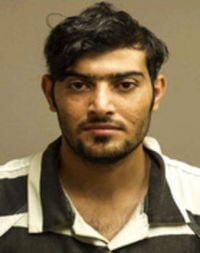
Kentucky Federal Court Of Appeals Upholds Life Sentence For Bowling Green Iraqi Born Terrorist, Mohanad Shareef Hammadi.


Appeals court upholds life sentence in terror case

An Iraqi man who pleaded guilty to terrorism charges wasn't entrapped into assisting in a plot to ship cash and weapons to al-Qaida in Iraq in 2010 and 2011 and the government did not take part in any misconduct, a federal appeals court ruled Tuesday.

The U.S. 6th Circuit Court of Appeals upheld the life sentence of 26-year-old Mohanad Shareef Hammadi, who pleaded guilty in 2012 to taking part in the plot, which was actually being run by a confidential informant for the FBI in Bowling Green.
 
"The government provided Hammadi with an opportunity to commit a crime, and he took it," Judge Karen Nelson Moore wrote for the three-judge panel in the case.

Hammadi and 32-year-old Waad Ramadan Alwan pleaded guilty in 2011 and 2012 to working with a man they thought was an insurgent in the United States to ship thousands of dollars in cash, machine guns, rifles, grenades and shoulder-fired missiles to al-Qaida in Iraq from 2010 through 2011.

Prosecutors said the two were actually working with a confidential informant who recorded the pair's activities and no money or weapons ever left the United States.
The two were arrested in May 2011 in Bowling Green, Kentucky, after a federal sting operation.

Hammadi is in a maximum-security prison in Colorado. Alwan is being held at the federal penitentiary in Terre Haute, Ind.
Hammadi alleged that the federal government resorted to entrapment in pursuing the case against him and sought to enhance any possible prison sentence by including certain types of weapons in the scheme.

Moore, joined by judges Julia Smith Gibbons and Jeffrey S. Sutton, noted that Hammadi willingly took part in the plot.
"The government's conduct in this case is not irregular, and Hammadi offers no evidence that the government acted purposefully to trigger a twenty-five-year mandatory minimum (sentence)," Moore wrote.

Hammadi and Alwan admitted to working and planting explosives near Bayji, Iraq, where multiple U.S. units were working.

Prosecutors described Alwan as a seasoned terrorist in Iraq. They said he worked with the Mujahidin Shura Council, a violent group that claimed responsibility for the kidnapping, torture and deaths of two soldiers with the Fort Campbell-based 101st Airborne Division and the death of a third soldier from the same unit while they were patrolling about 60 miles south of Baghdad in June 2006.

Prosecutors linked Hammadi to Jaish al Mujahidin, also known as the Mujahidin Army, a group that claimed responsibility for shooting down American helicopters in Iraq in 2006 and 2007.
Alwan and Hammadi arrived in the United States in 2009. Both admitted to taking part in insurgent activities in Iraq in 2005 and 2006. Prosecutors said federal authorities became aware of Alwan when they found out he had been held in an Iraqi prison in June 2006 for insurgent activities.

It is unclear how or why Alwan was released from prison. Later, federal authorities found his fingerprint on an unexploded bomb in Iraq and launched an investigation.
Alwan recruited Hammadi into the plot in January 2011 and the pair spent five months working with the informant, prosecutors said.

Labels: , , ,

Sunday, September 15, 2013

I Watched Syrian President Bashar al-Assad On 60 Minutes Today. He Does Not Appear To Be The Madman He Is Made Out To Be. Instead, He Appears Very Intelligent. Watch Video.


do you want to catch a brief history, consisting og Assad's dad,Hafez al-Assad: do you wanna know what a veteran, well placed CIA operative thinks about all of this Syrian stuff? well, watch video below:

Labels: , , ,

Wednesday, September 11, 2013

Barack Obama As Senator Vs. Barack Obama As President. Will The Real Obama Please Sit Down!


Brad Cummings | On Syria, Obama '13 haunted by Obama '02

There once was a politician who appeared to be the kind of change our country wanted. He drew stark contrasts to the current administration of his day using the Iraq War as his main foil. One of his many winning talking points even included being among the first to oppose what was a very popular war back in 2002.
“... I’m opposed to a dumb war. A rash war. A war based not on reason but on passion, not on principle but on politics.” — Illinois State Sen. Barack Obama

Yet, there’s nothing more political or emotional a president could do than enter his country into war because of an artificially rendered “red line,” a line members of his team are now claiming wasn’t even meant to be drawn. It’s amazing, with these words above as a historical backdrop to President Obama’s ascension, that we are even considering a strike on another Middle Eastern country based largely on reasons of passion and politics.

In the same speech, then-state Sen. Barack Obama went on to paint Iraqi dictator Saddam Hussein as a brutal man, acknowledging his possession of chemical weapons and brutalization of his own people. He defined Hussein as a dictator who defied U.N. resolutions and coveted nuclear capacity. And yet, this dictator was not worth going to war over.
“I know that even a successful war against Iraq will require a U.S. occupation of undetermined length, at undetermined cost, with undetermined consequences. I know that an invasion of Iraq without a clear rationale and without strong international support will only fan the flames of the Middle East, and encourage the worst, rather than best, impulses of the Arab world, and strengthen the recruitment arm of al-Qaida.”

How is this war in Syria any different than the one Obama opposed in Iraq? Are we really so riddled with short-term memory loss that we don’t recall the escalation of two wars that were supposed to be quick, localized efforts? No one can say the Syrian conflict would be limited to airstrikes with any certainty, especially since Syrian dictator Bashar Assad has pledged to retaliate. If Syria were to strike a U.S. embassy or our allies in Israel, does anyone believe we would (or should) stand down and take it?

Most important, this proposed war would do far more to “strengthen the recruitment arm of al-Qaida” than our war in Iraq. Much of the Syrian opposition is constructed of groups directly tied to the very terrorist organization that attacked our country 12 years ago today. It’s hard to imagine a greater benefit to those responsible for 9/11 than to clear the path for their takeover of an entire country, one that we already know possesses chemical weapons.

The Iraq War was the first full-fledged war of my adulthood. At 35 years old, many of my contemporaries, even those instinctively more hawkish like myself, have learned some great lessons over the last decade. More than anything, I’ve learned you can’t force a country to accept your worldview anymore than you can convert someone’s religion or force them to lose weight. Change comes from within, not without.

So do we make a similar mistake with Syria? What is an attack on this country for if not regime change and how do we guide regime change without at least implicitly imposing our way of life on a country lest we be stuck with the above scenario of al-Qaida rule? Possessing and using chemical weapons on the Iraqi people was not “clear rationale” for an attack but it is now in Syria. That makes about as much sense as a three-dollar bill.

With President Bush and a more principled President Obama, an attack was backed with the fear of knowing there’s “more where that’s coming from.” But now that our current president has made it clear he is willing to put every decision up for a vote and sway with the winds of the populace, we may now live in a world where enemies of the U.S. will not fear retaliation and instead count on capitulation. I don’t agree with going to war with Syria, but if President Obama stuck with his guns, the world would at least respect him in the morning.

As of this writing, Russia has now suggested a path forward to avoid a conflict by asking Syria to turn over their chemical weapons to the U.N. President Obama’s actions have made Vladimir Putin the voice of international reason. Honestly, this may be the most concerning revelation of all.

This is likely what happens when a president starts listening to those around him and not his core convictions. He’s no longer the man who lit a nation on fire with soaring rhetoric and inspired the world to the tune of a Nobel Peace Prize. Instead, he’s become a shell of his former inspirational self.
In his spare time, President Obama should take up reading some speeches delivered by a fresh-faced politician from early 2000s. He might still have a thing or two in common with that state senator from the Land of Lincoln.
Brad Cummings is COO of PM Advertising, and he previously served as Jefferson County Republican Party chairman. His column appears every third Wednesday. He can be reached at bradford.cummings@gmail.com

Labels: , , ,

Just In Case You Missed Barack Obama's Speech Justifying "Hit And Run" On Syria Like I Did! Watch And Puke -- Or Enjoy.

Tuesday, September 10, 2013

FLOTUS Michelle Obama Opposes Syrian "Hit And Run". Maybe, She Should Be President Instead! Watch Video.

Sunday, September 08, 2013

Watch Video Intelligence Community Showed To Members Of Senate Foreign Relations Committee To Prove Assad Used Sarin Gas Against His People. Do You Think We Need To Start Bombing? Remember They Told Us Saddam Hussein Had WMDs!

Sunday, September 01, 2013

Choice Of An Ally In The Syrian Conflict: Which Side To Support!

to me, trying to decide who to help in the #syrian conflict is akin to decide on a choice of pet between the #african crocodile and the hyena.

it is true they both smile, but i wouldn't wanna invite either inside my home or pet either one of them!!

Labels: , , ,

Friday, August 30, 2013

I Greatly Asked For, And Support, President Barack Obama's Decision To First Seek Authorization From Congress's Authorization Before "Hit And Run" Missile Strikes Against Syria. That Is Exactly What I Have Argued Our Constitution DEMANDS! Watch Video.

Thursday, July 25, 2013

We Congratulate The U. S. House Of Representives For Limiting Military Involvement In Egypt And Syria, Consiatent With War Powers Act.

With little argument, House limits U.S. military involvement in Syria, Egypt


With little argument, the House of Representatives approved measures Wednesday that would prevent the Obama administration from spending money on U.S. military operations in Syria without consulting Congress and would forbid funding U.S. military or paramilitary operations in Egypt.

The measures, part of the House’s $598 billion defense bill, were supposed to be contentious issues exposing bipartisan rifts between interventionists who want to give Obama a free hand in dealing with the civil war in Syria and unrest in Egypt and war-weary lawmakers concerned that U.S. troops will be dragged into more military actions.

But both amendments were approved on voice votes with only scant dissent.

On Syria, lawmakers passed an amendment by Rep. Trey Radel, R-Fla., that would forbid any military action in Syria if it violates the War Powers Resolution – which requires the president to consult Congress before committing U.S. forces to battle or placing them in situations where hostilities are imminent.

The Radel amendment does not address the contentious issue of providing weapons to the Syrian rebels, whose campaign to topple President Bashar Assad is made up of as many as 1,200 largely independent groups, including some that are openly affiliated with al Qaida. Congressional intelligence committees recently signed off on an Obama administration proposal to have the CIA funnel unspecified arms and training to rebels aligned with the moderate Supreme Military Council, led by a defected Syrian general, Salim Idriss.

But the wording of the amendment would apply to setting up a no-fly zone or using U.S. ships to launch attacks on sites in Syria, and the debate showed that deeper military involvement in Syria is opposed by an unusual House coalition of conservative Republicans and liberal Democrats.
“I believe without a shadow of a doubt this is one of the most insane policies that borders on madness – the United States to give funding, training and arms most likely to al Qaida in Syria doesn’t make any sense,” said Rep. Michele Bachmann, R-Minn. “This is absolute madness.”
Rep. Peter Welch, D-Vt., agreed, calling the situation in Syria “chaotic.”
“Distinguishing between the good rebels and the bad rebels is impossible,” Welch said on the House floor. “The notion that we can have a micromanaged approach and pick the good guys, and arm them, and not have any reasonable . . . expectation that the arms will get into bad hands I think is naive.”
Welch added that Congress has the responsibility to weigh in before U.S. troops are sent into harm’s way.

“We have a job to do under the Constitution,” he said.

The Obama administration last month notified Congress under the War Powers Resolution that a detachment of 700 U.S. troops who’d been participating in war games in Jordan would remain in that country “until the security situation becomes such that it is no longer needed.” The detachment includes Patriot anti-missile systems and fighter aircraft, the White House notification said.

The Egypt amendment by Rep. Thomas Massie, R-Ky., would prohibit the Department of Defense from using money authorized in the defense bill to fund military operations in Egypt or to fund individuals, groups or organizations engaged in paramilitary activity.
“Since our national security interests in Syria and Egypt are unclear, we risk giving money and military assistance to our enemies,” Massie said when he introduced his measure last week. “The Constitution prohibits the president from unilaterally spending American taxpayer dollars on military operations without congressional approval.”

The Egypt vote occurred as the Obama administration suspended delivery of four F-16 fighter jets to Egypt this week. A Pentagon spokesman said that the United States values its relationship with Egypt but that the delay was necessary as Egypt remains divided over the military’s removal from office of Mohammed Morsi, the country’s first democratically elected president.
Pentagon spokesman George Little told reporters Wednesday that the United States no longer believes it is “appropriate to move forward with the delivery.”

At the State Department, spokeswoman Jen Psaki used nearly the exact same wording to explain the decision. “Given the current situation in Egypt, we do not believe it is appropriate to move forward with the delivery of the F-16s at this time,” she said.

Labels: , , ,

Monday, March 25, 2013

This Past Week, We Celebrated The Anniversary Of The "War Based On A Pack Of Lies". And So Did Dick Cheney And The Press!

Monday, March 18, 2013

I Would Be Remiss If I Did Not Recognize, With Profound Sorrow, The 10Th Anniversary Of The War Fought On Unimaginable Pack Of LIES: The Iraqi War.

Enough said. If you want to read more, let Google help here.

Labels: , , , ,

Saturday, March 09, 2013

AP: Iraqi Terrorist Caught In Bowling Green, Kentucky, Mohanad Shareef Hammadi, Sent To Serve Life Sentence At Big Sandy.

Iraqi sent to federal prison in eastern Ky.  


An Iraqi man sentenced to life in prison after pleading guilty to terrorism charges has been assigned to a high-security facility in Kentucky.

The federal Bureau of Prisons lists 25-year-old Mohanad Shareef Hammadi as an inmate at the United States Penitentiary-Big Sandy in Inez. The prison is about 140 miles east of Lexington.

A co-defendant, 32-year-old Waad Ramadan Alwan, received a 40-year sentence in January. Alwan had not been sent to a prison as of Saturday.

Hammadi and Alwan pleaded guilty in 2011 and 2012 to ship thousands in cash, machine guns, rifles, grenades and shoulder-fired missiles to al-Qaida in Iraq in 2010 and 2011. Prosecutors said the two were working with a confidential informant.
Both were arrested in May 2011 in Bowling Green after a federal sting operation.

Labels: , , ,

Tuesday, January 29, 2013

ACCUSED IRAQI TERRORISTS IN KENTUCKY, MOHANAD SHAREEF HAMMADI AND WAAD RAMADAN ALWAN, RECEIVE LIFE AND 40 YEAR SENTENCES FROM FEDERAL JUDGE THOMAS B. RUSSELL IN BOWLING GREEN.

Iraqi men sentenced in Ky. terrorism case
By BRETT BARROUQUERE

BOWLING GREEN, Ky. (AP) — An Iraqi man who pleaded guilty to terrorism charges in Kentucky was sentenced Tuesday to life in prison without parole and a co-defendant received a 40-year sentence for his role in a plot to ship weapons and cash to insurgents in Iraq.

Mohanad Shareef Hammadi, 25, protested U.S. District Judge Thomas B. Russell's decision to send him away for life while granting 30-year-old Waad Ramadan Alwan less time in prison. Hammadi told Russell about growing up poor in Bayji, Iraq, and said his role in the scheme was merely helping a friend load a truck for much-needed money.

Hammadi's attorney, James Earhart of Louisville, had sought 25 years in prison for his client and said he would appeal the life sentence.

"A 25-year-old getting a life sentence is a tragedy," Earhart said. "The life that he lived is a tragedy."

Hammadi and Alwan pleaded guilty in 2011 and 2012 to working with a man they thought was an insurgent in the United States to ship thousands in cash, machine guns, rifles, grenades and shoulder-fired missiles to al-Qaida in Iraq from 2010 through 2011. Prosecutors said the two were actually working with a confidential informant who recorded the pair's activities and no money or weapons ever left the United States.

The two were arrested in May 2011 in Bowling Green, Ky., after a federal sting operation.

Former Pennsylvania National Guard Sgt. Brandon Miller of Chadds Ford, Pa., described the sentences as "outstanding."

Ford received a Purple Heart for burn injuries sustained when his Humvee blew up after hitting a roadside bomb near Bayji, where Alwan and Hammadi admitted to planning explosives.

U.S. Attorney David Hale said if Alwan hadn't cooperated, he would also have gotten a life sentence, but his help was valuable to investigators.

Alwan's attorney, Scott Wendelsdorf, declined to comment after the hearing.

Prosecutors described Alwan as a seasoned terrorist in Iraq. They said he worked with the Mujahidin Shura Council, a violent group that claimed responsibility for the kidnapping, torture and deaths of two soldiers with the Fort Campbell-based 101st Airborne Division and the death of a third soldier from the same unit while they were patrolling about 60 miles south of Baghdad in June 2006.

Prosecutors linked Hammadi to Jaish al Mujahidin, also known as the Mujahidin Army, a group that claimed responsibility for shooting down American helicopters in Iraq in 2006 and 2007.

Alwan's sentencing went relatively smoothly, with prosecutors petitioning Russell for a lesser sentence because of the defendant's cooperation and guilty plea. But Hammadi's hearing grew contentious at times as prosecutors accused him of changing his story in an effort to secure less prison time.

At two points during the hearing, Justice Department prosecutor Larry Schneider confronted Hammadi after he changed his account of what happened in Iraq and later in Bowling Green. Hammadi told Russell he wasn't part of an insurgent group in Iraq, even though he told the confidential informant he took part in at least 11 improvised explosive-device attacks on U.S. soldiers.

Like Alwan, Hammadi pleaded guilty to falsifying immigration records by not disclosing insurgent activities, in order to get into the United States.

"You did lie on your immigration forms. ... Is that correct?" Schneider asked.

"Yes," Hammadi said after a long pause. "Because it was what you wanted to hear."

Hammadi described his comments to the confidential informant as "just talk" that prosecutors misunderstood.

"If I was asking you how many people in my country, my town were killed, what would you say?" Hammadi asked Schneider, who repeatedly described the defendant as a terrorist.

"Mr. Hammadi, you are facing a life sentence," Schneider replied. "You don't get to ask questions."

Alwan and Hammadi arrived in the United States in 2009. Both admitted to taking part in insurgent activities in Iraq in 2005 and 2006. Schneider said federal authorities became aware of Alwan when they found out he had been held in an Iraqi prison in June 2006 for insurgent activities. It is unclear how or why Alwan was released from prison. Later, federal authorities found his fingerprint on an unexploded bomb in Iraq and launched an investigation.

Alwan recruited Hammadi into the plot in January 2011 and the pair spent five months working with the informant, prosecutors said.

Russell describe Alwan as "eagerly joining the operations in Kentucky" and recruiting Hammadi as part of an attempt to lead a terrorist cell in the United States.

"His motivation was to help the insurgents in their activities," Schneider said.

Read more: http://www.seattlepi.com/news/crime/article/Iraqi-men-sentenced-in-Ky-terrorism-case-4231073.php#ixzz2JQKzJzHm

Labels: , , ,

Tuesday, October 16, 2012

CITING HER "RESPONSIBILITY FOR SECURITY OF EMBASSY STAFF", SOS HILLARY CLINTON "MANS UP" AND ACCEPTS RESPONSIBILITY FOR BENGHAZI EMBASSY DEBACLE. WATCH VIDEO.

Friday, September 14, 2012

Afghan survivors Of Ganjgal Battle Join Mounting Dispute Of Official Account Of Medal Of Honor Receipient Dakota Meyer's Feats.

Afghan survivors of Ganjgal battle dispute official account of Medal of Honor feats
By Jonathan S. Landay

ASMAR, Afghanistan — Nine Afghan soldiers who survived a 2009 battle that brought the first Medal of Honor to a living Marine since the Vietnam War have disputed the official accounts of how Marine Sgt. Dakota Meyer won the country’s highest military decoration.

The Afghans, whom U.S. military officials never interviewed , contradict key details of the narratives cited by President Barack Obama and the Marine Corps in awarding the decoration to Meyer for his actions during a battle that took place in the Ganjgal Valley in Afghanistan three years ago this past weekend.

The Afghans said that Meyer, who received the Medal of Honor in a White House ceremony on Sept. 15, 2011, couldn’t have killed up to eight insurgents as they charged his Humvee and that he didn’t twice vault from the vehicle to load up two dozen Afghan soldiers and drive them to safety. They also insisted that it was the belated arrival of U.S. helicopters – not Meyer’s intervention – that ended the Taliban ambush, allowing the withdrawal of U.S. and Afghan troops who’d been trapped in the valley.

The Afghans didn’t dispute that Meyer, of Greensburg, Ky., who’s now a 24-year-old sergeant in the Marine reserves, risked his life by braving enemy fire in helping U.S. and Afghan personnel recover the bodies of four American servicemen.

Questions about what Meyer did during the battle touch on the rigor and integrity of a military awards process that’s supposed to leave no margin of doubt or possibility of error in granting the nation’s highest military honor. A McClatchy investigation published last December showed that many of the feats attributed to Meyer by the Marine Corps and the White House were embellished or invented and weren’t substantiated by sworn statements from Meyer himself and others who participated in the battle.

McClatchy raised more questions about the process in August, when it revealed that another Medal of Honor nomination from the same battle, for former Army Capt. William Swenson, conflicted with parts of the official narratives of Meyer’s achievements.

Swenson’s nomination mysteriously disappeared from military computers, though it was reinstated eventually and is awaiting Obama’s approval. Under normal circumstances, according to Pentagon regulations, that approval had to come by last Saturday, the third anniversary of the battle, but Pentagon officials say that because the original nomination went awry the president has two more years to make a decision.

Questions about whether the Marines embellished Meyer’s feats came against a backdrop of pressure on the Pentagon over how Medals of Honor have been handled during the wars in Iraq and Afghanistan, with many in Congress, veterans groups and the military complaining that too few had been granted. The Marine Corps reportedly also was frustrated by what it saw as insufficient acknowledgement of its sacrifices in both conflicts.

The Afghan survivors of the battle, however, have no stake in the outcome of discussions of Meyer’s feats, making their recollections valuable in sorting through conflicting information.

More is at stake than the military awards process. Meyer’s forthcoming book, for which he shared a six-figure advance, according to a publishing industry executive who requested anonymity because he wasn’t authorized to discuss it, contains new details about his actions, according to a report Aug. 20 in the Marine Corps Times, which obtained an advance copy of the book. They include a claim that Meyer killed an insurgent with a rock in hand-to-hand combat, something that isn’t mentioned in any official account or military document.

Meyer, responding Tuesday in a telephone interview to the Afghan survivors’ recollections, said, “I don’t care what Afghans say. They don’t speak the same language.”

He said that he’d killed insurgents during his runs into the ambush zone but didn’t count how many. “Where did you ever have me saying numbers?” he asked. When he was told that an account attributed to him published on the Marine Corps’ website said he’d “killed at least eight Taliban insurgents,” he replied, “You should talk to the Marine Corps.”

The Marine Corps remained adamant in the defense of its account of Meyer’s actions.

“Two comprehensive investigations, eyewitness statements, a command inquiry and other supporting documents present clear, compelling and well-documented justification that Sergeant Meyer deserves our nation’s highest military honor,” a Marine Corps statement said. “Any attempt to denigrate Meyer’s bravery or the merit of his Medal of Honor is regrettable.”

The Ganjgal battle produced a raft of other decorations for bravery after as many as 60 Taliban insurgents ambushed some 90 Afghan troops and border police, their American military trainers and a McClatchy correspondent who were on a patrol to meet village elders. Ten Afghans, three Marines and a U.S. Navy medic were killed, and a wounded U.S. Army sergeant died a month later.

The battle also resulted in reprimands for dereliction of duty for two Army officers, for failing to call in timely air, artillery and ground support.

Meyer wasn’t among those caught in the ambush; he arrived as the recovery operation began. He was nominated for the Medal of Honor for helping to recover casualties at the risk of his life.

The McClatchy correspondent who was embedded with Meyer’s unit of Marine trainers at the time of the ambush interviewed the nine survivors from the Afghan National Army’s 1st Kandak, 2nd Infantry Brigade, 201st Corps, in Kabul, in the eastern city of Jalalabad and at a small U.S.-Afghan base in Asmar, a mountain backwater in insurgency-wracked Kunar province, about 30 miles north of Ganjgal.

The men, none of whom had heard of Meyer’s Medal of Honor, spoke with permission from the Afghan Ministry of Defense. They were aided in their recollections by overhead photographs of the U-shaped valley of descending terraced fields divided by waist-high stone walls, and a Google Earth topographical model of the battlefield constructed by a military professional using date, time and location data obtained from digital pictures shot during the ambush.

The Afghans differed on some details, such as the timing of some developments. Several explained that they were illiterate and couldn’t read a watch.

All nine, however, were consistent in saying that the belated arrival of U.S. helicopters forced the insurgents to withdraw, allowing the pinned-down Afghan and American troops to pull back.

“The arrival of the helicopters had a 100 percent impact on the enemy,” said Maj. Talib Khan, 54, of Kabul, who was the senior Afghan officer caught in the ambush. “It was because of the firing by the helicopters that we were able to evacuate our wounded.”

His version was backed by Nematullah, a 30-year-old private from Fakhar, in northern Takhar province, who suffered three gunshot wounds to his abdomen. Nematullah uses just one name, like many Afghans.

“When the air support arrived, everyone who’d taken cover behind the rocks or terraces was able to leave the valley,” he recalled. “The helicopters saved us.”

Several of the Afghans disputed the official accounts that Meyer had jammed two dozen Afghans into his vehicle during two runs, saying there weren’t that many where the Humvee had stopped.

One, Afghan Army Sgt. Ataullah, 29, said he clearly recalled what had taken place. He was gravely wounded in the ambush, with a cheek slashed open by a Taliban bullet and a scarf knotted around a thigh to stanch bleeding from another, when a Humvee roared up.

As gunfire sparked around them, a Marine jumped from the vehicle, “picked me up and drove me to safety,” he said. But Ataullah contradicted the official version, saying his rescuer was Marine Gunnery Sgt. Juan Rodriguez-Chavez, not Meyer.

“He worked with me in HQ (headquarters) Company. He got off the Humvee and put me in it,” Ataullah said. “The driver got out. The other guy (Meyer) was in the turret, firing . . . a .50-caliber machine gun.”

Five days later, Ataullah said, Rodriguez-Chavez visited him as he recuperated from his wounds in a U.S. clinic, and “he asked me how I was doing and how I was feeling.”

McClatchy asked Marine Corps Public Affairs to make Rodriguez-Chavez available for questions, but it said he declined to be interviewed.

All nine Afghans said Meyer couldn’t have killed up to eight Taliban as they charged his vehicle on a third run.

Afghan troops advancing into the valley with the U.S. helicopters’ belated arrival recovered only two enemy bodies, they explained, and several said that both had died before Meyer and Rodriguez-Chavez drove in. One was found next to the rock-strewn wash that provides the only drivable track between the walled terraces, and the other was recovered from a terrace nearer to the village.

Nematullah, a rocket-propelled grenade gunner who’d exhausted his ammunition, related how the pair of insurgents – he said he saw the bodies at his base later that day – confronted him after they’d made their way down the southern valley slope as the ambush raged.

“They saw me . . . and I pointed the empty rocket launcher at them. They were more cowardly than me. When I pointed the empty rocket launcher at them, they dropped to the ground,” he recalled. “I ran from there. I was wounded, but I could still run.”

“I didn’t see any Taliban on the track,” asserted Sgt. Mohammad Gul, 26, of Sayed Karam, in Paktia province, who helped retrieve casualties after spending most of the ambush guarding vehicles with Meyer and Rodriguez-Chavez about a mile from the village.

Gul said he drove an unarmored light Ford truck ahead of Meyer and Rodriguez-Chavez on the first run into the ambush zone, and he returned numerous times. “The Taliban did not fight close to the track,” he said.

Capt. Mohammad Sharif, an intelligence officer who wasn’t involved in the battle, said the two dead insurgents were from Ganjgal and that he’d delivered their corpses to local officials, who returned them to their families.

U.S. special forces and Afghan troops found no other bodies during a house-to-house search of the village after the battle, said Sharif, who added that the Afghan force remained in the hamlet until the following morning.

All nine Afghan survivors said there weren’t any Taliban fighting close to the track who could have charged Meyer’s vehicle during the casualty recovery operation. To begin with, they recounted, there were U.S. helicopters overhead, firing at any insurgents they spotted.

“There were no Taliban down in the valley,” said Arab Khan, a 29-year-old private from eastern Panjshir province who was on the southern slope in an “overwatch” position, exchanging fire with insurgents on hilltops. “I didn’t see any Taliban down on the track. At that point, the helicopters were above the valley. The Taliban wouldn’t have dared move.”

Many Afghan and American troops escaped down the rocky wash on which Meyer and Rodriguez-Chavez drove in, and they would have been shot by any Taliban fighting there, the survivors said.

“There was no enemy to our rear,” Ataullah said. “There were only friendly forces behind us.”

McClatchy special correspondent Ali Safi in Kabul contributed to this report.

Editor's note: Read more here and here.

Labels: , , , ,

Wednesday, September 12, 2012

U. S. AMBASSADOR TO LIBYA, CHRIS STEVENS, AND THREE OTHERS KILLED WHEN DEMONSTRATORS STORM EMBASSY IN PROTEST OF MOVIE RIDICULING ISLAM. R.I.P. TO ALL. BTW: DID WE NOT HELP THESE PEOPLE REMOVE DICTATOR M. GHADAFI? JUST SAYING ... .