Google
 
Web Osi Speaks!

Monday, December 23, 2013

Aha! The Obama Administration Announces Special Waivers For Insurance Cancellations Because Of ObamaRomneycare!

Labels:

Friday, November 15, 2013

#ObamaRomneycare Rollut As Thanksgiving Turkey!

Wednesday, October 30, 2013

Kathleen Sebelius, Secretary Of Health And Human Services, Is Testifying Live On ObamaRomneycare. Watch And Be Happy -- Or Sad!

Thursday, October 24, 2013

ObamaRomneycare "Comedy Of Errors"!

The irony of ironies that rivals #ShakespeareComedyofErrors is that amidst all the criticisms and cries of woes that preceded #ObamaRomneycare, the darn healthcare plan rolls out to a complete technological disaster , thereby giving more ammunition to critics, who compare the plan's rollout to the merits of the plan itself!

I don't think Shakespeare could have conceived of such a dubious result!!

Labels:

Thursday, October 03, 2013

Affected by the #KidsinCONgress who gave us #Federalgovernmentshutdown because of #ObamaRomneycare? #AppleITunesRadio Becons!

Affected by the. #kidsinCONgress who gave us #federalgovernmentshutdown because of #obamaRomneycare?

Head over to the #ITunesRadio and tune into. #BobMarley station or #RootsRockReggae or any reggae station and start to feel. #irie.

#Jah is still in control. Be #foreverlovingJah.

#Rastafari

Labels:

ObamaRomneycare's First Day!


Labels:

Tuesday, October 01, 2013

It's October 1, ObamaRomneycare Kicks Into High Gear With Enrollment.

Obamacare open enrollment: Here's everything you need to know

STORY HIGHLIGHTS
  • 48 million Americans lack health insurance, according to the Census Bureau
  • In 2014 every American will have to have some form of health insurance
  • If you don't have some form of health insurance next year you will be fined at least $95
(CNN) -- Amy Braun-Gross is counting the hours until October 1.
It's not her birthday nor her anniversary.

October 1 is the day that marks the first time ever she will be allowed to buy health insurance.
Like more than 48 million other Americans, the Wisconsin stay-at-home mom does not have insurance to pay for doctor bills if she gets sick. It's particularly disconcerting when she thinks about her husband, Chris, who runs a tree-cutting business. Being an arborist is physically demanding. He has fallen out of trees.

Oct. 1 -- March 31 open enrollment for health insurance marketplaces.

Dec. 14 -- buy your plan through the exchange by this date if you want it to start by January 1, 2014

Jan. 1, 2014 -- all legal residents and U.S. citizens must have qualifying health coverage

Oct. 15- Dec. 7, 2014 --the next Open Enrollment Period for the marketplaces.
"You know something as simple as a sprained ankle, none of that is covered right now, none of it," Braun-Gross said. "To add the cost of that to the debt we already have, we'd basically be up a creek."
Braun-Gross and her husband have tried to get insurance before, but they don't qualify. They both work hard, and they're college educated. But because of some pre-existing conditions, including Braun-Gross' weight, insurance companies haven't wanted their business.
Obamacare will change all that. The law forbids insurance companies from rejecting people like Braun-Gross because of their pre-existing conditions. To make that affordable, though, one of the most controversial parts of the Affordable Care Act is about to go into effect.

By 2014 every American, with some very few exceptions, will have to have some form of health insurance or be fined. The idea is that more healthy people will buy insurance, and the money the insurance companies save on them will cover the costs of insuring the older and sicker people who will now be in the insurance system.
Obamacare: Everything you need to know

Employers will provide insurance for three out of every five Americans in 2014, according to the Congressional Budget Office. Another 12% get it through Medicaid or the Children's Health Insurance Program. For those Americans and for the Americans covered by Medicare, October 1 won't mean much.
Foes Go All Out To Undermine Obamacare
But for people without insurance, October 1 will be the first time they will be able to shop for private insurance in health insurance marketplaces, also known as exchanges. Many will be eligible for government help to pay for those plans.
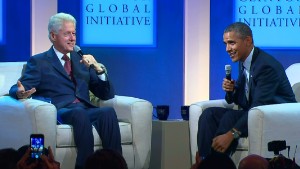
Clinton asks Obama about Obamacare
With so many politicians fighting over this controversial legislation, the details about how to sign up may have gotten a little lost. So, here is what Braun-Gross and the other millions of Americans like her need to know when open enrollment starts on Tuesday:

The deadline

Open enrollment runs between October 1 and March 31. You don't have to sign up that first day. In fact, you may want to put off paying for it until December. Plans bought through the exchanges won't start until January 1.
December 14 is the cut-off date if you want your plan to start January 1. Open enrollment runs through March 31. If you sign up in January or February your coverage will start the following month.
When Massachusetts rolled out a similar health insurance mandate in 2007, the biggest spike in enrollments came in the two months before people would be charged a penalty for not having coverage, according to Jon Kingsdale who ran the state's health benefit exchange then. He also noticed many people came back to the state's website to evaluate the potential plans more than once.
The experts advise you to take your time. Comparison shop to find the policy that works best for you.

Where to start

If you have Internet access, start with the Web. Beginning October 1, Healthcare.gov will have the information you need. The government site will link to where you sign up for the program.
Go first to "get insurance." That tab will get you to a page that will walk you through whatever marketplace is available to you. Some states set up their own; the federal government runs the rest. On this site you can also compare the plans available in your area.
You may also want to see if you are eligible for Medicaid here. So far, 26 states are moving toward expanding who is eligible for the federal government-funded health program for lower income families and individuals.

You can also enroll by mail.
The government has set up call centers to help people with open enrollment. Call 1-800-318-2596 (TTY: 1-855-889-4325). The number is staffed around-the-clock. Information is available in more than 150 languages.

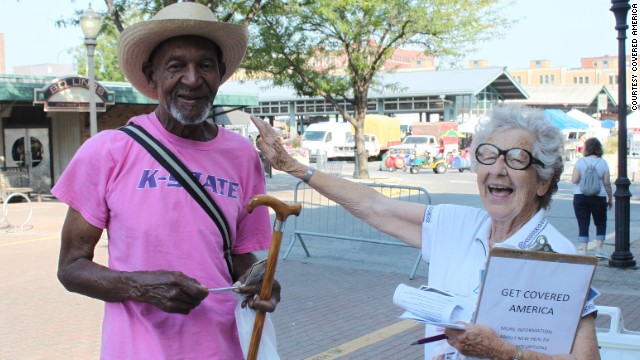
There will also be specially trained advisers in communities. These "navigators," as they are known, can help you in person. There will also be federally authorized marketplace-designated organizations. They will be based in community health centers, at the mall, in drug stores and in churches.

Depending on state law, traditional agents and insurance brokers can also help.
Unlike brokers or agents, navigators and marketplace-designated organizations can educate you about the plans, but they cannot tell you which plan to pick. Their advice is free. If someone who is a navigator or a federally designated organization tries to charge you, it is a scam.

The health care plans

There are several. The bronze level will be basic, silver midrange, while gold and platinum will be higher-end. There will also be a catastrophic option. Catastrophic insurance covers three doctor visits per year at no cost and preventive care such as screenings and vaccines. This plan will carry a higher deductible.

All plans bought through the exchanges must offer the same coverage benefits. All offer free preventive care. Nearly all cap out-of-pocket costs to $6,350 and $12,700 per family. No one can be turned away. No one will be penalized because of their gender (women often paid more in the old insurance system). Only smokers may be penalized in some plans and some older people may pay more.

The cost

What varies with the plans is cost. Some will carry higher deductibles. Some ask for higher co-pays. Costs will vary based on where you live. If you want to see what your bill may look like, be sure to check out the calculator the Kaiser Family Foundation put together. The nonpartisan foundation's tool provides an estimate of your costs depending on where you live and based on the kind of coverage you pick.

The majority of people uninsured today can find a policy for $100 or less a month, taking into account subsidies and Medicaid eligibility, according to the Obama administration.
No matter what the cost, you will pay a monthly premium, and may also have a co-pay or be asked to meet a deductible when you go to the doctor or hospital.

The good news is if you go through the exchanges rather than buy directly from an insurance company, you will likely be eligible for tax breaks and subsidies to pay for your insurance. The assistance is available to those with incomes of up to four times the federal poverty level -- this year, that's $45,960 for an individual or $94,200 for a family of four -- and will be calculated on a sliding scale.
You can take this subsidy as a tax credit or the government will pay the insurance company directly.

Exemptions

Some Americans will be exempt from the health insurance mandate, according to the Congressional Budget Office.
These are people who can't afford it: For example, people who make so little they don't have to file a tax return are exempt.
People who are in this country without authorization are exempted, as are members of a federally recognized American Indian tribe who are eligible for services through an American Indian health care provider and people with certain religious beliefs that conflict with acceptance of the benefits of private or public insurance.
 People with certain hardships are also exempt; so are people in states that don't expand Medicaid.

If you don't get insurance

If you don't sign up to get insurance, you'll list that on your 2014 tax return.
The fee for the first year is $95 per adult and $47.50 per child (up to $285 per family), or 1% of your income, whatever is higher.

In 2015, it jumps to 2% of your income, or $325 per adult and $162.50 per child. In 2016, it will jump to 2.5% of your income.
While some may rather pay the small fee the first year than pay premiums that would cost more, experts predict most people will sign up for insurance.
"I think the penalties should be higher, but they are still enough to make the law effective," said

Jonathan Gruber an economist at MIT who was an architect on both the Massachusetts and U.S. health plans. "In Massachusetts we had people flooding in to sign up. You know Americans are almost uniquely law-abiding people, we massively overpay our taxes in terms of what people do in the rest of the world. When you say it is the law to have health insurance I think people will get health insurance."

Enroll America, a nonpartisan nonprofit that is helping educate Americans about the program, said it has had a positive response once people have an explanation of what's coming.
"For the most part the people we encounter are thrilled that they will finally have health care," said

Enroll America's Jessica Barbara Brown. "For many people this will be the first time they have ever had access to care. This can be life changing."
Brown cautions that while we will keep hearing about October 1, really this is a "marathon" and people should take as much time as they need to figure out which plans are best for them.
Amy Braun-Gross said she will be doing just that.
"Once Obamacare is in effect, I am excited that I will not have to worry about pre-existing conditions any longer," Braun-Gross said. "I will be getting quotes online and making some phone calls to get the ball rolling for my husband and me."

Labels: ,

Today Is The First Day To Sign Up For ObamaRomneycare. Enjoy!


Labels:

Wednesday, September 25, 2013

Texas Senator Ted Cruz Is Still "Cruising" On The Senate Floor In A Marathon Speech Against ObamaRomneycare. Cool Cruz!

More?: watch below:

Labels:

Tuesday, September 03, 2013

Kentucky Judge Gives Governor Steve Beshear OK To Continue Implementation Of Obamacare In State.


Kentucky Medicaid expansion, healthcare exchanges proceed with judge's approval

What’s next

• Lead plaintiff David Adams said he will ask the Kentucky Supreme Court to hear his appeal of both rulings.
• On Oct. 1, Kentuckians may enroll in insurance plans for 2014 offered through the state’s healthcare exchange, which is called kynect.

FRANKFORT, KY. — The Beshear administration’s plans to expand Medicaid and begin enrollment in Kentucky’s new healthcare exchange survived their first court challenge Tuesday.
In separate rulings, Franklin Circuit Judge Phillip Shepherd upheld both decisions by Gov. Steve Beshear intended to expand access to healthcare to 640,000 uninsured Kentuckians under the Affordable Care Act, also known as Obamacare.

The rulings swept aside the legal challenge by Nicholasville Tea Party activist David Adams and others who insisted that Beshear’s actions must be ratified by the legislature.
“The Kentucky Supreme Court has held that this legislative power may be delegated to the executive branch of government in these circumstances, so long as there are standards governing the exercise of discretion, and the legislature retains the authority to withdraw the delegation,” Shepherd wrote in the case upholding the expansion of Medicaid. “Those conditions are clearly met here.”

Beshear said in a statement that his administration’s work to expand Medicaid and establish the exchange have not been slowed by the litigation.
“All our systems to assist Kentuckians in finding quality, affordable health insurance will be ready to go on Oct. 1,” Beshear said in a statement.

But Adams said he will appeal both orders and ask that the case go directly to the Kentucky Supreme Court.
“Gov. Beshear had to lie in court and break state law in order to pretend to have authority specifically denied him by statute, case law and the constitution. He needed a judge to ignore these facts,” Adams said in a statement. “Now he needs four of seven who are elected in districts whose people understand and oppose Obamacare. I don’t think he can do it.”

Sen. Julie Denton, a Louisville Republican who chairs the Senate Health and Welfare Committee, said she foresees major problems as the Beshear administration proceeds.
“My overriding concern from the beginning is that Medicaid is not being run well now; they’ve never gotten their hands around managed care,” Denton said. “Do we really want to expand a broken system? And do we want the government to take on another new project like the healthcare exchanges?”

But Rep. Jimmie Lee, D-Elizabethtown and chairman of the House Health and Welfare Committee said, “I agree with the court because the governor did these things with powers we delegated to him. I’m pleased, because to lose the cases would have really been a disruption.”
Late last year, Beshear issued an executive order starting the healthcare exchange — an online marketplace where Kentuckians and small businesses can shop for insurance policies by comparing benefits, costs and provider networks.

The 2013 General Assembly failed to ratify that move. Its failure to act meant that Beshear’s order became invalid 90 days after the session. However, Beshear issued a new order this summer, making substantial changes in the structure of the exchange, Shepherd said in his ruling.

The judge said Beshear was well within his authority in issuing the order, “which does nothing more than implement a very specific section of a federal law that has been upheld against constitutional challenge by the U.S. Supreme Court.”

Beshear announced last May that Kentucky would expand its Medicaid program under the Affordable Care Act — a move expected to bring an additional 308,000 newly eligible Kentuckians into the health-insurance program for the poor and disabled.

At the time he announced expansion, Beshear said a study by the Cabinet for Health and Family Services predicted that the move will create nearly 17,000 jobs and have a $15.6 billion impact on the state between 2014 and 2021.

In the case challenging the Medicaid expansion, Adams challenged the constitutionality of a state law in which the General Assembly established a policy to “take advantage of all federal funds that may be available for medical assistance.”

But Shepherd said this directive by the legislature was not an arbitrary delegation of its powers to the governor.
“The goal of the statute, self-evidently, is to provide for expanded healthcare benefits for indigent citizens, which is clearly a valid state objective,” Shepherd wrote. “It is up to the legislature to determine the means by which this goal is to be reached.”

Labels: , ,

Friday, August 16, 2013

Beshear opens Kentucky's 'Obamacare' insurance call center

(In above picture, Connie Harvey, Xerox Corp. vice pres. and chief operating officer, spoke during the grand opening of the kynect contact center at a Xerox call center 2436 Fortune Dr. in Lexington, Ky., Friday, August 16, 2013. The contact center, a major component of the Affordable Care Act, is operated through a contract with Xerox. This makes Kentucky one of the first states in the country to open a toll-free health benefit exchange call center for its citizens. Gov. Steve Beshear is on the right).

About 640,000 Kentuckians will soon be signing up for health insurance, and Gov. Steve Beshear said Thursday a new call center answering questions about the process is an important first step.
"This is an exciting morning because today we reach an important milestone in our historic effort to bring affordable healthcare coverage to every single resident of the commonwealth of Kentucky," Beshear said at a press conference.

Beshear said some 640,000 Kentuckians will be signing up for insurance through the website KyNect.com that is supported by the call center. Beshear said roughly half will qualify for Medicaid and most of the rest will qualify for subsidized rates on health insurance.

The call center, which opened Thursday at Fortune Drive in Lexington, currently employs 60 people. Operators, contracted through Xerox, are answering questions about how to sign up for insurance as part of the Affordable Care Act. People can begin to sign up for coverage Oct. 1 via the website. No coverage becomes effective until Jan. 1. Everyone, with very limited exceptions, is required to have health insurance by March.

Beshear said Kentucky is ahead of many states in the process to access health insurance. He said the call center is important in helping people seeking insurance for the first time navigate a complicated system.

He said those who are still complaining about "Obamacare" should accept the fact that it is the law.
"Some people inexplicably see the decision to participate as a referendum on the popularity of our president. I don't agree with them," Beshear said. "I believe these critics are blinded by a disease that I would call knee-jerk partisan politics, and that disease clouds their vision and quite frankly I sometimes wonder if it doesn't harden their hearts a bit."

BY THE NUMBERS640,000: Kentuckians eligible for health insurance
332,000: Those eligible for Medicaid
60: Current call center employees
100: Center employees expected by Oct. 1
5,000: Call center daily volume when fully staffed
2: Languages available at the center, English and Spanish
107: Languages available through a translation service
SOURCE: Kentucky Cabinet for Health and Family Services
Mary Meehan: (859) 231-3261. Twitter: @bgmoms. Blog: BluegrassMoms.com.

Labels:

Monday, July 22, 2013

TEA Party Activist David Adams Files Kentucky Bar Association Complaint Against Kentucky Governor Steve Beshear, Accuses Him Of Falsifying Court Evidence Over Obamacare.

Press release:

Kentucky Gov. Steve Beshear's latest court filing in his bid to force Kentucky into the ObamaCare Medicaid expansion without proper legislative approval may now put his license to practice law in jeopardy.

Tea Party activist David Adams, plaintiff in two lawsuits opposing Beshear's questionable ObamaCare actions, filed a Kentucky Bar Association complaint for evidence Beshear filed in the case which clearly was manufactured to advance his pro-Obama agenda.

"All you have to do is look," Adams said. "Beshear did this to himself and he should be held accountable."

Editor's note: go here to read the Bar complaint.

Labels: ,

Wednesday, July 03, 2013

The Obama Administration Continues To Play Politics With #Obamacare, Postpones Major Implementation Until Well After The Midterm Elections Have Passed.

Obamacare ‘employer mandate’ delayed until 2015


After months of conferring with fretful employers, the Obama administration announced Tuesday that it will delay enforcement of the Affordable Care Act’s so-called “employer mandate” until 2015.

A signature provision of the federal health care overhaul, the contentious measure would have required firms with more than 50 full-time employees to provide affordable health insurance or face a penalty of $2,000 per employee in 2014, when the law was set to be fully implemented.

Ninety-six percent of U.S. businesses have fewer than 50 employees and are already exempt from the mandate. The nonpartisan Kaiser Family Foundation estimates that 94 percent of firms with 50 to 199 employees already provide coverage – as do 98 percent of firms with 200 or more workers.

But those numbers don’t tell the whole story. Employees who work 30 or more hours per week are considered “full time” under the law. But one-third of nearly 900 employers surveyed last month by the health care consulting firm Mercer don’t offer coverage to those employees.

These businesses and those with workforces hovering near the 50-employee threshold faced a host of important financial decisions about their health plan enrollment that had to be made by October, when employees begin choosing their coverage for 2014.

The deadlines have left firms large and small scrambling for answers and somewhat bewildered by the red tape, potential costs and tax implications of the new provision. Hamstrung by funding shortages that have limited its outreach efforts, the Obama administration has not done a good job of explaining the legislation to employers.

In announcing the delayed enforcement of the employer mandate, White House special adviser Valerie Jarrett said employers needed more time to comply with the new rules, which require extensive reporting about the specifics of employees’ coverage in order to assess the penalties.
“As we implement this law, we have and will continue to make changes as needed,” Jarrett said in a statement. “In our ongoing discussions with businesses we have heard that you need the time to get this right. We are listening.”

The delay is the latest and most significant move by the Obama administration to slow enactment of the sprawling health care overhaul, which is seen as the major legislative achievement of the Obama presidency.

Although born of conservative ideology, the law has been opposed from the outset by Republicans and has only survived thanks to a surprising 2012 Supreme Court decision that upheld the law’s “individual mandate,” which requires that most Americans obtain health insurance or pay a penalty for noncompliance.

News of the decision to delay the employer mandate sparked unanimous praise from the business community.
“The administration has finally recognized the obvious – employers need more time and clarification of the rules of the road before implementing the employer mandate. . . . We applaud the administration’s step to delay this provision,” said Randy Johnson, senior vice president of labor, immigration and employee benefits at the U.S. Chamber of Commerce.

The National Retail Federation, which has called for the regulations to be delayed, was equally appreciative.
“The one-year delay will provide employers and businesses more time to update their health care coverage without threat of arbitrary punishment,” said Neil Trautwein, the federation’s vice president and employee benefits policy counsel. “We appreciate the administration’s recognition of employer concerns and hope it will allow for greater flexibility in the future.”

Republicans on Capitol Hill weren’t nearly as gracious about the administration’s concession. House Speaker John Boehner called the law a “train wreck” that should be repealed.
“I hope the administration recognizes the need to release American families from the mandates of this law as well,” said Boehner, R-Ohio. “This is a clear acknowledgment that the law is unworkable, and it underscores the need to repeal the law and replace it with effective patient-centered reforms.”

House Majority Leader Eric Cantor, R-Va., also called for the law’s repeal “before any more damage is done to our economy or the health care families depend on. The best delay for Obamacare is a permanent one.”
“Rather than continuing to delay the predictable pain until another election day has passed, we should scrap this entire law,” Cantor said.

Read more here: http://www.mcclatchydc.com/2013/07/02/195634/obamacare-employer-mandate-delayed.html#storylink=cpy

Labels: , ,

Thursday, May 23, 2013

David Adams And TEA Party Win Legal Standing Challenge To His Suit Over Kentucky's Obamacare Health Benefit Insurance Exchange.

Tea party wins round in health care reform lawsuit

The tea party won the first round Thursday in a lawsuit that questions the legality of the Kentucky Health Benefit Exchange that Gov. Steve Beshear set up last year by executive order.
Franklin County Circuit Judge Phillip J. Shepherd refused to dismiss the lawsuit, as had been requested by attorneys for the state.


The state argued unsuccessfully that taxpayers don't have legal standing to challenge the legality of the Kentucky Health Benefits Exchange, which is intended to help uninsured people arrange insurance coverage under the federal health care overhaul.
Tea party activist David Adams said he felt certain that argument would be rejected.
"I found that to be offensive," he said Thursday after learning of Shepherd's decision. "This says the people have the right to question the acts of the governor when the governor is violating the Constitution. It's very simple."
Beshear spokeswoman Kerri Richardson said she'd issue a statement later Thursday.

Adams filed the lawsuit last month, claiming Beshear created the exchange without necessary legislative approval. Adams wants Shepherd to order work on the exchange to cease.
In court earlier this week, attorneys for Beshear and the tea party argued over whether taxpayers had legal standing to challenge the health benefit exchange, prompting a pointed question from Shepherd that may have foreshadowed his ruling.

"I'm just wondering here," Shepherd said, "if they don't have standing, who does?"
Tea party activists in Kentucky have been sharply critical of Beshear's decision to operate a state health insurance exchange, saying taxpayers are picking up the bill for an unnecessary government entity. Beshear administration attorney Patrick Hughes said the lawsuit is essentially an improper attempt to use the court system to address "a purely political question."

Kentucky is one of 17 states that the U.S. Department of Health and Human Services has approved to build their own exchanges to provide one-stop shopping for health insurance. Open enrollment begins Oct. 1, and the exchange starts operation next Jan. 1. Some 21 states have declined to set up exchanges, which means federal authorities will set up and operate the new insurance marketplaces for them.
Startup costs for the Kentucky exchange are being covered by federal grants, but the state will be responsible for all funding beginning in 2015. Kentucky has already received $252 million from the federal government to set up the exchange.

Labels: ,

Wednesday, May 15, 2013

Kentucky's Governor Introduces State's Obamacare Health Exchange Website.

Beshear introduces website for Kentucky's health insurance exchange

FRANKFORT — After expanding the state's Medicaid program last week to about 308,000 Kentuckians, Gov. Steve Beshear launched several public education and awareness efforts Wednesday to help 332,000 more Kentuckians in need of health care coverage.
Beshear said Kentucky's Health Benefit Exchange, a key part of the federal Affordable Care Act is preparing to open for business. During a Capitol news conference, the Democratic governor introduced a website, Kynect.ky.gov, to help Kentuckians learn more about the program.
Beshear signed an executive order last July to create the exchange, which is an online marketplace offering health insurance plans for Kentuckians.

Beshear said the program, called "Kynect: Kentucky's Healthcare Connection," will help more than 600,000 Kentuckians get health care coverage through private insurance plans, Medicaid or the Kentucky Children's Health Insurance Program.
"Individuals, families and small businesses will be able to use Kynect for one-stop shopping to find health coverage and determine if they are eligible for payment assistance or tax credits to help cover costs," Beshear said.
Carrie Banahan, executive director of the state exchange, said open enrollment for those seeking to buy insurance begins Oct. 1 and runs through March 31, 2014. Insurance coverage can begin as soon as Jan. 1. Open enrollment for small businesses also begins Oct. 1, but businesses with fewer than 50 employees will be able to enroll employees in plans offered through Kynect at any point after that date.

During open enrollment, Kentuckians will be able to compare and select health insurance plans and find out whether they qualify for Medicaid, KCHIP or other programs by using the Kynect website.
With Kynect, individuals can find out if they qualify for payment assistance and special discounts on deductibles, copayments and co-insurance. Small businesses can enroll their employees in health plans, and businesses with fewer than 25 employees may qualify for tax credits.
A toll-free hotline will open Aug. 15 at 1-855-4kynect or 1-855-459-6328.

Kentucky has received $252 million from the federal government to set up the exchange.
The development and operation of the state's exchange will be financed entirely with federal dollars until Jan. 1, 2015, after which it will be wholly financed with revenues it generates, Beshear said.
Beginning in January, most Americans will be required to have health insurance or pay a penalty. Under the law, no one can be denied coverage due to a pre-existing health condition or lose coverage because a family member gets sick.

Insurance companies will be prohibited from charging women more than men for the same coverage, and children will be allowed to stay on their parents' health insurance plan until they reach the age of 26.
Banahan said five insurance companies — Anthem, Humana, Bluegrass Family Health, United Healthcare and Kentucky Health Cooperative — have filed notice of intent to offer programs on the Kentucky exchange.
They have not yet filed rates, she said.

Tea Party activist David Adams of Jessamine County has filed a lawsuit in Franklin Circuit Court challenging the legality of the state's health exchange.
Adams claims that Beshear did not receive "proper approval" from the Kentucky General Assembly to create the exchange.
A hearing is scheduled for Monday in Franklin Circuit Court to consider a request by Beshear to dismiss the lawsuit.
Beshear said Wednesday he is not concerned about the lawsuit.
"I think it is very clear that as governor I have the authority under the Constitution and the laws of Kentucky to implement this exchange," he said.

Labels: ,

Monday, August 13, 2012

MITT ROMNEY PIVOTS AND EBRACES OBAMAROMNEYCARE, REVEALING ONCE AGAIN HE'S A PHONY!

Romney Pivots, Embraces Romneycare Again
By GREGORY J. KRIEG

Mitt Romney secured the GOP presidential nomination in spite of the health care law he passed in Massachusetts. That legislation, which mandated people buy insurance, was the basis for the federal law that the candidate has pledged to move toward repealing on his first day as president.

But now, to the chagrin of some conservatives, Romney spokeswoman Andrea Saul has suggested twice in two days that if a steelworker laid off by a company managed by Bain Capital had lived in Massachusetts, his wife, who died without insurance, would have been covered.

Saul was responding a pro-Obama super PAC's assertion that Romney's action in the private sector cost a man his job and that policies supported by the Republican's campaign would leave someone in a similar position in comparable danger, when she stepped into the tar pit.

"To that point," Saul old Fox News anchor Bill Hemmer, when quizzed about the ad, "if people had been in Massachusetts, under Governor Romney's health care plan, they would have had health care."

Cue a collective anxiety attack among the conservatives Romney worked so hard to court to during the primaries.

"OMG. This might just be the moment Mitt Romney lost the election. Wow," RedState.com editor-in-chief Erick Erickson tweeted after he read about Saul's interview.

What follows in his feed is a triumph of the conservative will, a spasm of denunciations that begins with the spokeswoman, then quickly climbs the ladder to the candidate himself.

But as much as the news cycle has spun on the idea that Saul somehow slipped and lost the narrative thread, recent statements (and some from a bit further back) from Romney on health care policy and overhaul indicate that the former Massachusetts governor might be trying to take some air out the issue.

Romney spoke Wednesday about health care in Des Moines, Iowa. One could be forgiven for thinking he sounded like a candidate who has grown increasingly reluctant to dismiss his most significant and successful public policy achievement.

"At the top of my list of programs we don't need is one that costs $100 billion a year I'm going to get rid of and that's Obamacare," he said to cheers at a rally.

But then he made a telling pivot. "And by the way," he added, "that doesn't mean that health care is perfect. We've got to do reforms in health care and I have some experience doing that, as you know. And I know how to make a better setting than the one we have in health care."

Obama's health care plan, which was crafted in the Romney plan's image, puts similar safety nets in place.

Rush Limbaugh -- as he does -- weighed in today, declaring that "Republicans and conservatives are not unified and we cons [conservatives] don't think the Republican establishment know what they're up against."

"The question I have is, after Andrea Saul's response, is they are just accepting the premise here?" Limbaugh asked, referencing the Romney's campaign's not doing as much as might be expected to pull back from her comments.

Dial it back a bit further, though, to Romney's March appearance on "The Tonight Show" with Jay Leno, and the context begins to take shape.

The candidate told Leno, who was teasing him about Obama's health care plan, that "people who have been continuously insured, let's say someone's had a job for a while but insured, then they get real sick and they happen to lose a job, or change jobs, they find, 'Gosh, I've got a pre-existing condition, I can't get insured. I'd say, no, no no. As long as you've been continuously insured, you ought to be able to get insurance going forward."

And according to a wide range of surveys, the American people would tend to agree. When the Obama law is unwrapped and presented piecemeal, pollsters have routinely found the angel's in the details.

The law, as a whole, might split the country, but when translated into relatable terms (even if they are a bit dubious, as in the Priorities USA spot) like it was for Saul, it becomes more difficult to attack.

The extension of benefits for workers who've been laid off or seen their companies go under was a key provision in the legislation Massachusetts enacted in 2006.

For now, if Romney can convince the 47 percent of the country that supports the president's health care law that he has no intention of kicking out its most popular provisions, and that he has "some experience" in dealing successfully with similar issues, Saul's "gaffe" could be re-interpreted as a shrewd political coup.

Labels: , ,

Monday, July 23, 2012

HOW YOU WILL BE AFFECTED BY OBAMAROMNEYCARE (THE AFFORDABLE CARE ACT).

How will the coming changes in health care coverage affect you?

Now that the U.S. Supreme Court has upheld the controversial law to overhaul health care, millions of Americans are asking the same question: How will it affect me?

“It’s going to affect everyone,” said Jodi Mitchell, executive director of Kentucky Voices for Health, a coalition of health departments and groups. “... People want to know what’s in it.”

The Courier-Journal consulted health care experts, government agencies and others to answer some of the common questions people are raising about the law, which runs more than 2,000 pages, and how it could affect their daily lives, whether they are young people, working-age parents, senior citizens or business owners.

Experts agree the changes will be sweeping. Some provisions have already taken effect, such as one allowing young adults up to age 26 to stay on a parent’s health plan, and another forbidding health insurers from excluding a child from coverage because of a pre-existing health condition. Adults with pre-existing conditions can get insurance through a federal program until 2014, when insurers won’t be able to exclude them, either.

Many more rules are scheduled to take effect in 2014, including one of the most controversial — the individual mandate that people carry health insurance or pay a penalty.

That mandate — which the Supreme Court upheld under the federal government’s taxing power — is at the heart of a divisive debate that continues today.

Many health officials, including Dr. LaQuandra Nesbitt, director of the Louisville Metro Department of Public Health and Wellness, say the law is a step in the right direction, affirming that access to health care is a right and not a privilege. But many others say it’s an assault on individual freedom. Senate Minority Leader Mitch McConnell, R-Ky., has called it “the single worst piece of legislation passed in modern times.”

Earlier this month, the GOP-controlled U.S. House passed a bill to repeal the law, known formally as the Affordable Care Act. But Dewey Clayton, a political science professor at the University of Louisville, said he sees the law surviving in the long run.

“Politics will come into play,” he said. “... But many Americans will say, ‘It’s law; now let’s move on. We’ve got too many other pressing problems.’ ”

Still, some health care experts said it’s unclear what could happen if the political landscape changes.

“That’s the big mystery of the 2012 election,” said Susan Zepeda, president and chief executive officer of the nonprofit Foundation for a Healthy Kentucky, which strives to address unmet health needs of Kentuckians. “If the balance of power in Congress changes, if the person in the White House changes, it’s conceivable that Affordable Care may be repealed.”

Another issue that remains hazy is how many states will expand the Medicaid program for the poor and disabled, as called for in the health care overhaul. The Supreme Court’s June 28 decision said the federal government can’t withhold current Medicaid funds from states that refuse to comply with the expansion.

Officials in seven states have announced plans to opt out of the Medicaid expansion. Kentucky and Indiana officials have not yet decided. States that opt in face a financial burden down the road, since the federal government will reduce its contribution to the expansion costs from 100 percent to 90 percent in 2020 and later years.

“In light of the Supreme Court’s decision, a great deal of questions remain about how an expansion of Medicaid would affect Kentucky, particularly the long-term cost to the state after the three-year period of full federal cost coverage expires,” said Audrey Tayse Haynes, secretary of the Kentucky Cabinet for Health and Family Services.

Zepeda pointed to figures from the Kaiser Family Foundation showing more Kentuckians stand to gain than those in other states from a Medicaid expansion, with about 57 percent of uninsured adults becoming newly eligible for coverage.

As states sort out these unknowns, here are answers to some common questions about the law:

All residents
All residents

Q:
What is the “individual mandate”?

A: The mandate means virtually all Americans must have health insurance by 2014 or pay a penalty.

If you already have insurance, you’ve met this requirement. The Congressional Budget Office says about 80 percent of the 272 million Americans under 65 would be insured in 2014 even without the new law.

For individuals, the penalty for not having insurance will start at $95 a year, or up to 1 percent of income, whichever is greater. By 2016, it rises to $695 a year for individuals and $2,085 for families, or 2.5 percent of income.

The law includes a carrot as well as a stick — namely, subsidies to help working-class and middle-class people buy private insurance through new, state-based health insurance exchanges beginning in 2014. These will be available to people with incomes up to 400 percent of the federal poverty level, or about $90,000 for a family of four.

Those who make less will get a bigger subsidy. For example, a family of four earning $33,075 a year will have to pay 4 percent of their income, or $1,323 a year, for insurance premiums — with the remainder paid by the subsidy.

According to the U.S. Census Bureau, an average of 15.5 percent of Kentuckians, or 663,000 residents, lacked health insurance from 2008-2010; and 12.8 percent of Hoosiers, or 813,000 people, were uninsured during that period.

Q: Might I become eligible for Medicaid under the new law?

A: That’s unknown, since Kentucky and Indiana leaders haven’t yet decided whether to participate in the Medicaid expansion. If they opt in, starting in 2014, Medicaid would effectively cover people who earn up to 138 percent of the federal poverty level, which is currently $15,415 for an individual and $31,809 for a family of four.

Q: I haven’t been able to get insurance because of a pre-existing condition. Will the law change that?

A: For the next couple of years, people can get coverage from a federal program known as the Pre-Existing Condition Insurance Plan, or PCIP, which began in July 2010. This is separate from a state high-risk pool known as Kentucky Access, which has existed for more than a decade.

To qualify for a PCIP, you must be a U.S. citizen who has been uninsured for at least six months and have a pre-existing condition or have been denied coverage because of a health condition. To apply, go to www.pcip.gov. There are three types of plans — standard, extended and HSA — and the monthly premium for a 45- to 54-year-old getting a standard plan in Kentucky is $226; in Indiana it’s $284.

Both the PCIP and Kentucky Access will stop operating in 2014, when the law says people can no longer be denied coverage or charged higher premiums for having a pre-existing condition.

Q: How will I find health insurance?

A: New state health insurance exchanges will start up in 2014 as marketplaces for affordable coverage — primarily serving individuals buying insurance on their own, and small businesses.

Kentucky Gov. Steve Beshear issued an executive order on Tuesday creating an exchange in Kentucky, but Indiana officials have not committed to creating one, with Gov. Mitch Daniels saying it will be up to the next administration to decide whether to do so. If a state doesn’t create its own exchange, the federal government will step in to establish and operate one.

According to Kentucky’s Office of Health Policy, open enrollment for Kentuckians will begin in October 2013 and will take effect in January 2014.

Beshear said the exchange will enable eligible individuals to receive tax credits and subsidies to help reduce the cost of premiums, and qualify small businesses for tax credits through the Affordable Care Act.

Although the exchange is still being developed, Mitchell of Kentucky Voices for Health said she expects it to be not only a place to shop for insurance, but a clearinghouse for insurance-related information that people can call to ask questions.

The federal government says the exchanges will help make insurance more affordable by offering people choice, and encouraging competition among insurers on a level playing field. People will also be able to find out if they qualify for programs to make insurance more affordable, such as advance payments of the premium tax credit or Medicaid. Also, a Small Business Health Options Program, SHOP for short, aims to give small businesses the clout big businesses have when they buy insurance.

Q: Are any new taxes included in the new law?

A: The Supreme Court upheld the individual mandate under the federal government’s ability to tax, so the penalty for not having health insurance can be viewed as a tax. Also, starting in 2013, people who earn more than $200,000 a year and married couples earning more than $250,000 will pay a Medicare payroll tax of 2.35 percent, up from 1.45 percent. Such high earners will also face a new, 3.8 percent tax on unearned income such as dividends.

Starting in 2018, the law imposes a 40 percent excise tax on the portion of most employer-sponsored health coverage worth more than $10,200 a year for individuals and $27,500 for families, which some have dubbed “Cadillac” plans.

Though there are rumors to the contrary, the law does not contain a real estate sales tax or real estate transfer tax.

Young people
Young people

Q: I’ve heard that young adults can stay on their parents’ health insurance plans. What are the details?

A: Health plans that offer coverage for dependents now must allow young adults to stay on their parents’ insurance until their 26th birthday. So far, 35,600 young adults in Kentucky and 38,400 in Indiana have gotten insurance this way.

At this point, the provision applies to individual plans and new employer-based health plans. If young adults can get insurance through their own jobs, their parents’ existing employer-based plans don’t have to cover them. But that changes in 2014, when they can stay on a parent’s plan even if their employers offer coverage.

Call your insurance company, insurance agent or your company’s human resources department to find out when during the year an adult child can be added to your policy.

Q: What if my young adult child gets married or becomes pregnant?

A: Married young adult children up to age 26 still qualify for coverage. And if the parent’s plan covers pregnancy, the child’s pregnancy should be covered. But the plan doesn’t have to cover the new baby.

Q: How does the law affect coverage for young children still at home?

A: Insurers can no longer exclude children from coverage because of pre-existing conditions, impose lifetime limits on how much they’ll cover or drop them from coverage when they get sick. Starting in 2014, new health plans must cover basic pediatric services as well as dental and vision needs for kids.

Working-age

adults
Working-age adults

Q:
Will my premiums rise if I get my insurance through my job?

A: That’s unclear. The Kentucky Department of Insurance points out that employers will continue to make decisions about plans offered to employees.

“There are some folks who believe that insurance companies have already factored in the higher-risk patients” they’ll have to cover under the law, said Zepeda, of Foundation for a Healthy Kentucky. “I wouldn’t expect premiums to continue to go up.”

Jose Fernandez, an assistant professor of economics at the University of Louisville, said the law’s impact on premiums is largely unknown at this point. He said there are provisions that could push up premiums slightly, such as the elimination of lifetime caps on coverage, but there are also provisions that could push them down, such as the influx of many more healthy young people.

Q: I get my insurance through a large company. Besides possibly affecting my premiums, how else might the law affect me?

A: New health plans have to cover preventive services, such as cancer screenings, with no co-pays. They also can’t drop you from health coverage if you get sick, and they cannot deny your child coverage because of a pre-existing condition. If you have a Health Savings Account, you can keep it.

In 2014, insurers won’t be able to deny coverage to adults with medical conditions or refuse to renew their policies. They also won’t be able to limit coverage based on pre-existing conditions or charge higher rates to people in poor health.

Q: What if I work for a small company?

A: If you have insurance through your job, the provisions listed above would apply. Also, starting in 2014, insurance deductibles for small groups (50 employees or less) will be limited to $2,000 for individuals and $4,000 for families.

If you work for a small company that doesn’t offer health insurance, there’s no requirement that the company start offering it. Employers with fewer than 25 employees may be able to get tax credits for providing coverage, but they don’t have to do so and aren’t penalized if they don’t.

If you don’t get insurance at work, you can shop for it in the insurance exchange.

Q: Are there any insurance plans that aren’t affected by the new law?

A: Yes. The law “grandfathers” existing health insurance plans, meaning that if a person was enrolled in a plan on March 23, 2010, that plan has been grandfathered. It’s unclear whether changes to a health plan, such as what is covered, make it a new plan rather than a grandfathered plan.

Grandfathered plans are exempt from the vast majority of insurance changes under the law, but they do have to abide by some, such as bans on lifetime limits on essential health benefits, bans on health plan terminations and the requirement to allow children to stay on parents’ insurance up to age 26.

In 2014, grandfathered plans also won’t be able to make someone wait more than 90 days to be eligible to enroll in health benefits, and those providing group coverage won’t be able to exclude people based on pre-existing conditions.

Senior

citizens
Senior citizens

Q: Does the law affect my Medicare coverage?

A: Medicare benefits haven’t changed, but co-pays have been eliminated for preventive services such as mammograms and prostate cancer screenings, a provision that has affected more than 1.2 million seniors in Kentucky and Indiana so far. Seniors can still enroll in a Medicare HMO or Medicare Advantage plan, but the Advantage programs could change.

The law reduces payments to Medicare Advantage plans while rewarding high-quality plans. Experts say insurers may respond by charging higher premiums, reducing their network of health care providers or getting out of the market altogether.

Q: Does the law address the “doughnut hole” gap in Medicare drug coverage?

A: In 2010, seniors who had reached the doughnut hole (which in 2010 meant they had spent $2,830 on prescriptions) got $250 rebates. Last year, people in the doughnut hole received a 50 percent discount on brand-name drugs. In 2020, the doughnut hole is slated to be eliminated, although seniors will still have to pay the standard 25 percent of drug costs until they reach the threshold for Medicare catastrophic coverage, when co-pays drop to 5 percent.

Business

owners
Business owners

Q: How does the law affect me if I own a small business?

A: A lot depends on the size of your business.

Small firms with fewer than 50 employees aren’t required to offer health insurance.

Very small businesses can get tax credits — although just for two years. Those with fewer than 25 full-timers and average annual wages of less than $50,000 and which pay at least half the cost of health insurance for employees are eligible for credits. Through 2013, the maximum credit is 35 percent for small businesses and 25 percent for small charities — rising to 50 percent and 35 percent, respectively, the next year.

“It’s a way of giving a Groupon to these small employers,” said U of L’s Fernandez.

But there’s a potential penalty for small businesses with more than 50 employees. They’ll have to start paying a fee in 2014 if any employee receives a federal subsidy to buy private coverage through the health insurance exchange. The penalty, which rises over time, initially equals $2,000 multiplied by the number of workers in excess of 30. For example, an employer with 75 workers would pay a penalty of $90,000, or $2,000 times 45 employees.

Q: What if I own a larger business?

A: Businesses with fewer than 100 workers will be able to buy coverage starting in 2014 through a program in the health insurance exchange called Small Business Health Options, or SHOP.

Starting in 2014, businesses with more than 200 employees must automatically enroll workers in a health plan and won’t be able to impose a waiting period of more than 90 days. Employees can opt out if they choose.

Also, large employers could face penalties if their coverage is deemed inadequate or too expensive, with premiums higher than 9.5 percent of a worker’s income.

Before 2014, firms may be eligible to take part in an early retiree program that provides financial assistance to employers and unions to help them cover early retirees ages 55 to 64. The U.S. Department of Health and Human Services has received applications from more than half of Fortune 500 companies, all major unions, and government entities in all 50 states. Approved sponsors in Kentucky include Brown-Forman., Humana and others. The program ends in 2014, when early retirees can find insurance through the exchanges.

Sources: Kentucky Voices for Health, Foundation for a Healthy Kentucky, Kentucky Department of Insurance, Kentucky Cabinet for Health and Family Services, U.S. Department of Health and Human Services, the White House, Kaiser Family Foundation, The Urban Institute, Congressional Budget Office, Congressional Research Service, U.S. Census Bureau, National Association of Realtors, Internal Revenue Service

Labels: ,

Wednesday, July 18, 2012

IN KEEPING WITH THE DICTATES OF Federal Patient Protection And Affordable Care Act (OBAMAROMNEYCARE), KENTUCKY'S GOVERNOR STEVE BESHEAR ESTABLISHES HEALTH BENEFITS EXCHANGE.

Beshear creates health-benefit exchange; legislative panel rejects rental space
By Jack Brammer

FRANKFORT — Gov. Steve Beshear signed an executive order Tuesday to create an online marketplace offering health insurance plans for Kentuckians, as called for in the federal Patient Protection and Affordable Care Act.

Shortly afterward, the Kentucky General Assembly's Capital Projects and Bond Oversight Committee rejected, on a 4-3 partisan vote, a proposal by the Cabinet for Health and Family Services to spend $294,540 for rental space to accommodate 210 employees associated with the health insurance exchange.

Despite the vote, Finance Secretary Lori Flanery has the authority to override the oversight committee's decision and let the rental project proceed. Beshear said late Tuesday that Flanery will sign the lease "in order to make sure that we don't fall behind on implementation and run the risk of a federal takeover of our health benefits exchange."

Sen. Bob Leeper, an independent from Paducah who usually sides with Republicans, said he could not support the rental lease because he was reluctant to put his name on anything related to "Obamacare."

He also expressed concern that the state has not yet determined whether health plans in the exchange will cover abortion and contraception. The state will have to notify the federal government of its plans by Sept. 30.

Rep. Jim Wayne, D-Louisville, said the exchanges are vital to the federal health care act, which he said was based on a Massachusetts law that was approved under then-Gov. Mitt Romney, the expected Republican nominee for president.

Leeper and three Republicans voted against the lease, and three Democrats supported it.

Senate President David Williams, R-Burkesville, appeared before the committee to question the health cabinet's authority to spend money on the lease.

He criticized the Beshear administration for not briefing legislative leaders about his executive order "on one of the biggest public policy changes in the history of the commonwealth."

Williams said the state has "no idea" how much it will cost to operate the health benefit exchange when it becomes fully operational in 2015. Health cabinet officials told the oversight committee they had no information on the future costs of the exchange.

Several interest groups, including the Kentucky Hospital Association, the Kentucky Chamber of Commerce, Kentucky Voices for Health, and Anthem Blue Cross Blue Shield, have said they want the state, not the federal government, to operate the exchange.

"Kentucky is more in tune with the unique regional and economic needs of our citizens, as well as the health insurance needs of individuals, Kentucky small businesses and non-profits," Cabinet for Health and Family Services Secretary Audrey Tayse Haynes said in a statement.

Kentucky's exchange "will provide one-stop shopping" for Kentuckians who have had difficulty finding or qualifying for affordable health insurance, Beshear said.

The exchange, which is to begin operation Jan. 1, 2014, also will assist employers with enrolling workers in health plans, enable individuals to receive tax credits and subsidies for their insurance premiums and qualify small businesses for tax credits, Beshear said.

Beshear, a Democrat, said in May that he would issue an order establishing a state-operated exchange, provided that the U.S. Supreme Court upheld the federal law, which it did on June 28.

Beshear's order creates the Office of the Kentucky Health Benefit Exchange, which will oversee implementation and operations of the exchange. It will be housed in the Cabinet for Health and Family Services.

Beshear said the state has received three federal grants totaling $66.4 million for planning and implementation of a state exchange.

The development and operation of the state's exchange will be financed entirely with federal dollars until Jan. 1, 2015, after which it will be wholly financed with revenues it generates, Beshear said.

Rodney Murphy, executive director of the health cabinet's administrative and technical services office, told the legislative oversight committee that the federal government will pay 95 percent of the lease for 29,454 square feet of space at 12 Mill Creek Park in Frankfort through June 30, 2015.

The remaining costs will be paid through revenues it generates, he said.

State deputy budget director John Hicks said the legislative-enacted state budget set aside $5 million in Medicaid funds that could be used for the exchange, but Williams disagreed.

Murphy said the lease agreement has a 30-day cancellation notice in case the federal health care act is repealed or changed. He said the vendor who is selected to operate the exchange probably will bring in about 100 employees. The rest will have contracts with the state.

Beshear selected Carrie Banahan to be executive director of the new state office.

A career state employee with experience in the Department of Insurance and the Department of Medicaid Services, Banahan currently is the executive director of the Office of Health Policy within the cabinet. She will remain acting executive director of health policy until a permanent replacement is named.

Beshear's order also sets up an 11-member Exchange Advisory Board. He expects to announce appointments to the advisory board by mid-August.

Read more here: http://www.kentucky.com/2012/07/17/2261526/beshear-creates-health-benefit.html#storylink=cpy

Labels: ,

Thursday, July 12, 2012

U. S. HOUSE VOTES TO REPEAL OBAMAROMNEY CARE FOR THE 33RD TIME. LARGELY SYMBOLIC ONLY, IF YOU ASK ME BECAUSE THE SENATE WILL IGNORE VOTE OR POTUS BARACK OBAMA WILL VETO ACTIONS! WATCH VIDEO.