Google
 
Web Osi Speaks!

Wednesday, July 27, 2011

Kentucky Is The 4Th Higest In The Nation For TOXIC Pollution, Ohio Is Number One.

Check it out here.

Labels:

Thursday, July 21, 2011

eNVIRONMENTAL pROTECTION aGENCY kEEPS wATER qUALITY gUIDELINES, pLEASING eNVIRONMENTALISTS aND aNGERING pOLLUTERS.

EPA keeps surface mining water quality guidelines
By LAWRENCE MESSINA

CHARLESTON, W.Va. (AP) -- The U.S. Environmental Protection Agency urged tight limits Thursday on the practice of dumping waste into Appalachian valley waterways from the surface mine blasting of mountain ridges above.

The new guidelines advise the agency's officials who review water-related permits for mountaintop removal and other kinds of surface mining in a six-state region, while limiting certain key provisions to West Virginia and Kentucky. They are also aimed at state regulators who issue those permits based on water quality criteria. Revising standards issued in April 2010, the guidelines cite "extensive scientific evidence" and more than 60,000 public comments received during an eight-month period.

The EPA wrote that "The fundamental premise of the Guidelines is that no discharge of dredged or fill material may be permitted" under any of three conditions: if the nation's waters would be "significantly degraded;" if it causes or contributes to violations of a state's water quality standard; or "if a practicable alternative exists that is less damaging to the aquatic environment."

Industry groups and state regulators blasted Thursday's announcement while environmental groups welcomed it as a strong first step.

"Of course we hoped for more, but given the current political climate in Washington, we have nothing but praise and gratitude for EPA finalizing this guidance and reaffirming the scientific support for their actions" said Cindy Rank of the West Virginia Highlands Conservancy in a statement. "Now more than ever the waters of Appalachia and we who depend on them need EPA to stand strong on our behalf."

The National Mining Association denounced the guidelines as a "jobs destroyer," continuing the industry argument that the Obama administration's approach to mining-related environmental issues is harming this sector of the still-struggling economy.

"Alarmed at EPA's actions in Appalachia and other regions of the country, 121 organizations, representing a broad cross-section of economic activity throughout the United States, successfully called upon the House of Representatives last week to re-establish the legal authorities of states under the Clean Water Act," the group noted in its statement.

The 61-page document repeatedly refers to its non-binding nature, and says they carry no legal power or replace any existing regulations or rules. But West Virginia Environmental Protection Secretary Randy Huffman called the standards an example of why his state has sued EPA over mining policies. He cited how the agency has 30 days to review state-issued water quality permits, and can block one by requiring resolution of any concerns it may have.

"We know from experience that they will use this very document to object to a permit," Huffman said Thursday. "We believe that this is a continuation of illegal rule-making, de facto rule-making."

Agreeing with EPA's scientific findings, environmental groups called on the federal agency to go further in the face of such stances by state-level regulators.

"But clearly, as long as mountains are being blown up and leveled in Appalachia, streams are being buried with mining waste, and waters for communities are being contaminated, the Obama administration has more work to do in making sure that the government is following the (U.S.) Clean Water Act," said Joan Mulhern, senior legislative counsel for the group Earthjustice. "This guidance is only as protective as its implementation and the test will be whether we finally see compliance with the Clean Water Act which prohibits significant degradation of our nation's waters."

---

Online:

U.S. EPA guidelines: http://tinyurl.com/43mx5cb

Labels:

Thursday, June 23, 2011

The Obama Administration Plans To Release 60 Million Barrels Of Oil From The Strategic Petroleum Reserve, And It's Not Election Time Yet! Watch Video, And Read More Below.


Read more below (to continue reading, follow linked caption):

White House announces plan to tap oil reserve

The Obama administration joins with other nations to release 60 million barrels of oil from the Strategic Petroleum Reserve — with the U.S. getting 30 million of those.

Labels: , ,

Sunday, June 12, 2011

Al Cross: Kentucky Political Friends Of Coal Often Squeal Loudly, Generating More Noise Than Sense, More Heat Than Light.

Clear the air over the EPA's actions
Written by Al Cross

FRANKFORT, Ky. — To hear Kentucky politicians of both parties tell it, the Environmental Protection Agency should be renamed the Economic Destruction Agency. But their recent rhetoric has gone far beyond reality and obscured it.

At issue are EPA's tougher enforcement of the Clean Water Act against strip mines, particularly those on Eastern Kentucky mountaintops, and its new regulations under the Clean Air Act, which will force utilities to rely less on coal and charge more for electricity.

That's a double squeeze on the coal industry, involving significant issues for the state as a whole, not just in its two coalfields. Low electric rates allowed by handy coal reserves have helped Kentucky's economy, and the Appalachian forest, biologically unique to this continent, is where our rivers and water supplies begin.

Those issues deserve rational, fact-based discussion. But when the coal industry is squeezed, its political friends often squeal loudly, generating more noise than sense, more heat than light.

Republican Senate Leader Mitch McConnell did that June 1 in a red-meat speech to the Kentucky Coal Association, in which he declared, “The EPA's real goal here is not to see the Kentucky coal industry comply with its boatload of regulations and red tape. It is to see the Kentucky coal industry driven out of business altogether.”

There's no probative evidence of that. Under President Obama, who made clear in his campaign that he would get tougher on coal, mainly because of its contribution to global warming, EPA is enforcing laws and regulations that have long been on the books but circumvented by the industry and friendly regulators.

EPA's approach is open to some questions, because it created an uncertain regulatory environment during a recession, and its tough, new water-quality standard may encourage mining of Eastern Kentucky forest that has only been timbered, never strip-mined, thus discouraging re-mining and better reclamation of old mine sites.

But such significant details are usually obscured in the debate over mountaintop removal and other coal-related issues such as human-caused climate change (a scientific reality, we were told again last week, this time by three groups of agricultural scientists). That was most recently illustrated by nominally Democratic state Rep. Jim Gooch of Providence, in the state's western coalfield. ...

We will have to keep using coal, and try to make it cleaner. But spare us the simplistic poppycock.

Editor's note: To continue reading, just click on the linked titled.

Labels: ,

Tuesday, April 26, 2011

Kentucky's Three GOP Governor Candidates Bow To "King" Coal, Do Tap Dance In Support Of Environment Devastating Mountaintop Coal Removal.

GOP hopefuls OK with mountaintop removal mining
By ROGER ALFORD

FRANKFORT, Ky. (AP) -- Companies that unearth coal using a divisive mining procedure known as mountaintop removal have nothing to fear from Kentucky's three Republican gubernatorial candidates.

Louisville businessman Phil Moffett, state Senate President David Williams and Jefferson County Clerk Bobbie Holsclaw have proven supportive of the mining method that involves blasting away Appalachian mountaintops to get to the coal.

Moffett referred to the procedure as "mountaintop development" in response to a questionnaire from The Associated Press, suggesting that it creates flat land that can be used for commercial purposes. Williams promised to stand up to federal environmental regulators whom he accused of trying to shut down mining in Kentucky. And Holsclaw said she would appoint a commission to look at the future of coal.

Being pro-coal is a must in heavily Republican southeastern Kentucky, home to many of the state's 18,000 coal miners and a key battleground heading into the May 17 primary election.

Mountaintop removal, which involves blasting away Appalachian peaks to unearth coal, has been under fire from environmentalists, some of whom have gone to court to try to stop it while others have worked through state legislatures to try to ban it.

Meanwhile, Republican leaders have been steadfast proponents, criticizing federal regulatory agencies for actions that they say have kept some coal companies from opening new mines or expanding existing ones.

"Mountaintop development is vital to Kentucky's economy," Moffett said. "Local regulation of environmental concerns should be sufficient to handle most if not all environmental issues," Moffett said.

Williams said he and his running mate, Agriculture Commissioner Richie Farmer, will fight to prevent the U.S. Environmental Protection Agency from instituting policies harmful to Kentucky's mining industry.

"We believe coal mining, under present laws and regulations, can be done in an environmentally responsible way," Williams said in response to the AP questionnaire. "But the Obama Administration is using unelected bureaucrats at the Environmental Protection Agency to shut down coal mining operations in Kentucky, and we think our state needs a governor who will stand up and fight them every step of the way."

Holsclaw called for Kentucky leaders to work together to help the coal industry.

"I believe mountaintop mining can be done safely without damage to our streams, but it is not always done that way," she said. "I want to establish a blue ribbon commission on the future of coal. The commission can move forward in a bipartisan fashion to suggest what regulations if any more are warranted and what areas should we oppose federal regulations. Right now, I don't think state government has enough good answers or ideas for this vital industry."

Labels: , ,

Friday, April 22, 2011

Happy Earth Day. Frankly, Everyday Should Be Earth Day. In My Book It Is!

Labels:

Thursday, March 17, 2011

Talking About Kentucky, United Mine Workers Of America Rescinds Its Endorsement Of Galbraith/Riley Ticket.

FOR IMMEDIATE RELEASE:

UMWA Rescinds Endorsement

Frankfort, Kentucky March 17, 2011 - Yesterday we met with representatives of the United Mine Workers of American who informed us they intend to officially rescind their endorsement of our candidacy. Although disappointed by their choice, the UMWA’s sudden reversal serves as even more proof of the desperate need for change in Frankfort.

The Coal Industry has for too long been allowed free reign over the process of government via their continued buy offs and bullying tactics carried out by partisan elected officials. Be assured, this event serves only to motivate us further in our stand against the continued corruption that has driven Kentucky to economic and environmental despair.

We remain adamantly opposed to the process of Mountain Top Removal. We are just as adamant in our support of unions, worker’s rights and mine safety.

Even though the leadership of the UMWA has chosen to change teams in the middle of the game, we are undaunted in our support of the rank and file members of the UMWA. As elected officials, we will strive to provide for the health, safety and welfare of all working Kentuckians.

We would like express our gratitude and to thank all those UMWA members who still stand with us – the ones who represent the proud, fearless tradition that lives large in the hearts of Kentucky’s working men and women.

Gatewood Galbraith
Dea Riley
Contact:
Ralph Long
859-797-3008
ralph@ralphlong.com

Labels: , ,

Nuclear Power Is TOOOOOOOOOOOOOOOOOOOOOOOO Risky. Yes, I Said It!

Japan's crisis intensifies debate: Is nuclear worth it?
By Rob Hotakainen and David Lightman

WASHINGTON — As the six-day nuclear crisis worsened in Japan on Wednesday, China announced it was suspending construction to rethink its designs for nuclear plants, following the lead of Switzerland and Germany.

In Washington, Energy Secretary Steven Chu, a big proponent of nuclear power, told Congress that the Obama administration wants money to help power companies build from six to eight new plants in the U.S.

And opponents of nuclear power were busy arguing that the health risks facing Japanese citizens are much worse than the public is being led to believe.

They're all examples of a debate rekindled by the frightening blasts at the Fukushima Daiichi nuclear complex in Japan: For the first time since the nuclear disasters at Three Mile Island and Chernobyl, people around the globe are trying to figure out the pros and cons of nuclear safety.

Committees are meeting on Capitol Hill, with politicians demanding answers. And experts on all sides are offering their views. Such a roiling debate, combined with escalating costs, stopped the industry cold in America three decades ago.

Now comes the question: Is the potential catastrophe in Japan making this debate any different? Or will President Barack Obama's view that nuclear power is needed to combat climate change be enough to change the dynamics?

The debate intensified Wednesday as the U.S. urged all Americans living within 50 miles of the damaged plant in Japan to evacuate. And the chairman of the Nuclear Regulatory Commission said Japan faces an increasingly dangerous situation.

Opponents are seizing the moment — but Washington lawmakers have been reluctant to promise any change in policy.

Senate Commerce Committee Chairman Jay Rockefeller, D-W.Va., for instance, noted that while he's "not a big fan of nuclear power . . . We don't make (decisions) out of emotion; we don't make them because of a catastrophe in another country. So before we make the decision, let's be thoughtful about it."

Nevertheless, foes of nuclear power pushed hard.

In a conference call with reporters, Ira Helfand, past president of the Physicians for Social Responsibility, said a meltdown of each reactor at Japanese plant would be the equivalent of "a thousand Hiroshimas."

He said that people living as far away at Tokyo are at risk, and that any assurance that the total dose of radiation is low "needs to be taken with a grain of salt." He said that people could be susceptible to cancers if they inhale or ingest just a small dose of radiation, even if they're far away from an exploding reactor.

"No dose is safe," he said.

"It's an extremely serious situation," added David Richardson, an associate professor of epidemiology at the University of North Carolina.

Most health officials say there's no health risk to Americans, because any radioactive material would disperse by the time it reached the West Coast.

And Marvin Resnikoff, a nuclear physicist and an international consultant on radioactive waste issues, said it would take from five to eight days for any radioactive material to get across the ocean.

"This is going to be a continual problem for months," he noted.

Chu went to Capitol Hill for the second consecutive day to sell the president's plan, which seeks $36 billion in loan guarantees for new power plants as part of the White House's 2012 budget.

He dismissed a suggestion by Democratic Rep. Henry Waxman of California that Congress needs to hold hearings on the safety of the industry, saying an internal assessment will "naturally occur" as U.S. officials study what went wrong in Japan.

"We're always increasing the safety of our reactors," Chu said.

While the $36 billion would pay for six to eight nuclear plants, Chu said the White House hopes for the industry to have enough confidence that the private sector would then step in and pay more of the costs.

He said the administration hasn't changed its thinking on nuclear power since the crisis in Japan began unfolding.

Most lawmakers aren't eager to pursue policy changes, either. While they want more information about the safety of nuclear power in the U.S., and are proposing more hearings, most stopped short of proposing any legislation.

"I don't think there should be a mad rush to say nuclear power generation is bad. I think we need a timeout and take a look at it," said Senate Majority Leader Harry Reid, D-Nev. "And I'm sure we'll have the experts tell us some things we could have done better."

Senate Republican leader Mitch McConnell, R-Ky., took a similar view. "I just don't think we ought to, in the wake of a crisis, be making long-term decisions about America's energy sufficiency."

Part of their dilemma is that a lot of lawmakers have nuclear plants in their districts and states, plants that have long operated efficiently and provided much-needed power — with no emissions. About 20 percent of the country's electricity is generated by nuclear plants.

House Minority Whip Steny Hoyer, D-Md., who calls himself a "strong supporter of nuclear power" and has a nuclear plant in his southern Maryland district, was also circumspect.

"I think (the Japan crisis) is a wake-up call to look very seriously at the safety of (nuclear) reactors," he said, "to make sure that they are, in fact, as secure as we can possibly make them from natural disasters, as well as manmade attacks on them."

As a result, Reid said, "There will be some activity, some hearings. I think there's nothing wrong with that as it relates to nuclear power. But I think the main issue is let's not be rambunctious. Let's take our time."

Meanwhile, Sen. Patty Murray, D-Wash., the chairwoman of the Senate Veterans' Affairs Committee, urged the military to carefully track radiation exposure for U.S. service members who are aiding in the Japanese relief efforts.

She said that 17 military personnel who had been aboard three helicopters were exposed to low levels of contamination when they flew through a plume of radioactive contaminants.

In the past, Murray said, the military has had a "track record of failing to monitor exposures," which has made it difficult for previous generations of veterans to receive benefits.

Read more: http://www.mcclatchydc.com/2011/03/16/110569/japans-crisis-intensifies-debate.html#ixzz1GrkVISef

Labels: , ,

Tuesday, March 15, 2011

The WORST Has Come To Japan: Nuclear Radiotion Leak. Pray For Japan.


Read more here.

Yes, pray for Japan.

Labels:

Friday, March 11, 2011

Our Thoughts And Prayers Are With Japan Earthquake And Pacific Coast Tsunami Victims. Watch Video.


You can follow the tsunami LIVE below:

Labels:

Thursday, February 24, 2011

We Applaud Gatewood Galbraith For Taking A Strong Stance Against Mountaintop Removal Of Coal.

Galbraith comes out against mountaintop removal
By ROGER ALFORD

FRANKFORT, Ky. (AP) -- Independent Gatewood Galbraith differentiated himself Thursday from all other Kentucky gubernatorial candidates by taking a strong stand against mountaintop removal mining.

Galbraith told The Associated Press that the practice has caused "unsurpassed environmental damage" in Appalachia and should not be permitted to continue.

"It is too large a cost for the extraction of coal," he said Thursday. "I'm for coal, but mountaintop removal is the most wasteful, unsustainable method for extracting coal. It destroys an ecological heritage that belongs to all of Kentucky."

The Lexington attorney making his fifth run for governor is the only candidate who has voiced opposition to mountaintop removal.

Democratic Gov. Steve Beshear, who is seeking re-election, has called for the U.S. Environmental Protection Agency to ease regulations that are hampering the mining method, as have three Republican gubernatorial candidates: state Senate President David Williams, Louisville businessman Phil Moffett and Jefferson County Clerk Bobbie Holsclaw.

Galbraith won an early endorsement from the United Mine Workers of America. He said it shows that Kentucky's working class is unhappy with the state's political leadership. He also said his opposition to mountaintop removal isn't a condemnation of the coal industry and especially not of coal miners.

Mountaintop removal has long been a heated issue in Kentucky politics, especially so in recent weeks with demonstrators rallying at the state Capitol in opposition to the practice. A handful of those demonstrators staged a four-day sit-in at Beshear's office before walking out to the cheers of some 1,200 mountaintop removal opponents gathered on the Capitol lawn.

In mountaintop removal mining, forests are cleared and rock is blasted apart to get to coal buried underneath. The leftover dirt, rock and rubble usually is dumped into nearby valleys. Coal operators say it is the most effective way to get to the coal, while environmentalists say it does irreversible damage.

In a letter to supporters, Galbraith and runningmate Dea Riley said they "stand on the side of mountains."

"Specifically, the practice of mountaintop removal has reduced valuable coal jobs, caused unsurpassed environmental damage and continues to stifle overall economic development efforts," they wrote.

"We cannot undo the injustice and travesties of the past," they said, "but we can promise our dedication to a new future."

Labels:

Tuesday, October 12, 2010

The Obama Administration Lifts Moratorium On Deepwater Offshore Oil Drilling. Let's See ... Oh, It's The Election, Stupid!


Feds lift moratorium on deepwater offshore oil drilling
Margaret Talev and Renee Schoof

WASHINGTON — The Obama administration Tuesday lifted a moratorium it imposed on deepwater offshore oil drilling in July during the BP oil spill in the Gulf of Mexico, saying that new rules should make it safer.

While all work isn't expected to resume immediately, the timing of the announcement — six weeks ahead of schedule and three weeks before congressional and state elections — could give Democrats a boost at the polls.

The moratorium has been blamed for thousands of lost jobs in an already damaged economy and posed a potential drag on some Democrats' election prospects.

Both candidates in the Louisiana Senate race, Republican David Vitter and Democratic Rep. Charlie Melancon, have criticized the moratorium. Sen. Mary Landrieu, D-La., has been holding up Senate confirmation of President Barack Obama's nominee to head the Office of Management and Budget, Jacob Lew, to protest the moratorium.

Interior Secretary Ken Salazar, announcing the move in a teleconference, said he expects criticism from both camps: industry interests who say the new standards are too onerous and drilling opponents who say the moratorium is being lifted too soon.

To the latter group, Salazar said, "The truth is, there will always be risks associated with deepwater drilling. But we have now reached a point where we have significantly, in my view, reduced those risks."

Even as the nation seeks more clean energy alternatives, Salazar said, "We will still need oil and gas from the Gulf of Mexico to power our cars, our homes and our industry. But we can and we will make the drilling of oil and gas in the Gulf of Mexico safer than it ever has been."

The new rules, issued two weeks ago, include requirements for worst-case planning requirements and third-party verification that blowout preventers and other equipment work properly. Oil rig operators also will be required to show they have enough materials to contain oil in the case of a blowout.

The BP spill began on April 22 after an explosion on the Deepwater Horizon rig, and it took until July 15 to stop the flow of oil from a well nearly a mile underwater. An estimated 4.1 million barrels of oil flowed into the Gulf in the nation's worst manmade environmental disaster.


Read more: http://www.kentucky.com/2010/10/12/1476466/feds-lift-moratorium-on-deepwater.html#ixzz12BgXzzky

Labels:

Tuesday, October 05, 2010

Tennessee Governor, Phil Bredesen, Petitions To Block Mountaintop Mining. Good For Him.

Tennessee Governor Petitions to Block Mountaintop Mining
NASHVILLE, Tennessee

For the first time a state government has submitted a petition to the federal government to set aside state-owned mountain ridgelines as unsuitable for coal surface mining.

Tennessee Governor Phil Bredesen and the state of Tennessee Friday filed a petition with the Department of Interior's Office of Surface Mining, asking that the agency initiate a study and public dialogue on the suitability of state-owned lands in the Northern Cumberland Plateau for surface mining, also called mountaintop removal mining.

Much of the 500 miles of ridgeline covered by the petition is part of Tennessee's 2007 Connecting the Cumberlands conservation initiative and is located in Anderson, Campbell, Morgan and Scott counties.

"These lands are managed by the state of Tennessee for hunting, hiking, wildlife viewing and other outdoor recreational activities," said Governor Bredesen. "This petition asks the federal government to help us prevent mining on these ridgelines to protect their important cultural, recreational and scientific resources."

The ridgelines covered in the petition include about 40 percent of the total North Cumberland Wildlife Management Area and Emory River Conservation Easement Tract.
These mountains in the Royal Blue wildlife management area are covered by Tennessee's petition. (Photo © Melinda Welton courtesy SELC)

The areas covered by the petition include the Royal Blue, Sundquist and New River units within the North Cumberland Wildlife Management area.

The petition area also includes the Emory River Tract Conservation Easement, which is managed by Frozen Head State Park for public use. A portion of the Cumberland Trail also traverses the area.

Bredesen said, "Surface mining along these mountain ridges would be inconsistent with uses specified in the Wildlife Management Area and Conservation Easement, including hunting and recreation, depriving future generations of these special resources."

If approved by the Secretary of the Interior, the petition would prevent surface mining of coal for 600 feet on each side of the ridgelines in the designated area, creating a 1,200 foot ridgetop corridor encompassing approximately 67,000 acres.

This area contains most of the older forest that exists in the area as well as an array of habitats and wildlife, some of which are considered rare or threatened.

Upon receiving a complete petition, the federal Office of Surface Mining must prepare an Environmental Impact Statement. This process provides an opportunity for public input prior to a decision being made about whether to accept the Lands Unsuitable for Mining petition under provisions of the Surface Mining Control and Reclamation Act of 1977.

The petition does not affect underground mining or permits for surface mining that have already been issued; nor does it cover any areas in which historical mining has resulted in water pollution from acid mine drainage where re-mining could help improve environmental impacts.

Environmental groups applauded the governor's move to protect Tennessee ridgelines.

Don Barger, Southeast regional director for the National Parks Conservation Association, said, "The governor's petition seeks to balance coal extraction with conservation. Clearly in the future we will be burning less coal. This petition requests that the same future includes these ridgelines intact for recreation and tourism they will provide for future generations of Tennesseans."

Deborah Murray, senior attorney for the Southern Environmental Law Center, said, "This is really good news for Tennesseans and those who enjoy the outstanding natural heritage of this part of the state, and who rely on clean water for their drinking water, fishing, or other uses."

"Governor Bredesen has consistently demonstrated his commitment to protecting Tennessee's environment," Murray said. "We strongly support his action today to protect the ridgelines and put these public lands off-limits to destructive mining practices such as mountaintop removal mining."

Much of the land covered in the petition is upstream from the Big South Fork National River and Recreation Area. The environmental groups say surface coal mining in this area threatens aquatic life, including more than 13 federally threatened or endangered aquatic species found in the Big South Fork River.

Pollution from resource extraction, including expanding surface coal mining, is impacting water quality in the park, the groups warn.

The federally managed Big South Fork area and connected state lands offer camping, whitewater rafting, kayaking, canoeing, hiking, horseback riding, mountain biking, hunting and fishing.

In a 2005 report by the National Park Service, these recreational activities represented a $10 to $16 million economic benefit annually to the region.

The North Cumberlands petition is similar to a Lands Unsuitable for Mining petition granted in 2000 that covers Fall Creek Falls State Park and the watersheds that flow into it.

In 1990, the Office of Surface Mining designated the Flat Fork watershed adjacent to Frozen Head State Park as unsuitable for mining, in part to protect the unique resources of the park.

Labels:

Tuesday, July 06, 2010

British Petroleum (BP) Learns The American Way, Wastes NO Time Preparing For Oil Spill Lawsuits.

BP wasted no time preparing for oil spill lawsuits
Marc Caputo

TALLAHASSEE — In the immediate aftermath of the Deepwater Horizon disaster, BP publicly touted its expert oil clean-up response, but it quietly girded for a legal fight that could soon embroil hundreds of attorneys, span five states and last more than a decade.

BP swiftly signed up experts who otherwise would work for plaintiffs. It shopped for top-notch legal teams. It presented volunteers, fishermen and potential workers with waivers, hoping they would sign away some of their right to sue.

Recently, BP announced it would create a $20 billion victim-assistance fund, which could reduce court challenges.

Robert J. McKee, an attorney with the Fort Lauderdale firm of Krupnick Campbell Malone, was surprised by how quickly BP hired scientists and laboratories specializing in the collection and analysis of air, sea, marsh and beach samples — evidence that's crucial to proving damages in pollution cases.

Five days after the April 20 blowout, McKee said, he tried to hire a scientist who's assisted him in an ongoing 16-year environmental lawsuit in Ecuador involving Dupont.

"It was too late. He'd already been hired by the other side," McKee said. "If you aren't fast enough, you get beat to the punch."

At the same time it was bolstering its legal team, BP was downplaying how much oil was spewing from the Deepwater Horizon well — something that lawyers say is likely to be a critical factor in both court decisions and government fines.

"The rate we're seeing today is considerably lower, considerably lower, than what was occurring when you saw the rig on fire," BP America's chief operating officer, Doug Suttles, told NBC Nightly News on April 25, three days after the Deepwater Horizon sank.

BP would stick to low estimates of how much oil was leaking — first, 1,000 barrels a day, then 5,000 barrels a day — until the Obama administration stepped in under congressional pressure nearly a month later and set up an independent commission of scientists to determine the flow.

In mid June, the so-called Flow Rate Technical Group said the well is gushing 35,000 to 60,000 barrels a day — but the delay and imprecision of that estimate will make how much oil escaped into the gulf a matter of debate for years.

In the early days after the spill, BP also included a liability waiver in the paperwork it gave fishermen and prospective workers. That prompted Florida Attorney General Bill McCollum, among other Gulf coast officials, to warn citizens: "Do not sign waivers."

A BP spokesman said the company doesn't comment on lawsuits and "won't be giving running commentaries" on the number of court actions it's facing.

In Florida, however, the company has hired Akerman Senterfitt, the state's largest law firm and a major player in the state's capital. It's a strategy the company is likely to follow throughout the Gulf. When President Barack Obama met with BP executives last month to set up the $20 billion fund, BP was represented by Jamie Gorelick, who was deputy attorney general under President Bill Clinton.

The grounds for the suits and potential suits run the gamut: federal pollution and environmental laws, general maritime law, international treaties, public-nuisance codes and even state and federal racketeering laws.

Under the federal Oil Pollution Act, state and local governments can sue to collect lost tax revenues and the cost of increased governmental services as a result of a spill. That can include lost sales and hotel room taxes in tourist-dependent towns all across the Gulf coast.

So far, an estimated 250 court suits have been filed against BP, and more come each day. Florida Gov. Charlie Crist has tapped Steve Yerrid, one of the so-called "dream team" of lawyers that won Florida $11.3 billion in a landmark tobacco suit, to assemble a new legal crew to provide advice. Counties and cities are hiring lawyers as well.

Brian O'Neill, a lead attorney in the 1989 Exxon Valdez oil spill case, said the Gulf Coast states and residents should realize it will take years to clean the waters, the marshes and the beaches. Three years after the Alaska spill, salmon stocks started to return, he said, but the herring population was "exterminated'' in Prince William Sound.

Exxon spent $2 billion and cleaned up just 8 percent of the oil, he said. And the oil never left.

"You're going to have to wait years to figure out what happened and what is happening," O'Neill said. "The oil goes where you don't expect it. You will clean a beach and the oil will just come back in a few months or a year. The beaches could be oiled and oiled again."

The fight against the oil company is likely to take decades.

"Exxon has shown you can stiff those you hurt and tie them up in court for 21 years and nothing bad happens to you," he said. "You hope BP won't do that."

St. Petersburg crabber Howard Curd is expecting a long battle. His blue- and stone-crab fishing grounds in Tampa Bay were killed off when Hurricane Frances blew out a retaining wall at a phosphate pit that spewed acidic water into the bay.

The fertilizer company, Mosaic, persuaded a trial court and an appeals court that Curd and other fishermen couldn't sue because they didn't own the seafood that was potentially killed, so they weren't technically damaged.

Finally, six years later, the state Supreme Court on June 17 reversed lower-court opinions and said Curd and other fishermen could sue. Curd now has to prove damages in court. The ruling in his favor arrived just in time for Florida's 23,422 commercial and charter fishermen who could use the new ruling to press pollution claims against BP.

Curd said crabbing in the bay is bouncing back, but the BP spill is depressing seafood sales even though the oil is nowhere near the western coast of Florida.

He's prepared to sue BP, but harbors no illusions about facing a big corporation in court.

"They've got all the money, and all the attorneys and all the experts on retainer. It really doesn't cost them anything," Curd said. "It's like it's cheaper to pay their attorneys and fight in court than paying the money to people they hurt and doing the right thing."

Read more: http://www.kentucky.com/2010/07/03/1335406_p2/bp-wasted-no-time-preparing-for.html#ixzz0suj9ANjh


Read more: http://www.kentucky.com/2010/07/03/1335406/bp-wasted-no-time-preparing-for.html#ixzz0suiv8UwR

Labels:

Sunday, June 27, 2010

Ashley Judd Speaks The TRUTH About Environmental Devastation Of Appalachia Caused By MountainTop Coal Removal, Profitters HOWL.

Ashley Judd's mountaintop mining criticism called off base

PRESTONBURG, Ky. -- Ashley Judd has angered some eastern Kentucky officials with a speech to the White House Press Club denouncing mountaintop removal.

WYMT-TV reports Judd said she was proud of being from eastern Kentucky but said mountaintop removal is destroying the Appalachian Mountains she loves.

State Sen. Johnny Ray Turner told the television station he thinks Ashley Judd's comments were "off base."

Turner said mountaintop removal has been good for eastern Kentucky and its economy.

Turner and Prestonsburg tourism officials said they are inviting Judd to play a round of golf at the Stonecrest Golf Course in Floyd County, built on a reclaimed mine site, and discuss her concerns with them.

Labels: ,

Tuesday, June 15, 2010

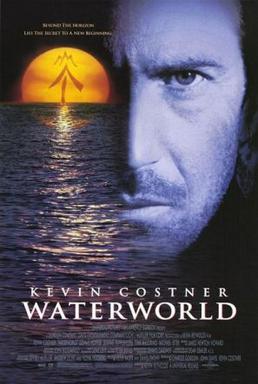
BP Enlists Kevin Costner's Help In Gulf Coast Oil Cleanup. OK, I Get It: Kevin Costner Starred In "Waterworld". Right!


Read more here.

Labels:

Monday, June 07, 2010

Lexington Herald Leader: Let BP Bear True Costs Of Oil Spill. I Agree.

Let BP bear true costs of oil spill
Congress should remove the cap on liability protecting oil firms

Should BP and other oil companies be required to pay for economic damage caused when their rigs and tankers spring giant leaks?

Most people would say yes, that businesses that take the risk of drilling five miles under the ocean should pay the consequences when things go wrong.

That's the discipline of the marketplace, after all.

Yet three times in recent weeks, Republicans in the U.S. Senate have blocked attempts to change a law that caps oil companies' economic liability at $75 million.

That amount doesn't begin to compensate for the economic damage that's already been done to fisheries, tourism, tax revenues and other drilling operations which have been halted until more is known about the cause of the BP blowout.

It's less than half of the $169 million that the oil and gas industry spent lobbying Congress last year. And it's pocket change to BP, which earned $6 billion in just the first three months of this year.

Senate Republican Leader Mitch McConnell of Kentucky is among those cautioning against lifting the $75 million cap. He has said the danger would be raising the cap too high which he said would limit competition among drillers, leaving only giants such as BP able to afford to drill in the Gulf. Without Gulf oil, McConnell also cautioned, "you'd have $14 gasoline."

Which raises an interesting question: What is the true cost of gasoline?

We know what we pay at the pump. But who else is paying and how much? How many of the costs have been externalized by the industry?

Wikipedia defines external costs as those not transmitted through prices and incurred by a party who did not agree to the action causing the cost.

Count the gooey tar that started washing up on the white sand beaches of Alabama and Florida last week as an external cost of gasoline.

Also, the clean-up workers sickened by breathing fumes from the spill and the chemicals used to disperse it.

The long-term costs of the BP spill are still incalculable, including the harm to human health from the infiltration of wetlands by oil.

Federal law already requires companies to pay all the cleanup costs, which will be huge. The oil industry also pays 8 cents a barrel into a fund from which $1 billion will be available to compensate for economic damages from the BP spill.

Economic victims can also try suing in state courts. It only took 20 years for Alaskans to wring economic damages out of Exxon for the Valdez disaster.

BP has promised to compensate those who have been harmed economically.

That promise would carry more weight if the $75 million cap were lifted, which Democrats in both chambers of Congress are trying to accomplish.

The full cost of this spill will be borne by someone. If it's not the oil industry, it will be individuals and businesses whose livelihoods and health have been damaged, taxpayers or both.

Leaving the $75 million cap in place buffers the oil industry from the economic consequences of its own actions, which sounds an awful lot like a perpetual bailout for Big Oil.

Read more: http://www.kentucky.com/2010/06/06/1294635/let-bp-bear-true-costs-of-oil.html#ixzz0qCkGcc98

Labels: ,

Sunday, June 06, 2010

Email From Barack Obama. Enjoy.

Osi --

Yesterday, I visited Caminada Bay in Grand Isle, Louisiana -- one of the first places to feel the devastation wrought by the oil spill in the Gulf of Mexico. While I was here, at Camerdelle's Live Bait shop, I met with a group of local residents and small business owners.

Folks like Floyd Lasseigne, a fourth-generation oyster fisherman. This is the time of year when he ordinarily earns a lot of his income. But his oyster bed has likely been destroyed by the spill.

Terry Vegas had a similar story. He quit the 8th grade to become a shrimper with his grandfather. Ever since, he's earned his living during shrimping season -- working long, grueling days so that he could earn enough money to support himself year-round. But today, the waters where he has worked are closed. And every day, as the spill worsens, he loses hope that he will be able to return to the life he built.

Here, this spill has not just damaged livelihoods. It has upended whole communities. And the fury people feel is not just about the money they have lost. It is about the wrenching recognition that this time their lives may never be the same.

These people work hard. They meet their responsibilities. But now because of a manmade catastrophe -- one that is not their fault and beyond their control -- their lives have been thrown into turmoil. It is brutally unfair. And what I told these men and women is that I will stand with the people of the Gulf Coast until they are again made whole.

That is why, from the beginning, we have worked to deploy every tool at our disposal to respond to this crisis. Today, there are more than 20,000 people working around the clock to contain and clean up this spill. I have authorized 17,500 National Guard troops to participate in the response. More than 1,900 vessels are aiding in the containment and cleanup effort. We have convened hundreds of top scientists and engineers from around the world. This is the largest response to an environmental disaster of this kind in the history of our country.

We have also ordered BP to pay economic injury claims, and this week, the federal government sent BP a preliminary bill for $69 million to pay back American taxpayers for some of the costs of the response so far. In addition, after an emergency safety review, we are putting in place aggressive new operating standards for offshore drilling. And I have appointed a bipartisan commission to look into the causes of this spill. If laws are inadequate, they will be changed. If oversight was lacking, it will be strengthened. And if laws were broken, those responsible will be brought to justice.

These are hard times in Louisiana and across the Gulf Coast, an area that has already seen more than its fair share of troubles. The people of this region have met this terrible catastrophe with seemingly boundless strength and character in defense of their way of life. What we owe them is a commitment by our nation to match the resilience they have shown. That is our mission. And it is one we will fulfill.

Thank you,

President Barack Obama


Paid for by Organizing for America, a project of the Democratic National Committee -- 430 South Capitol Street SE, Washington, D.C. 20003. This communication is not authorized by any candidate or candidate's committee.
This email was sent to: Osi@Onyekwuluje.com
Change Email Address | Unsubscribe

Labels: ,

Thursday, April 22, 2010

Happy Earth Day To All.


Let's all join hands and help Mother Nature protect us from our self destructive tendencies towards our environment.

Labels:

Friday, April 16, 2010

"Surface Mining's High Cost". I AGREE!


Surface mining's high cost
By Bellarmine University students

As 15 college freshmen, we support the U.S. Environmental Protection Agency's new regulations to sharply limit the environmental damage caused by surface coal mining in Eastern Kentucky and other parts of central Appalachia.

Before EPA's April 1 action, our “contemporary issues” class at Bellarmine University in Louisville had examined the heated controversy over this mining. We weighed the views of environmentalists, coal industry representatives, scientists, government officials and citizens. We concluded that surface mining's economic benefits come with a very steep cost to environmental and human health, a cost that can and should be reduced by stronger safeguards.

Scientific studies document mining's harm to water and air quality and the life of plants, trees and animals, and alarming new research has found that residents in mining areas suffer higher incidences of cardiovascular and other chronic diseases.

Our judgment, however, isn't based solely on a cost-benefit approach. It also has to do with how we treat what we've been given. As Wendell Berry, the world-famous Kentucky author, has written, ecosystems are not products. They are communities of living things and belong “to the mystery that everywhere surrounds us.”

Public debate has centered on a surface mining method often called mountaintop removal where trees are clear-cut and huge machines and explosives remove layers of rock and dirt in the upper part of a mountain, ridge or hill to reach the coal seam or seams below. Leftover rubble is then placed in adjacent valleys. It is these “valley fills,” the EPA says, that have buried mountain streams and polluted rivers below them.

The Government Accountability Office reported earlier this year that at least 2,343 valley fills have been “authorized” in central Appalachia since January 2000. (Because of limited data, the GAO couldn't determine how many of these fills were actually constructed.)

The industry says that mining brings economic stability and employment, and it warns that more regulation will mean fewer jobs. Kentucky, the third-largest coal producer in the U.S., has about 200 underground mines and 240 surface mines in Eastern Kentucky, according to the federal government.

It's also true that total coal mining jobs in Kentucky have declined, down from 28,500 in 1990 to an estimated 19,000 last year, the federal government reported. Most of these jobs involve underground mining, which is more labor intensive than surface mining.

The Mountain Association for Community Economic Development said that total mining employment makes up 1 percent of the Kentucky's nonfarm employment.

Steve Gardner, the president of a Lexington engineering consulting firm, says mining plays a much bigger economic role than these numbers indicate. Mining jobs, he said, help support the local economies of many mountain communities, and Kentucky as a whole benefits from the low-cost, ready electricity that its coal and coal-fired power plants provide. The low electric rates are a major reason why automobile and some other manufacturers chose to locate in Kentucky, said Gardner, who has worked with the mining industry for 35 years.

But the toll imposed by surface mining stunned us.

Take headwater streams for example. These small waterways in the mountains are often dry and easy to miss, but they're the arteries that purify and supply water and nutrients to river systems. When debris from mountaintop mining buries these headwaters, it can have irreversible consequences.

According to Margaret Palmer, laboratory director of the Chesapeake Biological Laboratory and a biology professor at the University of Maryland, headwaters are filled largely by groundwater which is cleansed as it moves through the soil and enriched with nutrients that are necessary for healthy streams. But mountaintop mining, she said, destroys the paths along which groundwater previously flowed, and the mountain summit and its organic-rich layers of soils which harbor ecologically important communities of bacteria, fungi and burrowing insects are no longer intact. The land disturbance also can release toxins.

Surface mining also has cut down sections of Appalachian forests, which support some of the highest biological diversity in the world's temperate regions. And forests can't easily be restored because the ground on many of these sites was so heavily compacted after mining that trees can't grow on it.

Labels: