Google
 
Web Osi Speaks!

Wednesday, June 22, 2011

Jefferson County Clerk Bobbie Holsclaw Deserves Credit For Giving $1.9 Million Surplus From Her Office To County Government. Yes, No?

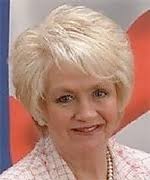
County clerk Bobbie Holsclaw gives $1.9million surplus to Louisville
Written by Sheldon S. Shafer

Louisville metro government is getting a one-time payment of just over $1.9 million from Jefferson County Clerk Bobbie Holsclaw
for surplus fee collections her office took in during her four-year term that ended Dec. 31.

Steve Rowland, Mayor Greg Fischer's chief financial officer, said officials anticipated Holsclaw's surplus payment and included it in the current fiscal year's budget that ends June 30. The amount was factored into the general fund and was not allocated for any particular item, Rowland said.

Holsclaw, who lost a bid for the Republican nomination for governor in May, began serving her fourth four-year term as county clerk in January. State law requires all county clerks to give any surplus to their local government at the end of every four-year term. If the clerks operate in the red, they are personally responsible for making up any financial deficit.

Holsclaw gave metro government checks for $2.74 million at the start of 2003 after her first term and $2.53 million at the start of 2007 after completing her second term.

Holsclaw's office is funded by a percentage of fee collections that state law authorizes it to keep.

Labels:

Thursday, September 30, 2010

CATO Institute Releases "Fiscal Policy Report Card On America's Governors: 2010". See How Your Governor Manages Your Money.

Read more here, or excerpts below.

State governments have had to make tough budget choices in recent years. Tax revenues have stagnated as a result of the poor economy, and that has prompted governors to take a variety of fiscal actions to close large budget gaps. Some governors have cut spending to balance their budgets, while others have pursued large tax increases.

That is the backdrop to this 10th biennial fiscal report card of the governors, which examines state budget actions since 2008. It uses statistical data to grade the governors on their taxing and spending records — governors who have cut taxes and spending the most receive the highest grades, while those who have increased taxes and spending the most receive the lowest grades.

Four governors were awarded an "A" in this report card — Mark Sanford of South Carolina, Bobby Jindal of Louisiana, Tim Pawlenty of Minnesota, and Joe Manchin of West Virginia. Seven governors were awarded an "F" — Ted Kulongoski of Oregon, David Paterson of New York, Jodi Rell of Connecticut, Pat Quinn of Illinois, Jim Doyle of Wisconsin, Bill Ritter of Colorado, and Chris Gregoire of Washington.

Click here to check out how your Governor stacks up to others.

Labels: , ,

Saturday, March 13, 2010

Marlene Davis: We Need To Re-examine Our Relationship With Money. I AGREE, Since "The Love Of Money Is The Root Of All Evils"!

We need to re-examine our relationship with money
By Marlene Davis

Glinda Bridgforth advanced quickly through the ranks of a California bank after graduating college in 1974, becoming an assistant vice president in only 12 years.

She had married a former professional basketball player, jetted to luxurious vacation spots and lived in a large home overlooking San Francisco Bay.

Bridgforth had it all, at least on the outside.

If you go:

March 20: 11 a.m.-1:30 p.m. Village Potluck. William Wells Brown Community Center, 548 E. Sixth St. "Sustaining Your Family in Hard Economic Times." Kay Jones, Mary Engles and Ingrid Adams.

March 24: 6-7:30 p.m. Student Town hall Meeting. Rm 206. University of Kentucky Student Center. "Do You Really Have Money to Blow?" Glinda Bridgforth.

March 25: UK Student Center Small Ballroom

9:30 a.m. Registration.

10-11:30 a.m.Anna J. Cooper Address. "Consumer Self-Control and Individual Well-Being." Maura Scott, UK assistant professor of marketing

Noon- 1:30 p.m. Mary McLeod Bethune Luncheon and Lecture. "Money Matters: What Every Woman Needs to Know." Glinda Bridgforth. $15. Call for tickets. (859) 257-3593.

2:00 p.m. to 3:15 p.m. "Made to Make It in Challenging Times." Janet Beard, Vice President of Community Affairs at Fifth Third Bank

3:15- 4:30 p.m. "Reclaiming our Entrepreneurial Legacy." Patrice Muhammad, editor of The Key Newsjournal

5-6:30 p.m. Student Center Theatre. Doris Y. Wilkinson Distinguished Lecture. "Counting Black Women and Counting on Black Women." Yvonne Jones, associate professor of anthropology and Pan-African studies at the University of Louisville
.

By 1988, however, the dynamics of her job had changed, her marriage had ended and she was $50,000 in debt, living on disability and facing the foreclosure on her home. She calls that period of time the "Three B's: Breakdown, Breakout, and Breakthrough."

Through therapy and financial counseling, Bridgforth recovered emotionally and monetarily but not without a lot of work and self-examination.

What she learned, and what she now shares with others, is that we all need to look at our financial picture holistically, not just practically through budgeting and planning.

Bridgforth, financial consultant, economist and author of three books, is the guest speaker for the 16th Annual Black Women's Conference sponsored by the University of Kentucky's African America Studies and Research Program. The theme of this year's conference is "Black Women, Work & Wealth: Economic Self-Sufficiency During Tough Economic Times."

"There are aspects of our lives that will prompt us, trigger us to go out to do something," said Bridgforth, now the founder and owner of Bridgforth Financial Management Group. "Our emotions get involved, our history, our culture."

Spending money excessively becomes a drug for some people, she said. "Some are seeking short-term fixes for problems that are longer-term."

That is what happened to her, she said. She and her former husband made a lot of money, but they spent more. The lifestyle of the rich became hypnotic.

"I'm going to share with the Kentucky audience steps they can take to avoid going through what I've gone through and what my clients have gone through," Bridgforth said. "Income is not about how much you make but how you spend it and what you do with it."

Sonja Fiest-Price, director of research program, said the theme evolved from a statement made by Eleanor Jordan, executive director of the Kentucky Commission on Women, during a speech at last year's conference. Jordan listed economic self-sufficiency as one of the challenges facing African-American women, Feist-Price said.

That seed of an idea was followed by daily pronouncements of budget cuts, lay offs and downsizing.

But instead of all gloom and doom, Feist-Price said, these uncertain times invite us to look at economics more critically and use strategies that helped our parents and grandparents survive difficult times.

Bridgforth, who will explain ways to look at our relationship with money, is just one of an array of speakers during the three day conference. Some will address how pennies were pinched in the old days, how an inward look could find our entrepreneurial spirits and how investing and saving now could keep future economic wolves at bay.

"Whenever I go to Africa where opportunities are limited, " Feist-Price said, "I never leave without being awed in seeing the creative ways people make money."

Today's economy forces us to do the same, she said.

At the Village Potluck on March 20, Kay Jones and Mary Engles, two women who have managed households in much more difficult times, and researcher Ingrid Adams, with UK's Department of Nutrition and Food Science, will discuss ways to both manage a budget and keep nutritious food on the table.

"There is a lot that women of today can learn from women who made it work back then," Feist-Price said. "They did a whole lot more with a whole lot less. They didn't have the debt we have and were so much happier."

After exploring how to manage what money we have, the conference will focus on control our money instead of having it control us.

Bridgforth will speak at the Student Town Hall Meeting on March 24 and at the Mary McLeod Bethune Luncheon and Lecture on March 25.

The conference, which is free except for a luncheon on March 25, helps us better understand our relationship with money. The primary problem with overspending, Bridgforth said, is low self-esteem. Buying things, binge spending, masks what really needs fixing. Bridgforth said she knows that from experience. "I survived this," she said. "I can teach this to other people."

Labels:

Sunday, December 16, 2007

Is the I-66 road building project a boondoggle or a worthwhile project? You be the judge.

Thursday, November 15, 2007

Economic Development: A Top Priority for Beshear-Mongiardo?

Judging by the transition team, the answer might be yes. In addition to Dave Armstrong of Louisville, Beshear taps Jonathan Miller for this team as well as incoming Chief of Staff Jim Cauley. The ED team will be the only transition work for Cauley and Miller, two of the top Beshear officials. A sign of things to come?

Labels: , ,

Tuesday, September 18, 2007

Feds cuts interest rate by half a percentage point, as U. S. House passes bill to have government back mortgages.

Twin economic news announced just now. First, the Federal Reserve Board has lowered the prime rate -- the interest that the Feds charge banks and other lending institutions to borrow money/credit -- by an unexpected half a percentage point. This move is expected to help a sluggish economy, particularly in the turbulent mortgage market -- to rebound.

Talking about the mortgage market, the U. S. House of Representatives has just now (in a breaking news fashion) overwhelmingly passed a bill to have the federal government back mortgages. It remains to be seen whether the Senate will also back it, though I think it could be a good idea IF the feds will be EFFECTIVE (a kind of oxymoron) in policing the program.

Labels: , ,

Sunday, May 20, 2007

Lindsy Wilson College does the unthinkable ...

... REDUCES, not increases, tuition by 45%! WOW. Can other Kentucky colleges and universities dream of doing the same?

Labels: , ,

Wednesday, April 18, 2007

Group rates legislators on Fiscal responsibility.

Kentucky Club for Growth, a fiscal watchdog group based in Covington, KY, has released its fiscal responsibility ratings score card for Kentucky Legislators. Read the Club's press release and rankings to see how your Legislator fared in being fiscally responsible with your money.

In the House: I am HAPPY to know that my Legislator and VERY good friend, Rep. Jim DeCesare, is the second MOST fiscally responsible (at a score of 88), right behind the MOST fiscally responsible Legislator of the ALL -- Stan Lee (at 91). Lt. Governor candidate, Jeff Hoover ranked #16 by score (at 47).
The bottom rung of the fiscal ratings ladder is populated by Legislators, such as Reps. Robin Webb, Larry Clark and Steve Riggs (who came in at 100 and were considered the least fiscally responsible). Speaker Jody Richards came in at 91 -- a better score than 9 others.

In the Senate: My friend, Sen. Dick Roeding came in the Most fiscally responsible, followed closely by another good friend Sen. Bob Leeper. My good friend and Senator, Brett Guthrie was tied with several Senators at second place with a score of 61.
Bringing up the rear were Sens. Gerald Neal, Tim shaughnessy and Dan Mongiardo.

Related story: Billy Harper has put out a news release in response to the rankings stating: "Fiscal responsibility in Frankfort has taken a back seat to politics for years now, and state policymakers need to reevaluate the way they spend taxpayer funds. Education reform and economic development, state government’s most important responsibilities, have been allowed to whither on the vine while many policymakers have looked after their own special interests."

Labels: , , ,