Google
 
Web Osi Speaks!

Wednesday, July 09, 2014

Rand Paul Responds To Georgia Powers.
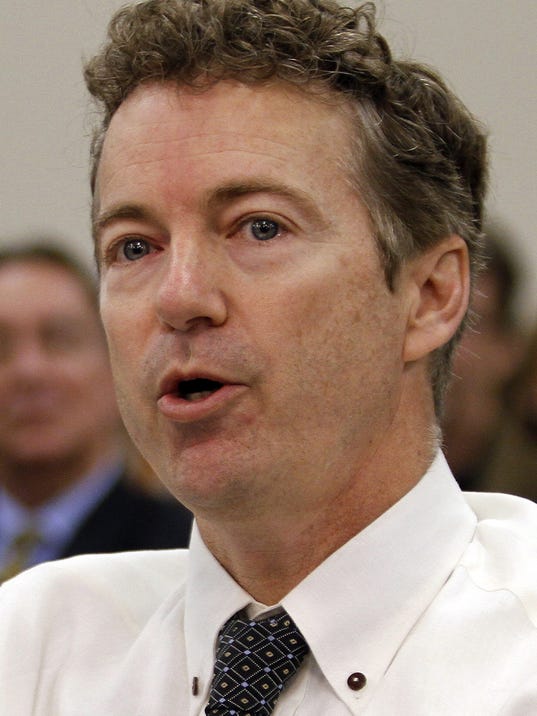

Rand Paul, Special to The Courier-Journal

Georgia Powers' recent op-ed in The Courier-Journal mischaracterizes my views, and does a disservice to a host of issues that I am working on to help minorities.

Let's start with fact one: I support the Civil Rights Act of 1964. It is simply unimaginable to think what modern America would be like if not for the brave men and women who stood up for the rights of all Americans. This legislation changed the future of our nation by enforcing the belief that all men and women are created equal.

In passing the law, Congress rightly acted under the 14th Amendment which states that "no state shall deprive" an individual of his or her natural right to due process and equal protection under the law.

I do not support discrimination of any kind, public or private. I, like most Americans, celebrate the great civil disobedience of sit-ins that helped bring down Jim Crow. I respect and admire Samuel Tucker, who organized one of the first sit-ins in 1939 at the library in Alexandria, Va., and the Greensboro Four. A few months ago, I met Clarence Henderson who sat with others at the Woolworth's counter in Greensboro. He was kind enough to recognize the work I'm doing for minority rights: "I have seen him be a voice crying out in the wilderness, standing up for freedom," he said. "I have encouraged [Sen. Paul] to keep speaking out because he reminds me of myself—when I walked into the Woolworth's in Greensboro, I did it not for publicity, but because it needed to be done."

We must continue to build an America that our children — of every race, creed and color —deserve. That is why I am advocating for a 21st century civil rights agenda with economic empowerment, voting rights restoration, sentencing reform and school choice at its core. These are all issues of paramount importance to the black community and I am proud to be the champion of these ideas.

My Economic Freedom Zones legislation would allow $650 million to remain in the West End of Louisville over 10 years. This plan would create thousands of new jobs in West Louisville.

This week, I joined with Democratic Sen. Cory Booker of New Jersey to introduce a bipartisan bill to roll back harsh mandatory sentencing on non-violent drug offenses.

When nearly one-third of the adult black male population has been in prison — when the prison population has exploded ten-fold in the past generation — there is a problem. Politicians, wanting to be "tough on crime" have made harsh, unnecessary sentences the only answer, ruining many lives over a simple mistake.

The war on drugs has had a racial outcome and no one in Congress is fighting harder to eliminate racial bias from our criminal justice system.

If someone does go to jail and pays their debt for a crime, they deserve to have their voting rights restored when they return to society. Too many voters are disenfranchised today from voting, due to a mistake for which they have already paid.

(GEORGIA POWERS: Do not be fooled by Rand Paul)

ALSO: Readers weigh in on Georgia Powers and Sen. Rand Paul

Of course, the root of so many problems in all of our communities — black, brown or white — is education.

Our system is broken, especially in our poorest communities. That's why, just this past Monday, I joined Pastor Jerry Stephenson in the West End of Louisville to discuss the success he has had with his after-school and summer academic programs. We talked about the promise of school choice and the obstacles that still exist, and how we can make better schools with local and parental control the norm rather than the exception.

I have brought this message to Louisville and Lexington. To Paducah and Pikeville and everywhere in between in Kentucky for the past five years.

And recently, I have brought this message to Washington, D.C., Detroit, Chicago, Milwaukee, California and New York. I will travel throughout Kentucky and the nation, with passion in my heart.

When you believe in something wholly, it is easy not to be deterred by the naysayers who want to protect a broken system, or who have a political interest in making sure you don't succeed.

Our nation has made great strides on civil rights in the past 50 years. I was too young to have marched with Dr. King, but I like to think that I would have.

Now there is more to do, and I want to help lead the way, in the ways that I can. No one in Congress is doing more to address these important civil rights issues and I won't rest until we have an America that is truly colorblind.

Rand Paul, R-Bowling Green, is a U.S. senator representing Kentucky.

Editor's note: Read the Georgia op-ed here.

Taking you back to 2010 when rand paul first ran for senate and met with cj staff. watch:

on race and civil rights. watch:

Labels:

Monday, July 07, 2014

Former Kentucky Senator Georgia Powers: Georgia Powers.


Do not be fooled by Rand Paul


Sen. Rand Paul doesn't get it.

Anointing himself liaison for GOP minority outreach, he's been knocking on doors of African Americans with increasing frequency, unabashedly seeking support for the GOP and presumably his budding presidential aspirations.

I support every political party's efforts at inclusion, a core goal of the civil rights struggle for which I and many other Kentucky leaders fought. African Americans fought long and hard for the right to economic, legal, political and social inclusion.

But Sen. Paul is forgetting a critical concept: You must earn our community's trust and support. We don't give it freely. We especially don't give it to leaders who shake our hands while spitting in our faces.

If the African-American community delves behind Paul's outstretched hand, we find a man whose words and deeds expose a troubling belief system, whose votes have consistently opposed policies that advance our community.

Let's give Paul the closer look he requests following the recent 50th anniversary of the enactment of the Civil Rights Act of 1964, landmark legislation that outlawed racist voter registration requirements and gave all Americans, regardless of their skin color, the right to be served in all facilities open to the public.

Paul disagreed with the Civil Rights Act, and believes private businesses should be able to discriminate. Sen. Paul, in explaining his opposition to the Civil Rights Act, said, "I think it's a bad business decision to exclude anybody from your restaurant, but, at the same time, I do believe in private ownership." Paul would support the decision by Rich's lunch counter in Atlanta to refuse to serve the Rev. Martin Luther King.

Paul wrote a critique of the Fair Housing Act, another landmark bill that prevents discrimination in the selling, renting or financing of housing. "At first glance," Paul wrote, "who could object to preventing discrimination in housing?" But then he goes on to ask if discrimination should "be prohibited for private entities such as a church, bed and breakfast or retirement neighborhood that doesn't want noisy children? Absolutely not. Decisions concerning private property and associations should in a free society be unhindered. As a consequence, some associations will discriminate. … A free society will abide unofficial, private discrimination — even when that means allowing hate-filled groups to exclude people based on the color of their skin."

After the Supreme Court struck down part of the Voting Rights Act, Paul said the country has moved beyond a time where the color of someone's skin should factor into voting. "We have an African-American president. … There doesn't seem to be any sort of systemic problem like there was in the South with precluding blacks from voting." Recently he made clear he supported discriminatory voter ID laws: "There's nothing wrong with it. … I don't really object to having some rules with how we vote."

Not concerned by Paul's words? How about his staff:

Paul hired Jack Hunter, first to help him write his book, then in his Senate office, despite Hunter's appearances in a Confederate flag mask, his toasting John Wilkes Booth, saying his heart was in the right place when he assassinated Abraham Lincoln, and his membership in a group that the Southern Poverty Law Center has classified as a hate group, among other controversial comments.

Don't care about his staff? Here are Paul's actions:

• Opposes an increase in the minimum wage.
• Wants to repeal the Affordable Care Act, taking health care from 421,000 Kentuckians.
• Introduced legislation to dramatically cut food stamps.
• Wants to abolish the U.S. Education Department.
• Opposed the Paycheck Fairness Act, which would ensure men and women are paid equally for equal work.
• Voted against the Violence Against Women Act.
• Opposed lowering the interest rates for millions of student loan borrowers.

Do not be fooled by Sen. Paul. I appreciate sincere efforts to work with our community and look for ways to better the lives of our children. But we have fought too long to give our precious vote to one who with one breath asks for support, and with the next promises to tear down the foundations of our progress, while surrounding himself with hate-filled people.

Georgia Powers was elected to the Kentucky Senate in 1968, the only woman and the only person of color in the 38-member chamber upon that election. She served in the Kentucky Senate for 21 years.

Editor's comment: 

I know dr. rand paul. he was my eye doctor, and my family's eye dr, for several years until he was elected to the senate. i have had numerous discussions with him on a variety of topics. he is not a racist, in my view, as some might speculate.

yes, I am a black (registered) republican!

i know sen. georgia powers and she is a very fine public servant. my wife wrote her biography. i have no reason to doubt the sincerity of her concerns based on certain ill advised pronouncements from rand paul.

But like one rodney king once asked, and I ask now: can't we all get along?

Labels:

Sunday, February 16, 2014

Mitt Romney Emerges On The Scene And Joins Rand Paul In Resurrecting Bill Clinton/Monica Lewinsky Affair. Watch Video.

Monday, November 11, 2013

My Friend, Rand Paul, Challenges His Critics To A Duel, And Now Allison Lundergan Grimes Challenges My Buddy Mitch McConnell To A Shooting Contest After He Receives NRA Award! Let The Shooting Commence!!

Senate candidates tout gun-rights support


Senate Minority Leader Mitch McConnell bagged an award Friday from the powerful National Rifle Association, while his chief Democratic rival in next year's Senate race defended her support of gun rights and threw down a marksmanship challenge to the Republican senator.
"Whenever he's not busy pandering to Washington lobbyists, I welcome Sen. McConnell to come shoot with me at the range any day," said Democratic candidate Alison Lundergan Grimes, an NRA member and skeet shooter.

Grimes' campaign released a photo Friday showing her shooting at her family's farm in northern Kentucky.
McConnell didn't respond to a reporter's question Friday asking if he'd be willing to test his shooting skills against Grimes' at a gun range.
The Grimes campaign pounced, saying McConnell "loves to talk a big game," but "when asked to back it up, he fails badly and walks away."
The senator was at a Bullitt County gun club to pick up the NRA's "Defender of Freedom" award and to recognize a sportsmen's coalition backing him.
McConnell was flanked by shotguns lined up next to flags, and boxes of clay targets were stacked by the podium. Empty shotgun shells littered the ground nearby.
Gun-rights issues are hot-button topics in Kentucky, where about 300,000 hunters are set to trudge through the woods in coming days in pursuit of deer.
Louisville businessman Matt Bevin, who is challenging McConnell in the GOP primary next spring, touted his own credentials. Bevin noted he and his wife have licenses to carry concealed weapons, and said he'd be a strong defender of constitutional rights. Bevin has been endorsed by the group Gun Owners of America.
McConnell, who is seeking his sixth term next year, aimed his criticism at President Barack Obama, who is unpopular in Kentucky, and gun control advocates.
McConnell said efforts to pass stricter gun laws in the wake of mass shootings were an example of the "nanny state" advocated by Democrats.
"After every dreadful, awful occurrence of some person with deep mental disability, their reaction to that is try to restrict your rights given to you under the Second Amendment to the Constitution," he told a group of supporters. "And there's very little talk about how to deal with the problem of mentally incapacitated people."
McConnell, the Senate's top Republican, said he's the prime target for national Democrats in next year's elections. He noted the blistering attacks already unleashed against him, then added: "I assure you, I'm not going to turn the other cheek." McConnell is known for his own bare-knuckled campaign style.
Mark Nethery, president of the League of Kentucky Sportsmen, said McConnell has an "impeccable record" of protecting Second Amendment rights.
The NRA said McConnell "stood with gun owners and hunters through the toughest of times."
McConnell was recognized by the NRA for a series of Senate votes, including his fight against bans on semi-automatic weapons and high-capacity ammunition magazines. He also won NRA praise for helping block legislation that would have expanded background checks to include sales at commercial venues like gun shows and on the Internet.
Grimes, the state's secretary of state, said in a statement that her support for gun rights is "unquestioned."
"In the Senate, I will protect my fellow Kentuckians' right to keep and bear arms," she said.

Labels: , , , ,

Wednesday, November 06, 2013

Rand Paul Seeks To Retool His Craft After Plagiarism Fiasco.


The questions about Paul's writings, starting with disclosures that some of his speeches had borrowed from Wikipedia, threatened to undercut his relatively newfound status as an intellectually rooted libertarian Republican vying to lead his party into the post-Obama, post-Bush era. They were of a sort that caused Joe Biden to drop his Democratic primary campaign in 1988, when, as a young senator, he used words from a speech by Neil Kinnock, then the Labour Party leader in Britain, without attribution. (He also admitted plagiarizing a law review article for a law school paper.)
Paul's handling of the disclosures was being watched by his Senate colleagues and by strategists and potential donors to a 2016 national run. Some said they viewed it as a test of whether he could cope with the intensity of a campaign and the presidency itself.
"I think when you have a high visibility in America politically, you've got to understand that you undergo scrutiny that you don't even as a senator," said Sen. John McCain of Arizona, the Republican Party's presidential nominee in 2008 and a frequent sparring partner of Paul. He added that he was hesitant to judge the political fallout Paul could face until he knew "how much there is of it."
Paul, when asked if he thought the accusations could turn off some presidential supporters, indicated the degree of what he termed "unfair criticism" might factor into whether he decides to run.
"It's also what people hate about politics, and it's why, frankly, members of my family are not too interested in politics, period, or wanting me to do more of this," he said. "To tell you the truth, people can think what they want, I can go back to being a doctor any time, if they're tired of me. I'll go back to being a doctor, and I'll be perfectly content."
On a day when one potential rival for the Republican nomination, Gov. Chris Christie of New Jersey, won re-election, Paul was fending off a new disclosure that came Monday night, this one served up by BuzzFeed. The site reported that an op-ed article Paul wrote for The Washington Times in September on mandatory minimum prison sentences appeared to have copied language from an essay that had been published in the magazine The Week.
That article, written by Dan Stewart, an editor for the magazine, included this sentence: "America now jails a higher percentage of its citizens than any other country, including China and Iran, at the staggering cost of $80 billion a year." It was posted on the Web on Sept. 14.
On Sept. 20, Paul wrote this: "America now jails a higher percentage of its citizens than any other country, including China and Iran, at the staggering cost of $80 billion a year."
The Washington Times said Tuesday it was canceling Paul's column by mutual agreement.
Paul made it clear that he took that example more seriously than the previous disclosures. The first of those came last week on the MSNBC show of Rachel Maddow. She highlighted a speech from last Monday that used parts of the Wikipedia description of the 1990s movie Gattaca. which was based on a science fiction future in which societal standing is determined through DNA testing.
On Tuesday, Paul argued that that did not technically represent plagiarism. "Trying to say someone commits plagiarism, you're saying that someone is dishonest," he said. "And, well, it would be dishonest if I tried to say, 'Oh, I had this great idea for a movie, and this is my idea, and this is a story I wrote in college called Gattaca."
Paul said the unattributed passages of his Washington Times article were the result of life at the speed of a newly minted national political figure, and that the article had been adapted from a speech, which was one of the reasons it was not vetted.

Read more here: http://www.kentucky.com/2013/11/06/2914965/rand-paul-to-retool-office-after.html#storylink=cpy

Labels: ,

Wednesday, October 02, 2013

Rand Paul, From The Eyes Of An "Establishmen" Viewer.

Sen. Rand Paul

I happened to catch a segment on Sean Hannity’s show last week with Kentucky’s junior Sen. Rand Paul. Just after Sen. Ted Cruz’s 21-hour “filibuster,” Hannity was trying to goad our senator into piling on with the divisive attitude coming from many conservatives toward Republican senators who would not join in on the Texas senator’s fight to defund Obamacare. But Sen. Paul wouldn’t take the bait. Instead, he encouraged conservatives to not create a divide with those who only disagree on tactic, not policy. He argued that no Republican is for the funding of Obamacare and to sever allies based on tactic was counterproductive.

I couldn’t agree more. This is the type of unifying voice that needs to be heard in this day of political dysfunction. It showed Sen. Paul can be a major force for positive change among Republicans. And this breath of fresh air was my final turning point on Kentucky’s newest U.S. senator. I was wrong about Rand.

Back in 2009, Trey Grayson, a dear friend and one of the most honorable men I have ever known, was considered a relative shoo-in to take over for Sen. Jim Bunning as Kentucky’s next senator. I was enthusiastic about his campaign and the long term prospects for his time in D.C.

My connection to Trey is more personal than most. He gave me my biggest break, choosing me to serve as his political director for his 2007 reelection campaign for Kentucky secretary of state. Trey won reelection and our success was the biggest factor in my becoming Jefferson County’s youngest Republican chairman. Without Trey Grayson, I simply wouldn’t be where I am today. And with his inexhaustible drive to spend time with every Republican (and Kentuckian) in the state, he won the loyalties of many longtime activists and politicos.

However, 2010 was a change election year and thousands of new people were engaged in the political process that had never been involved before. As chairman in mid-2008, I saw the tea party coming well before Sen. Barack Obama was elected president. Every week, I would field phone calls from Republicans angry at President George W. Bush for driving up debts and putting our country in an economic tailspin. (Sorry to burst the bubble of those who thought the tea party was formed because an African-American man became president.)

Rand Paul became Kentucky’s answer to this fervor formed from the frustration of conservatives against “the establishment.” This historic moment in political history took Grayson as an unfortunate casualty. Dr. Paul won the primary handily and defeated Attorney General Jack Conway to become our newest U.S. senator.

Some of Sen. Paul’s views were hard to swallow for this “establishment” Republican. For instance, I found his stance allowing private business to discriminate along racial lines unsettling. It made me fear his belief system was untested. I’ve always been an advocate for minority rights and this myopic approach felt tone deaf to say the least. I felt legitimately concerned Sen. Paul wasn’t part of the solution to help the divide created between minorities and the GOP.
But I’ve been proven wrong. Sen. Paul has shown through both words and action his desire to improve the lives of minorities in Kentucky.

He correctly identifies mandatory minimum sentencing against drug offenders that disproportionately effect African-American men as one of the biggest factors in limiting the black vote. He knows the war on drugs is the single most destructive government policy that we have as it pertains to all minorities — targeting them overwhelmingly for suspicion, prosecution and incarceration. He reached out in a non-election year to the traditionally black Howard University and gave a speech on the advantages of conservative policy for the black community. He’s spent many hours in minority communities in Kentucky without a staged campaign, but instead as a powerful observer hoping to find ways to meet the needs of these underserved populations.

Beyond his concern of minorities, Sen. Paul’s views on drugs and drug penalties, especially cannabis, are refreshing for those of us who wonder why something less harmful than alcohol could land someone in jail and potentially ruin their chances for a productive life. His support for Commissioner of Agriculture Jamie Comer’s move to legalize hemp in Kentucky was courageous, direct and, most importantly, the correct stance to take for Kentucky’s farmers. The opposition to hemp is even less educated than the war against marijuana.

And Sen. Paul’s influence on the Republican Party has allowed many of us to look at the last decade of war with a more discerning eye. Without his presence, many like myself may have been caught up in the desire to attack Syria, instead of understanding voluntary military action does more to harm our international cause than help it.

I’ve been wrong about Rand. Like many others in Kentucky’s GOP who have come to the same conclusion, I look forward to making up for lost time.
Brad Cummings is COO of PM Advertising, and he previously served as Jefferson County Republican Party chairman. His column appears every third Wednesday. He can be reached at bradford.cummings@gmail.com

Labels: , , ,

Monday, September 23, 2013

Merlene Davis: Agreeing With Sen. Rand Paul Surprises Even Me!

Merlene Davis: Agreeing with Sen. Rand Paul surprises even me

OK. I'm getting really scared.
Not long ago, I found myself in agreement with Republican strategist Newt Gingrich when he said there are racial inequities in the judicial system. It left me in a position similar to when you jump off a cliff in a nightmare and then suddenly awaken before hitting the rocks below. I hadn't expected such progressive thought from Gingrich.

Now, I'm hearing "Amen," pass my lips as I listen to Sen. Rand Paul, the Kentucky Libertarian Republican and Tea Party poster child who once criticized the Civil Rights Act before coming to his senses.

Paul testified Wednesday at the Senate Judiciary Committee hearing titled "Reevaluating the Effectiveness of Federal Mandatory Minimum Sentences," and began espousing principles and values
I hadn't heard a Republican utter in a very long time.

He said things like, "If I told you that one out of three African-American males is forbidden by law from voting, you might think I was talking about Jim Crow 50 years ago. Yet today, a third of African-American males are still prevented from voting because of the war on drugs. The war on drugs has disproportionately affected young black males."

And he said, citing an American Civil Liberties Union report, "The majority of illegal drug users and dealers nationwide are white, but three-fourths of all people in prison for drug offenses are African American or Latino."

Mandatory minimum sentencing laws require binding prison terms of a designated length for people convicted of certain federal and state crimes, most often drug offenses. These laws prevent judges from fitting punishment to individual and circumstances.

Paul highlighted several cases, including that of a friend, in which offenders were punished severely for minor offenses. The judges, he said, had no choice.

In a Washington Times op-ed piece he wrote, Paul cited sources that seldom flow positively from the lips of a Republican: the ACLU, the Sentencing Project, and Ohio State University Law Professor Michelle Alexander who first coined the judicial system as the new Jim Crow racial caste system.

Paul wrote, "Since mandatory sentencing began, America's prison population has quadrupled, to 2.4 million. America now jails a higher percentage of its citizens than any other country, including China and Iran, at the staggering cost of $80 billion a year.

"Drug offenders in the United States spend more time under the criminal justice system's formal control than drug offenders anywhere else in the world. Statistics like these prove that mandatory minimum sentencing has failed our society," he wrote."

On top of all that, Paul hopes to make the restoration of voting rights for ex-offenders a lot easier.

Be still my heart.

In March, Paul joined with Sen. Patrick Leahy (D-Vt.) in drafting the Justice Safety Valve Act of 2013, which allows judges to sentence below the established minimum. A similar bill has been introduced in the House.

To hear a Republican talk about rights that have been slowly-but-surely yanked from black people never fails to give me heart palpitations. But to hear a sitting Republican senator, one who has sway with his fellow party members, talk about the injustices he has seen leveled on black people, now that can cause a heart attack.

Paul and I still disagree about the benefits of Obamacare and how greatly constituents in his home state would benefit from it. And, even though Paul has cut ties with him, I wasn't comfortable with

Paul's selection of a new media director who had publicly voiced arguably racist views. And I'm definitely not in Paul's corner when he says voter ID laws don't negatively affect minorities.

Nevertheless, I do believe Paul really is looking out for the welfare of black federal prisoners, their mandatory minimal sentences, and the semi-automatic restoration of their voting rights.

Jesse Wegman, The New York Times editorial page editor, wrote of Paul, "Whatever you think of Rand Paul or his motives, current and former prison inmates — who are nobody's constituency and possess zero lobbying power — have rarely had as impassioned a champion in Congress."
I must give him credit for that, too.

If he would use some of that influence and passion to affect change in sentencing laws and the restoration of voting rights in his home state, I might consider voting Republican like my dad and my brother did. (Good grief. Did I just say that?)

But if he doesn't, if he is simply trying to win over black voters for a presidential run in 2016, then somebody needs to awaken me quickly.

Those rocks at the bottom of the cliff, the ones made of broken political promises, hurt far too much.

Labels:

Tuesday, September 17, 2013

Rand Paul Calls It Like He Sees It.

Paul backs sentencing flexibility for judges

U.S. Sen. Rand Paul drew a favorable response Monday in a mostly black Louisville neighborhood as the tea party favorite promoted the ideas of giving judges more sentencing flexibility, restoring voting rights for felons and offering tax breaks to lure businesses into struggling communities.
 
The Kentucky Republican, who is considering a presidential campaign in 2016, attended a community meeting in his latest visit to neighborhoods in western Louisville _ a Democratic stronghold. Paul has urged the GOP to reach out to a broader electorate by connecting with voters who have shunned the party in the past.


Paul spoke with a group of ministers and community activists during a meeting that lasted more than an hour. The senator told the group at the Plymouth Community Renewal Center that the "War on Drugs" unfairly targeted blacks.
"We went crazy on the `War on Drugs,'" the libertarian-leaning senator said. "Drugs aren't good. We should have some laws. ... We have to figure out how to go forward, so changing those laws is important."

Paul criticized federal mandatory minimum penalties that he said have clogged prisons with non-violent drug offenders. Blacks make up a disproportionately high number of those inmates, he said.
"We have people in jail for life for non-violent drug crimes," he said. "I think this is a crime, in and of itself."

The first-term senator is a leading sponsor behind legislation that would give federal judges greater flexibility in sentencing. The measure is scheduled to be reviewed at a Senate Judiciary Committee hearing later this week.
"Mandatory minimums have trapped a lot of people, made them felons, made it hard for them to get jobs, for non-violent crimes," Paul said. "I would just as soon take some of these non-violent crimes and make them misdemeanors so you don't get in that trap."

Paul said he's also considering legislation that would restore voting rights for non-violent felons of federal crimes. The bill is still in draft form, he said, but the restoration of rights would apply to non-violent offenders who haven't committed other crimes for perhaps five years.

Paul said such a bill would especially be aimed at people who committed drug offenses as young adults _ which he referred to as a "youthful mistake." Such offenders pay for those indiscretions for decades to come, he said.
"I think the biggest problem right now with voting rights is ... not being allowed to vote because the law says you can never vote," he said.

Some participants in the discussion said they thought five years would be too long to wait for a restoration of rights.

Don Smith, among the participants, said non-violent felony offenders are unable to put their lives back together years after getting out of jail. They have difficulty landing jobs and finding places to live. Another participant, Alonzo Malone, said such felons pay taxes but can't vote.
"You're still held hostage," Smith said.

In Kentucky, Democratic state Rep. Jesse Crenshaw of Lexington has introduced a proposed constitutional amendment for years that would automatically restore voting rights for non-violent felons who have served their sentences. The measure has cleared the Democratic-controlled House but stalled in the GOP-led Senate.

Paul told reporters on Monday he would talk with Republican state Senate leaders about the issue. He said he would be willing to testify on the issue before state lawmakers.

On another topic, Paul said he's working on creating "economic freedom zones" that would offer federal tax breaks to businesses that locate in economically distressed areas.

Labels:

Thursday, April 18, 2013

Marlene Davis Claims "Rand Paul Wasn't Talking To Blacks At Howard University Speech, He Was Only Planning To Run For President". Do You Agree?

Merlene Davis: Rand Paul wasn't talking to blacks at Howard University speech


A lot of white people have said to me recently that Republican Sen. Rand Paul should get kudos for visiting Howard University and talking with a majority black audience.
The number of folks telling me that made me think something was wrong with me. I didn't see Paul's visit that way.
Why wouldn't, and shouldn't, a U.S. senator talk to a group of young, intelligent, black college students? Aren't they Americans?

Did Paul simply deserve credit for talking with a group that may not agree with him? President Barack Obama does that frequently. Obama spoke with a group of CEOs who have serious disagreements with his efforts to raise their taxes. He has addressed Congress and received a "You lie!," for his efforts.
I didn't quite understand why I should applaud Paul's visit anymore than I should gush over my husband picking up a broom now and again.

In his talk, Paul said today's Republican Party is essentially the same party Abraham Lincoln belonged to. Today's Republicans are the same as those of the 19th century who helped end slavery.
In essence, he said to those students that they should understand that when today's Republicans reach out to them, black people should joyfully clasp the hand that brought them freedom 150 years ago.
Democrats, Paul said, were the bad guys back then, and that's true. A majority of black voters once were Republicans. My father was a Republican. But black voters began leaving that party when integration fell out of favor with the party of Lincoln.
Paul knows that.

In the 1950s and 1960s, southern Democrats, who were demanding the right to remain segregationists, were rebuffed by northern Democrats for that stance. Those Democrats then fled to the Republican Party, where they found a welcoming home.
They were lured by that party's "Southern strategy," which was in direct opposition to federal policies regarding civil rights. So those segregationists became Republicans, changing how that party was perceived by black people, who voted overwhelmingly for Democrats during the past election.
Paul knows that.

So when Paul decided to give those bright students a history lesson that left decades of issues out of the discussion, I began to wonder why our senator had gone there in the first place.
He said he was there to try to get them to look at Republicans differently. Republicans really need to reach out to minorities, he said. That's true. But I don't think that's why he was there.

And then it came to me.
Yesterday, while speaking at a breakfast sponsored by the Christian Science Monitor, Paul said he is considering a presidential campaign in 2016. Such a move had been rumored, but now Paul has put it out there for all to see.
"I want to be part of the national debate," Paul said. "Whether I run or not, being considered is something that allows me to have, I think, a larger microphone. We're considering it."

That's why he went to Howard. His talk wasn't to persuade black students to give Republicans a second look. His talk at Howard was to give white students a chance to see him as magnanimous.
He had to have known that black people remember the longstanding racist and homophobic beliefs that his father, former Texas Rep. Ron Paul, used to publish in his newsletters.
He had to have known that those black students would remember his recorded statements that businesses should be allowed to discriminate.

He wasn't there for black people. He was there to win some of the white votes that Obama had snagged from soccer moms disenchanted with the Republican desire to dictate what happens in their vaginas. He was there to convince those white people that he isn't such a bad fellow, really, and that they "should pay no attention to the man behind the curtain."
He went to Howard because he is planning to run for president. How better to get the "larger microphone" than to go where other conservatives fear to tread?
That's why I can't give Paul credit for talking to black people. He wasn't really talking to them.

Labels: ,

Rand Paul: Obama Using Newtown Families As "[Gun Debate] Props".

Labels:

Thursday, March 07, 2013

In Response To Senator Rand Paul's Admirable Drone Filibuster, Eric Holder Clarifies POTUS Barack Obama's Position On Use Of Drones Against Americans While John McCain And Lindsey Graham Reveal Why Both Of Them Must Be Defeated At The Polls. Thanks, Rand Paul.

Holder Clarifies View on U.S. Drone Strikes

WASHINGTON—Attorney General Eric Holder sent a letter Thursday to Sen. Rand Paul to clarify the Obama administration's view on the use of lethal force on American soil, an issue that provoked the Kentucky Republican to wage a nearly 13-hour filibuster against the president's nominee to lead the Central Intelligence Agency.

image
Attorney General Eric Holder appears Wednesday before a Senate committee. His letter issued Thursday is a more unequivocal statement of a view he gave at the Senate hearing.
Mr. Holder's letter was described by White House Press Secretary Jay Carney: "Does the president have the authority to use a weaponized drone to kill an American not engaged in combat on American soil? The answer is no," Mr. Carney said, reading an excerpt during a news briefing.
The letter by Mr. Holder could clear the way for a vote on President Barack Obama's choice for CIA director, John Brennan. It is a more unequivocal statement of a view Mr. Holder advanced under questioning Wednesday at a Senate Judiciary Committee hearing.

However, in an earlier letter, Mr. Holder appeared to allude to circumstances where a drone strike on an individual in the U.S. would be permissible.

After that letter, Mr. Paul demanded the White House agree that it would be unconstitutional to kill an American not engaged in combat. Mr. Holder's letter Thursday appears to meet that demand, and could end the argument between Mr. Paul and the administration over the use of armed U.S. drones.

Mr. Paul spoke from just before noon Wednesday until after midnight Thursday morning to protest the lack of clarity in the administration's view.
Senate Democrats were working to schedule a vote later Thursday on Mr. Brennan's nomination, although Mr. Paul's surprise filibuster has scrambled the politics of the confirmation debate.
The filibuster energized many Republican senators, who flocked to the floor late into the night to encourage Mr. Paul, who stayed in the chamber for the duration as required under Senate rules.

Two top Republicans, however, expressed annoyance with the filibuster, and said they planned to vote for Mr. Brennan's confirmation. Both said on the Senate floor that Mr. Holder was right in an earlier response not to rule out targeting an American combatant on American soil.
"I am going to vote for Brennan now because it's become a referendum over the drone program," Sen. Lindsey Graham (R., S.C.) told reporters. He had been planning to vote against Mr. Brennan, Mr. Obama's top counterterrorism adviser, because "I thought Brennan was arrogant; kind of a bit shifty."

Sen. John McCain (R., Ariz.) separately told reporters that he, too, would vote for Mr. Brennan. The two men disagree with Mr. Paul and other lawmakers who are pressing for clear limits on the use of unmanned drones to target Americans on U.S. soil.
During his floor speech, Mr. McCain read a Wall Street Journal editorial chiding Mr. Paul, and adding his own scolding: "I don't think what happened yesterday was helpful to the American people." Mr. McCain said that while the nation "needs a discussion" of drone policy, Mr. Paul's assertion "that the United States of America would drop a Hellfire missile on Jane Fonda brings a serious discussion into the realm of the ridiculous."

He was joined by Mr. Graham, a former Air Force judge advocate, who asked: "What is it all of a sudden that this drone program has gotten every Republican so spun up?" Mr. Graham said that Mr. Obama had the "good judgment to understand we're at war. To my party: I'm a bit disappointed that you no longer apparently think we're at war."

Senate Majority Leader Harry Reid (D., Nev.) also took to the floor Thursday morning, outlining the schedule, and offering some words of praise for Mr. Paul.
"I have been involved in a few filibusters, as Rand Paul did yesterday. And what I have learned from my experiences in talking filibusters is this: To succeed, you need strong convictions but also a strong bladder. It's obvious Sen. Paul has both."

Editor's note:To read more, visit New York Times.com.

Editor's commentWe are now satisfied with the clarification contained in Eric Holder's letter to Rand Paul. T read more than what's above, go here.

Labels: , , ,

Saturday, February 23, 2013

Rand Paul: No Decision Yet On Presidential Run.

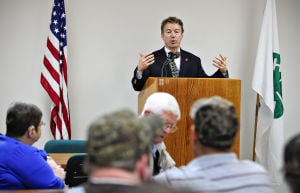
Rand speaks at a forum in Butler County


Rand Paul, R-Ky., speaks during a community forum Friday, Feb. 22, 2013, at Butler County Cooperative2 Extension Office. (Photo by Miranda Pederson/Daily News)
By KATIE BRANDENBURG

MORGANTOWN — U.S. Sen. Rand Paul reiterated Friday that he will wait until 2014 to decide whether he will run for president.
Paul, a Republican from Bowling Green, said it’s a compliment to him and to Kentucky that his name is being mentioned as a potential candidate. He spoke about the issue Friday when questioned by an audience member during a community forum in Morgantown.

While the Republican Party has a lot of support in Kentucky, it has struggled in some areas, he said. “So I think we need some new ideas that are a little different than what we’ve been presenting, and I think I could be part of that, but we haven’t made any firm decisions,” Paul said.
He spoke about a number of his policy ideas during the forum hosted by the Morgantown-Butler County Chamber of Commerce at the Butler County Cooperative Extension Service.
He stood at the podium next to a large check for $600,000 made out to “The U.S. Taxpayer.” The check represented money from his official operating budget that he will return to the U.S. Treasury, he said.
Paul announced the return of money from his operating budget earlier in the week. He said government needs to give employees incentives to save money.
Paul also spoke about the potential impact of the sequester – a mandated round of budget cuts set to go into effect next month – and ways in which the government can save money.
The sequester would cut $1.2 trillion over 10 years, but government spending will continue to increase, Paul said.
“Spending still is going to go up,” Paul said. “It’s not a cut in spending. It’s a cut in the rate of growth of spending.”
He made cuts in his office without laying people off, Paul said.
“We watch what we spend,” he said.
Paul said the government should choose not to fill the positions of governmental retirees and bring pay for employees down to market value. He also suggested a cut in foreign aid spending.
The ideas are part of Paul’s proposal, unveiled this week, to help prevent federal layoffs.
To improve the U.S. economy, it’s important to keep tax dollars in the hands of people in places such as Morgantown, he said. “You don’t get richer if I raise your taxes and send more money to Washington,” Paul said. “It’s typically wasted.”
He gave some examples of what he considers government waste, including about $5.2 million spent on a study of goldfish to find out about how they behave democratically.
Paul also took questions from the audience.
Kirk SanCartier, 51, of Morgantown, asked Paul about gun control efforts in Washington.
Paul said he wouldn’t have a problem with teachers or principals having guns in their desks at schools as a safeguard against gun violence.
The people who obey gun laws are not the people who are prone to gun violence, he said.
SanCartier said he’s concerned about his gun rights being taken away.
“Everybody has a right to protect themselves,” he said. “We do a lot of hunting, and that’s a very family oriented thing right now.”
If people spent more time with their children, many of the problems with gun violence wouldn’t exist, he said.
SanCartier doesn’t want people dictating how he can protect his family. “I’m afraid they’re trying to trample on our rights,” he said. “I’m afraid they’re trying to change the Constitution.”
James Runion, Morgantown-Butler County Chamber of Commerce president, asked Paul about coal mine permits in counties near Butler County, where many local residents work.
Paul said the president has been open about his feelings about coal, and that environmental regulations on coal don’t bode well for the industry.
“If this president has his way, there will be no more coal mined,” he said.
Runion was raised in eastern Kentucky and said coal is important for the state and for Butler County. “We want to keep jobs, not just in Butler County, but we want to keep Butler Countians working in other counties,” he said.

Labels:

Wednesday, February 13, 2013

IF YOU ARE LIKE ME AND YOU MISSED POTUS BARACK OBAMA'S STATE OF THE UNION ADDRESS, GOP'S RESPONSE BY MARCO RUBIO, AND RAND PAUL'S TEA PARTY RESPONSE, YOU CAN WATCH THEM HERE. ENJOY OR WINCE.

POTUS BARACK OBAMA:


MARCO RUBIO:


RAND PAUL:

Labels: , ,

Friday, September 14, 2012

Rand Paul and Mitch McConnell: Odd-Couple Allies.

Rand Paul and Mitch McConnell: Odd-couple allies

Sensing a tea party uprising back home after Paul defeated McConnell’s hand-picked candidate in the 2010 Senate primary, the calculating Republican leader focused on bringing Paul and his supporters under his wing. Two years later, it’s paying off: The two men barnstorm the state together in both official and political events; throw high-dollar fundraisers for one another; and are trying to merge the GOP’s tea party wing with the party’s establishment, social conservative and business wings — heading off an intraparty war that has uprooted Republican politics in many parts of the country.

The latest example came Thursday, when McConnell announced he had hired Jesse Benton — a top aide to both Paul’s Senate campaign in 2010 and Rep. Ron Paul’s presidential campaign this year — to lead what could be the toughest reelection campaign of the Republican leader’s career in 2014.

The year-long search that ended with Benton’s hiring was a major signal to Republicans that McConnell views support from the younger libertarian and tea party movements as crucial not only to his political future, but also to his party’s prospects nationally.

“The last thing we want are tea party folks to feel like they’re not welcome in the Republican Party and then they’d have to form a third party that would hurt both of us,” Sen. John Cornyn, chairman of the National Republican Senatorial Committee, said when asked about the alliance between Paul and McConnell. “I think it’s been a positive development.”

Still, the move isn’t risk-free. The tea party remains unpopular nationally, and Democrats have a voter registration advantage in Kentucky — meaning any shift to the right could hurt McConnell in what will likely be a furious Democratic challenge in 2014. Paul, meanwhile, risks alienating some supporters who worry the establishment will co-opt the purist movement.

Still, both men clearly believe they have something to gain.

McConnell lends establishment credibility to Paul, who’s seen by some Republicans as the leader of a fringe movement that gave his father Ron Paul the perch to call for a radically smaller government and isolationist policies abroad. Their alliance could help the younger Paul forge a broader coalition of supporters — something he began to do in an address to the GOP convention — as he decides whether to make a run for the Republican presidential nomination in 2016 or 2020, or survive a Senate reelection bid in five years.

For McConnell, the Paul relationship could help him gain clout with the tea party movement, which has a mixed track record defeating entrenched members of Congress. McConnell angered tea party types two years ago when he backed Paul’s GOP primary opponent, Trey Grayson.

“In 2010, the establishment Republicans for the most part supported Paul, despite misgivings. That helped him to win,” Grayson said. “One of the keys for McConnell is to keep the tea party behind him in 2014.”

In interviews Thursday, neither Paul nor McConnell would talk much about their relationship.

Paul called it “very good.”

“We’re excited about it,” Paul said of the Benton hire. “I think Jesse will do a great job for him.”

When asked about his relationship with Paul, McConnell would only say: “Well, we’ve established a very good working relationship.”

It didn’t happen overnight.


After quietly pushing then-Sen. Jim Bunning to retire, McConnell — who rarely publicly endorses in home state primaries — cut a TV ad on Grayson’s behalf, fearing Paul would lose the general election that year. But Paul won resoundingly, leaving McConnell on the losing side of an intraparty civil war.

Immediately after the May 2010 primary, McConnell tried to soothe over tensions. He led a unity rally outside the state Capitol in Frankfort and gave Paul crucial political advice after the rookie candidate gave confusing and controversial comments to the press over his views on the 1964 Civil Rights Act, sending his campaign into a tailspin.
Continue Reading
Text Size

-
+
reset

In an interview Thursday, Benton — who said he got Paul’s blessing before taking the McConnell job — said those moments were crucial to forging the relationship between the Paul and McConnell camps.

“We had a little stumble in the media, the national Democrats were ramping up their attacks and Republicans were not quite sure what to make of Rand,” Benton said. “But Sen. McConnell, true to his word, held the unity rally and helped soothe any hurt feelings.”

McConnell later dispatched several trusted aides, including his now-chief of staff Josh Holmes, to help advise Paul’s campaign against Democratic candidate Jack Conway. McConnell toured the state on a campaign bus with Paul, attending tea party rallies along the way. And some veterans who were dispatched by the National Republican Senatorial Committee to help Paul later stayed on to help advise his father’s 2012 presidential campaign.

All of this has built a deeper level of trust between McConnell and Paul as well as their staffs.

“The relationship between Paul world and McConnell grew throughout 2010 and is growing since he’s been in the Senate,” said Trygve Olson, a top GOP operative and McConnell ally who helped advise both Pauls’s campaigns. “Their relationship is one in which you see both sides benefiting.”

In Benton, McConnell believes he’s hired a savvy strategist who knows how to run a presidential-style campaign, which McConnell is already preparing for with $6 million in the bank. Benton has proven that he can run a winning statewide campaign in Kentucky and can cobble together a coalition of conservative activists.

McConnell himself has tried to do the latter over the last two years — especially with the Paul forces.

Earlier this week, he swung by a reception at the Library of Congress honoring Ron Paul, who is retiring at the end of the Congress. And he appeared in a Republican National Convention tribute video to the elder Paul.

Before the convention, McConnell and Paul spent an entire day together in Kentucky, attending a tea party rally and a state party lunch as well as meeting with a coal industry group and dropping by a Louisville hospital. They even headlined a fundraiser for Thomas Massie, the tea party-backed House candidate from northern Kentucky. Their wives also correspond regularly.

The two also have raised money for each other. In March, Paul was the featured guest for a McConnell fundraiser. And last summer, McConnell headlined Paul’s inaugural fundraiser for his political action committee, known as RAND PAC.

When their policy goals diverge on the Hill, McConnell often gives Paul plenty of room to maneuver. The latest example was this week, as Paul held up the Senate floor in a dispute over cutting foreign aid to Pakistan, Libya and Egypt.

But politically, both men seem to be on the same page — for now.

“It’s been a very interesting evolution,” said Sen. John Thune (R-S.D.), No. 3 in leadership. “The one thing you don’t want to have is a lot of intra-family conflict.”

Read more: http://www.politico.com/news/stories/0912/81194_Page2.html#ixzz26S5veP7F

Labels: , , ,

Wednesday, January 25, 2012

More On The Rand Paul/TSA Brouhaha. Watch News Video.

Labels:

TSA Releases Video Of Rand Paul At Nashville International Airport. Watch.

Labels:

Thursday, January 12, 2012

Rand Paul Gives Back Half A Million Dollars Of His Allocated Senate Office Expense Money To U. S. Treasury. Watch Video.

Labels:

Monday, December 05, 2011

A Year Into Term, Rand Paul Proving He's Maverick's Maverick. YEP!

A year into term, Rand Paul proving he's maverick's maverick
By Halimah Abdullah

WASHINGTON — The moment was classic Rand Paul.

The freshman Republican senator from Kentucky on Tuesday took on Sen. John McCain, R-Ariz. — a highly decorated veteran and former presidential candidate — over a provision in the defense authorization bill that would deny civilian trials to American terrorism suspects.

Paul's impassioned opposition to the provision put him on the same side as the White House and many Democrats and at odds with many Republicans, including his fellow Kentuckian, Senate Minority Leader Mitch McConnell.

"There is one thing and one thing only protecting innocent Americans from being detained at will at the hands of a too-powerful state — our Constitution and the checks we put on government power," the libertarian-leaning Paul said in a speech on the Senate floor.

McCain, who is the top Republican on the Senate Armed Services Committee, countered that Paul didn't fully understand the threat of terrorism on American soil.

"Facts are stubborn things," McCain said on the floor. "If the senator from Kentucky wants to have a situation prevail where people who are released go back into the fight to kill Americans, he is entitled to his opinion."

Paul's attempt to strip the provision ultimately failed — the fate of many of his similar stands over the past year. But he was successful in raising the issue's profile and, after a series of protracted negotiations that ran through late Thursday, in pushing for language that says the bill doesn't trump current law.

In the year since Paul, a Bowling Green eye surgeon, rode a Tea Party-backed wave to clinch a comfortable victory in Kentucky's U.S. Senate race over Attorney General Jack Conway, the political newcomer has become one of the movement's most visible faces.

In his numerous appearances on network news programs, he has come to symbolize the conservative dissatisfaction that rattled Republican ranks and whittled the moderate Blue Dog Democrats' corps through the Tea Party's broad gains in the House of Representatives in the November 2010 elections.

Some critics say Paul is a disruptive ideologue.

"We feel that overall he's been a destructive force when it comes to the environment," David Goldston, a director of government affairs for the Natural Resources Defense Council, said of Paul's ongoing pushback against several Environmental Protection Agency regulations.

Supporters say Paul's blend of work ethic and theatrics makes him an effective lawmaker.

"To be an effective advocate you have to be both a workhorse and a show horse. Whether on Fox (News) or on the floor, Rand has proven he can be both," said Trygve Olson, a GOP political consultant who served as the National Republican Senatorial Committee's field consultant to the Kentucky Senate race and now works for the presidential campaign of Paul's father, Rep. Ron Paul of Texas.

As of this week, Rand Paul has either sponsored or co-sponsored 135 pieces of legislation, a record that outstrips many of his freshman Senate colleagues.

At the Conservative Political Action Conference in Washington earlier this year, McConnell praised Paul, calling him "one of the great freshman conservatives," and said the newly elected senator was "already taking strong, principled stands in the Senate."

Paul acknowledges that many of those stands failed to result in passed legislation. However, he prides himself on putting up procedural roadblocks to force the Senate to focus on issues he champions — such as his successful requirement for testing older pipelines as part of a pipeline safety bill, or his vocal opposition to President Barack Obama's intervention in the Libyan civil war.

"We lost, but without me being here I don't think it would have come up," Paul said in a Herald-Leader interview.

In May, Paul's one-man showdown over extending the Patriot Act delayed a Senate vote and forced Obama to use a so-called "autopen" to sign an extension from France, where he was attending a G-8 summit.

In July, Paul blocked a two-year extension of FBI Director Robert Mueller's term until Mueller answered questions on how two Iraqi nationals — one with a history of terrorism — gained refugee status and lived for several years in Bowling Green.

The move could have forced Mueller to step down temporarily in anticipation of his term ending just before Labor Day; however, Paul released the hold following a private meeting with Mueller.

In October, Paul temporarily blocked a measure to provide $36 million in benefits for elderly and disabled refugees, citing concerns the money could be used to aid terrorists like the ones who were arrested in his hometown.

This type of approach has been tried with varying degrees of success by previous generations of maverick lawmakers and is not without its political perils.

"An individual in the Senate, if he or she wants to be the skunk in the garden party, can drive your colleagues to distraction because the whole thing operates on unanimous consent. If you're willing to accept that then you can have some role to play," said Norm Ornstein, a congressional scholar at the American Enterprise Institute, a conservative Washington think tank.

"The second part of that role is that you can get significant public attention drawn to an issue you want highlighted."

Paul said his split with many in his party against allowing the military to indefinitely imprison without trial U.S. citizens suspected of terrorism reflects his willingness to cross party lines, when necessary, on issues he views as important.

Earlier this fall, Paul also discussed Kentucky's deteriorating bridges with President Obama during their plane ride from Washington to the Cincinnati/Northern Kentucky Airport.

He has also repeatedly asked, with little success, to be invited to the weekly Democratic Caucus luncheon.

"It goes against the narrative so many people have about the Tea Party that we are unwilling to talk to the other side," Paul said.

"It shows I don't see issues in a purely partisan way. I see what's right but also what's constitutional."

Still, Paul — and his Tea Party backed-congressional colleagues in the House and Senate — have helped shift Republicans on Capitol Hill a little more to the right, said Dave Woodard, a Clemson University political science professor and GOP consultant who co-wrote a book with Sen. Jim DeMint, R-S.C.

"I think he's been a pretty effective first-term senator," Woodard said. "He has been able to keep his base and widen his appeal to other areas of the Republican Party."

Paul worked with McConnell on several pieces of legislation this year. Among their more high-profile joint efforts was one designed to force the EPA to decide more quickly whether to approve permits that coal mines need to operate under the Clean Water Act.

The senators also have a measure that would empower the Department of Energy to re-enrich some 40,000 cylinders of depleted uranium at the Paducah Gaseous Diffusion Plant, sell it and use the money to help with environmental cleanup.

Paul says the Tea Party is definitely not on the wane and has left its mark on Congress.

"We got rid of earmarks," Paul said. "Every legislative debate since then we're talking about offsets. There have been a lot of changes in the way things are done."

Read more: http://www.kentucky.com/2011/12/03/1981425/a-year-after-his-election-kentuckys.html#ixzz1fULNzr1P

Labels:

Friday, December 02, 2011

Rand Paul: A Threat To Our Rights.

A threat to our rights
Written by Rand Paul

James Madison, father of the Constitution, warned, “The means of defense against foreign danger historically have become instruments of tyranny at home.”

Abraham Lincoln had similar thoughts, saying, “America will never be destroyed from the outside. If we falter, and lose our freedoms, it will be because we destroyed ourselves.”

During war there has always been a struggle to preserve constitutional liberties. During the Civil War the right of habeas corpus was suspended. Newspapers were closed down. Fortunately, these rights were restored after the war.

The discussion now to suspend certain rights to due process is especially worrisome given that we are engaged in a war that appears to have no end. Rights given up now cannot be expected to be returned. So we do well to contemplate the diminishment of due process.

My well-intentioned colleagues ignore these admonitions in defending provisions of the 2012 defense authorization bill pertaining to detaining suspected terrorists.

Their legislation would arm the military with the authority to detain indefinitely — without due process or trial — suspected al-Qaida sympathizers, including American citizens apprehended on American soil.

I want to repeat that. We are talking about people who are merely suspected of a crime. And we are talking about American citizens.

If these provisions pass, we could see American citizens being sent to Guantánamo Bay. This should be alarming to everyone watching this proceeding today. Because it puts every single American citizen at risk.

There is one thing and one thing only protecting innocent Americans from being detained at the hands of a too-powerful state: our Constitution, and the checks it puts on government power. Should we err today and remove some of the most important checks on state power in the name of fighting terrorism, well, then the terrorists have won.

Detaining citizens without a court trial is not American. In fact, this alarming arbitrary power is reminiscent of Egypt’s “permanent” Emergency Law authorizing preventive indefinite detention, a law that provoked ordinary Egyptians to tear their country apart last spring and risk their lives to fight.

Recently, Justice Antonin Scalia affirmed this idea in his dissent in the Hamdi case, saying:

“Where the Government accuses a citizen of waging war against it, our constitutional tradition has been to prosecute him in federal court for treason or some other crime.”

He concluded: “The very core of liberty secured by our Anglo-Saxon system of separated powers has been freedom from indefinite imprisonment at the will of the Executive.”

Justice Scalia was, as he often does, following the wisdom of our Founding Fathers.

As Ben Franklin wisely warned against, we should not attempt to trade liberty for security; if we do we may end up with neither. And really, what security does this indefinite detention of Americans give us?

Michael Chertoff, then head of the Justice Department’s Criminal Division and later secretary of the Department of Homeland Security, testified shortly after 9/11 to the Senate Judiciary Committee. He underscored that “the history of this government in prosecuting terrorists in domestic courts has been one of unmitigated success and one in which the judges have done a superb job of managing the courtroom and not compromising our concerns about security and our concerns about classified information.”

Some say that to prevent another 9/11 attack we must fight terrorism with a war mentality and not treat potential attackers as criminals. For combatants captured on the battlefield, I tend to agree.

But 9/11 didn’t succeed because we granted the terrorists due process. 9/11 attacks did not succeed because al-Qaida was so formidable, but because of human error. DoD withheld intelligence from the FBI. No warrants were denied. The warrants weren’t requested. The FBI failed to act on repeated pleas from its field agents, agents who were in possession of a laptop with information that might have prevented 9/11.

These are not failures of laws. They are not failures of procedures. They are failures of imperfect men and women in bloated bureaucracies. No amount of liberty sacrificed on the altar of the state will ever change that.

We should not have to sacrifice our liberty to be safe. We cannot allow the rules to change to fit the whims of those in power. The rules, the binding chains of our Constitution, were written so that it didn’t matter who was in power. In fact, they were written to protect us and our rights from those who hold power without good intentions. We are not governed by saints or angels. Our Constitution allows for that. This bill does not.

Dr. Rand Paul is Kentucky’s junior U.S. senator. He is a Republican from Bowling Green.

Labels:

I Applaud My Good Friend, Doctor And Senator Rand Paul For Taking A Stand Against "Too Much Power For The Military", Because Those Who Give Too Much Power To The Military In Civilian Affairs Have NEVER Lived Under A Dictatorship! I Have!!

Too much power for the military

Kentuckians can be proud of Sen. Rand Paul for splitting with his party on allowing the military to indefinitely imprison without trial U.S. citizens suspected of terrorism.

Paul was one of only two Republicans — the other was Mark Kirk of Illinois — who opposed an amendment to a military authorization bill that would give civilian policing and judicial powers to the military. This is the same kind of military power that has sparked brave protests against Mideast despots.

The provision is aimed at increasing the role of the U.S. armed forces in imprisoning suspected members of al-Qaida and related groups. But the change could undermine successes in combating terrorism on U.S. soil by marginalizing the FBI and other domestic police agencies that have gained counterterrorism expertise since the 9/11 attacks.

The provision is opposed by the current national security team and some counterterrorism officials of the Bush administration. But an attempt to turn it back by Sen. Mark Udall, D-Utah, was defeated 60 to 38.

If the amendment passes both houses, President Barack Obama should follow through on his threat to veto it.

Because, as Paul said, "Should we err today and remove some of the most important checks on state power in the name of fighting terrorism, well, then the terrorists have won."

Read more: http://www.kentucky.com/2011/12/01/1979244/too-much-power-for-the-military.html#ixzz1fLcT0ZDF

Labels: ,