Google
 
Web Osi Speaks!

Monday, June 27, 2016

The Debacle Of O.J. Simpson Trial Reinforces How I Understand Society.


BY PAUL PRATHER

Twenty years after the most notorious trial of the last century, I find myself still mesmerized by it, perhaps more now than at the time.

Lately, I’ve watched all 10 episodes of the FX dramatic series, The People v. O.J. Simpson; I’ve read The Run of His Life by Jeffrey Toobin, the nonfiction book on which the TV series was based; and I’ve finished viewing the powerful five-part documentary on the case, O.J.: Made in America.

For a while, I couldn’t figure out my own fascination with the 1994 murders of Simpson’s estranged wife, Nicole Brown Simpson, and her friend Ron Goldman, especially after so much time has elapsed.

But I think I find the Simpson debacle riveting because it reinforces two principles at the center of how I understand society: first, true justice doesn’t, cannot exist in our fallen world, and second, we humans, individually and as a species, are profoundly flawed.

From beginning to end, the Simpson trial was riddled with every imaginable irony, hypocrisy, venal subplot, misjudgment, arrogance, incompetence and bias. No one involved — prosecutors, defense lawyers, police, the jury, the judge, the media, forensic scientists and, least of all, the defendant himself —emerged intact.

Even the victims, particularly Nicole Simpson, sometimes appeared mercenary and amoral. Saying that is not to blame them for their fates, but to note that even the dead were defiled by this story’s grime.

The backdrop to the trial was a violent police force, the notorious Los Angeles Police Department, which had compiled an ugly history of brutalizing black citizens. Blacks in L.A. feared and despised the LAPD, and with very good reason, Rodney King being only the tip of a mammoth iceberg whose depths white people couldn’t comprehend.

An exception to this was Simpson himself. A wealthy hall of fame football player, actor and corporate shill with an ingratiating public persona, he’d made a point of befriending cops and enlisting them to perform personal favors for him. Rather than abusing Simpson, the LAPD had protected him when Nicole charged, as she repeatedly did, he’d beaten her half senseless.

“I’m not black, I’m O.J.,” Simpson bragged.

Rules rarely applied to him. Entitled, glib, astoundingly narcissistic, he cheated at everything, even at golf with the business executives whose professional favor he relied on. He was a serial philanderer, too.

He proved, however, a hapless criminal.

When he finally killed Nicole and Goldman in a fit of pique, he left behind enough evidence to convict a dozen murderers.

Prosecutors practically high-fived each other. They’d never seen so much incrimination: Simpson’s blood at the murder scene, as well as the victims’ blood in his vehicle, on his later infamous gloves, on his clothes and at his house.

He had no alibi. Cops observed a cut on his left hand. A pattern of bloodstains at the crime scene showed the killer had bled from the left side of his body. And the bloodstains matched O.J.’s DNA.

He’d already demonstrated motive: his escalating violence and stalking. Nicole had prophetically left behind handwritten notes, and even photos of her bruises from past beatings, saying she would one day turn up murdered, and when she did authorities should assume O.J. was her killer.

On and on the evidence went. An open-and-shut case.

Except the prosecutors repeatedly erred, in jury selection, in presenting the voluminous evidence, in failing to adequately vet Mark Fuhrman, a detective who’d played a small role in the investigation but had an extensive history of racism the defense could exploit.

Professionally, the prosecutors were no match for the “dream team” of defense attorneys Simpson had assembled. (He funded his defense partly by signing millions of dollars’ worth of memorabilia while in jail.)

It was a white lawyer, Robert Shapiro, who hit on the idea of turning Simpson’s trial into a referendum on the LAPD — that is, using the “race card.” Later, Shapiro would distance himself from this strategy, blaming it on another lawyer, Johnnie Cochran, because the race card’s bald cynicism made Shapiro a pariah among his well-to-do friends.

But the strategy worked. A largely minority jury, drawn from the same areas of Los Angeles long victimized by the police, exhausted by a trial that ran the better part of a year — months they spent unhappily sequestered — acquitted Simpson in a single morning’s deliberations.

In O.J.: Made in America, a juror admits the verdict was less a statement about Simpson’s innocence than a payback to the LAPD.

A final irony. Years after that first trial, after he’d been found responsible for the murders in a subsequent civil lawsuit, Simpson was sentenced to up to 33 years in prison for an unrelated penny ante Las Vegas robbery that legal experts say may not even have been a crime. Even if his acts were illegal, they would have netted another defendant probation, or at worst a couple of years behind bars. Simpson remains incarcerated.

Many view this imprisonment as its own kind of payback: by the Las Vegas judge for Simpson’s acquittal in the 1994 murders.

So Simpson walked free when he should have gone to prison, but got 33 years when he should have walked. Justice by injustice, you might call it. Still, that doesn’t really sit right, does it?

Our courts convict more guilty people than innocent, I imagine, and probably acquit more innocent people than guilty. But their proceedings are marred on all sides, always, by a stain that is the human stain.

We humans are capable of humility and decency and honesty and love.

Just beneath those virtues, perhaps interwoven with them in the very same hearts, lie the taints of arrogance and seaminess and dishonesty and hatred. Such sins infect every social structure we create.

Paul Prather is pastor of Bethesda Church near Mount Sterling. You may email him at pratpd@yahoo.com.

Read more here: http://www.kentucky.com/living/religion/paul-prather/article85961207.html#storylink=cpy

Labels: ,

Monday, September 08, 2014

NFL Baltimore Raven's Ray Rice Pummeled His Ex-Girlfriend/Now Wife, Gets Suspended And His Contract Voided. He Belongs In Prison, Though! Watch Video.

Friday, September 05, 2014

Democracy For Sale: Ex-Virginia Governor, Bob McDonald, Found Guilty Of Public Corruption. Great! In #Nigeria, The Corrupt Politician Is Elevated In Society!! Watch Video.


watch after verdict video:

Labels: , , , ,

Tuesday, August 05, 2014

"A Fool Has Himself/Herself As Own Lawyer": Jodi Arias To Represent Herself At Death Penalty Phase Of Trial! Watch News Video.

Labels: ,

Tuesday, July 15, 2014

Richie Farmer Saga Continues As Two More Subordinates Plead Guilty And Are Fined And Reprimanded For Ethics Violations.


Two former Richie Farmer subordinates guilty

FRANKFORT, Ky. – Two employees of the state Agriculture Department under former Commissioner Richie Farmer were found guilty Monday of violating the code of ethics for state employees.

That brings to seven — including Farmer himself — the number of department employees during Farmer’s 2004-11 tenure who have been found guilty of ethics violations.

The Executive Branch Ethics Commission on Monday reached settlements in cases it brought last year against Bill Ed Mobley and his brother Steve Mobley.

In one settlement, Bill Ed Mobley admitted claiming pay on his time sheets for times he failed to carry out his assigned job duties. “Mobley was assigned the duties of a Stockyard Market Reporter,” a news release from the commission said. But “Mobley consistently failed to appear at these stockyards and failed to make market reports of the activities of the stockyards.”

Mobley also admitted violating the ethics code by claiming mileage reimbursement for trips to stockyards he did not take.

Under the settlement, the commission reprimanded Bill Ed Mobley and fined him $3,000.

In the other settlement, the commission found that Steve Mobley violated the ethics code for processing time sheets and mileage reimbursement claims of his brother.In the settlement Steve Mobley did not admit to this violation but agreed not to contest the charge.

Steve Mobley did admit in the settlement that he violated the code by failing to report in his annual disclosure statement a gift — a wooden hat valued at about $600 from a Kentucky Proud vendor.

The commission reprimanded Steve Mobley and fined him $2,500.

Both Mobleys are from Farmer’s hometown of Manchester. They were among several appointees of Farmer fired in early 2012 by Farmer’s successor as agriculture commissioner, James Comer.

Steve Mobley’s attorney, Paul Fauri of Frankfort, had no comment on Monday’s settlement. Bill Ed Mobley’s attorney, Stephan Charles, of Manchester, did not return a phone message seeking comment.

The commission previously reached settlements with Farmer and four other department employees.

The commission has one case still pending against a former Agriculture Department employee during Farmer’s tenure. That case is against Stephanie L. Sandmann, who has denied the commission’s charge that she claimed pay for time not worked.

Farmer, a former basketball player for the University of Kentucky, settled multiple ethics counts last year as part of an agreement that also saw him plead guilty to two counts of a federal indictment that alleged theft of public funds. He is serving a 27-month sentence at a federal prison in West Virginia.

Labels: , ,

Wednesday, May 28, 2014

U. S. SupremeCourt Let's Convictions For Phen Fen Lawyers William Gallion, Shirley Cunningham, And Melbourne Mills Stand.

 — A $42 million judgment against a group of former attorneys will stand after the U.S. Supreme Court declined to take up an appeal in the case.
The justices on Tuesday rejected a request from now-disbarred lawyers William Gallion, Shirley Cunningham Jr. and Melbourne Mills to consider reversing the Kentucky Supreme Court, which reinstated the verdict in favor of a group of 431 people sickened by the diet drug fen-phen.
The former clients sued Gallion, Cunningham and Mills in 2005, claiming the lawyers mishandled a massive settlement stemming from litigation over the diet drug and improperly kept a significant portion of the funds for themselves.
Gallion and Cunningham are serving federal prison sentences after being convicted of bilking their clients out of millions from the settlement.

Labels: ,

Wednesday, April 23, 2014

U. S. Supreme Court Limits Restitution To Victims By Child Porn Users.

Justices limit restitution to victims by child porn users 

The Supreme Court ruled Wednesday that people who peddle in child pornography must help pay for their victims' pain and suffering – within reason.

In a 5-4 decision, the justices struck a compromise in the case of "Amy," whose images — taken by her uncle when she was 8 and 9 years old — have become some of the most popular on the Internet for traffickers in child pornography.

Rather than holding one man liable for up to $3.4 million in restitution, as the woman's lawyers urged, the court said trial judges should determine the fair amount. Three justices dissented and said the defendant can't be liable at all; a fourth said he should be liable for the full amount.

In the compromise ruling, the ultimate penalty for each purveyor of porn "would not be severe, but it would not be token," Justice Anthony Kennedy said in announcing the decision from the bench.

The case stems from Congress' passage of the Sexual Exploitation and Other Abuse of Children Act, which established penalties and restitution for sexual assault, domestic violence and child pornography. The law called for full restitution — but it did not specify who should pay what.

Amy, whose real name is not used in court papers, was raped and filmed at ages 8 and 9. It wasn't until she was 17 that she learned the sex acts had gone viral on the Internet. As a result, her lawyers argued, she could not finish college, has had trouble holding a job and will require weekly psychotherapy for the rest of her life.

Those problems carry what courts have estimated is a $3.4 million price tag for psychotherapy, lost wages and other costs. Since her images were discovered, federal authorities have identified more then 3,200 cases in which they were downloaded. They have won court orders for restitution totaling more than $1.7 million in 182 cases.

The case before the court involved Doyle Randall Paroline, who possessed just two images and was sentenced in 2009 to two years in prison. Lawyers for the victim argued that under the law Congress passed in 1994, every trafficker should be held liable for the maximum amount he can pay until the full $3.4 million has been paid. Government lawyers argued for a lesser "fair share" approach.

During oral arguments in January, the justices agreed that Amy deserved the money, but they didn't agree that Paroline should be asked to pay it all. "Some limiting principle has to come into play," Justice Stephen Breyer said.

In the end, Kennedy and Breyer were joined by Justices Samuel Alito, Ruth Bader Ginsburg and Elena Kagan in devising what Kennedy called a "common sense" approach.

"Restitution is therefore proper ... only to the extent the defendant's offense proximately caused a victim's losses," Kennedy said in a 26-page opinion.

Chief Justice John Roberts, along with Justices Antonin Scalia and Clarence Thomas, said Paroline should pay nothing because it's impossible to approximate his share of the crime.

"The statute as written allows no recovery," Roberts said. "We ought to say so, and give Congress a chance to fix it."

But Justice Sonia Sotomayor dissented for the opposite reason, saying that Amy should be able to collect the full amount from any defendant.

Picking up where she left off on Tuesday in a verbal tiff with Roberts over affirmative action, Sotomayor said his dissenting opinion "would result in no restitution in cases like this for the perverse reason that a child has been victimized by too many."

Labels: , ,

Saturday, March 08, 2014

Justice Department Officials File Briefs Urging To Let Stand Prison Sentence FDor Former Barren County Sheriff Chris Eaton.


Lawyers urge that conviction stand

Former sheriff Eaton sentenced 18 months, remains free pending outcome of appeal

Lawyers from the U.S. Department of Justice are urging a panel of federal appeals judges to uphold the conviction last year of former Barren County Sheriff Chris Eaton on witness tampering charges.
Erin Flynn and Mark Gross, attorneys from the justice department’s Civil Rights Division, filed a brief this week with the 6th U.S. Circuit Court of Appeals that outlines their argument for Eaton’s guilt.

A jury in U.S. District Court in Bowling Green found Eaton guilty of two counts of witness tampering, agreeing unanimously that he encouraged then-deputies Steve Runyon and Adam Minor to provide false information to the FBI, which was investigating allegations that Eaton and others used excessive force during their arrest of Billy Stinnett in 2010.
Eaton was given an 18-month sentence but remains free pending the outcome of his appeal.

The 70-page brief requests oral arguments before the federal appeals court and counters the arguments in a brief filed in January by Eaton’s attorney, Guthrie True of Frankfort.
Flynn argues that sufficient evidence was presented at trial to support the jury’s guilty verdict against Eaton on both counts of witness tampering.

The federal case focused on the actions of Eaton and three colleagues when they arrested Stinnett, who had led law enforcement on an hour-long chase through Barren County that ended at Calvary Baptist Church in Glasgow.
Court records and testimony revealed that Eaton struck Stinnett with a baton in an effort to subdue him and place him under arrest.
The arrest was witnessed by youths inside the church who claimed Stinnett was hit with batons and kicked after he was handcuffed. One of the youths told her father, who later contacted the Glasgow Police Department.

Glasgow police then notified the FBI, which initiated the investigation.
Eaton, Deputy Aaron Bennett, Detective Eric Guffey of the Barren-Edmonson-Allen County Drug Task Force and Minor were charged with deprivation of rights under color of law and other offenses.
Bennett and Guffey were acquitted of all charges, while Minor pleaded guilty to making a false statement to federal investigators, reaching an agreement in which he testified for the government in exchange for a sentence of probation.

At the trial, Runyon testified that he was directed by Eaton to write a report for the FBI stating that he had seen a knife belonging to Stinnett on the ground at the scene of the arrest outside the church, even though Runyon was not involved in the arrest, was unfamiliar with the scene and had not observed the location of the knife.
Runyon, who retired last year from the sheriff’s office, also said that he felt his job was in jeopardy if he did not write the report.
“A juror reasonably could infer that Eaton, acutely aware of the FBI’s investigation into the officers’ use of force, knowingly directed Runyon to include false information in his report in order to make the amount of force the officers used, and Stinnett’s related injuries, appear justified,” Flynn wrote.
Minor testified that he prepared a report for the FBI under Eaton’s watch, the sheriff directing him to include false information about Stinnett pulling a knife on Eaton and dropping it at the arrest scene.

When testifying in state court about the case, Minor admitted withholding truthful information about the arrest and the recovery of the knife, which Stinnett disclosed to Minor was in his pants pocket and was retrieved from there by Eaton and Minor.
Minor said he omitted those details at Eaton’s direction.
“Minor explained that if he did not comply with Eaton’s instructions, he would have been fired and, because of Eaton’s political connections, faced difficulty finding another job in Barren County,” Flynn wrote.

Flynn went on to counter True’s contention that Eaton cannot be held liable for witness tampering because information about the knife was not material to whether officers assaulted Stinnett while handcuffed.
In her argument, Flynn asserts that the federal investigation focused on the circumstances of Stinnett’s arrest but was not limited just to what occurred once he was handcuffed.
Eaton was asked by the FBI to provide all information related to the physical confrontation with Stinnett, including information on whether Stinnett was armed, resisted arrest, threatened officers or possessed or brandished a weapon.
“As the Barren County Sheriff, Eaton would have known the importance of any such information when he directed Minor and Runyon to lie in their reports to the FBI,” Flynn wrote.
Additional arguments

Later in the brief, Flynn addresses True’s argument that the federal district court should have instructed the jury on an affirmative defense for Eaton’s contact with Minor and Runyon, in which the sheriff encouraged the deputies to relate truthful facts about the arrest to the FBI.
True has argued that the jury was left with the impression that any kind of contact between Eaton and the deputies in the wake of the investigation constituted witness tampering, but Flynn replies in her brief that the district court has found that Eaton did not point to any facts that would have made his conduct lawful.

True’s argument that the conviction should be overturned because the witness tampering count against Minor alleged two offenses in one count is also addressed by Flynn.
Flynn argues that federal law establishes that an indictment can allege that a defendant committed an offense by one or more means and that jurors do not need to come to unanimous agreement on which method to rely upon in convicting a defendant.

The government alleged in the witness tampering count involving Minor that Eaton persuaded him to conceal truthful information from the FBI about unreasonable use of force against Stinnett and to provide false information to the FBI about the knife in Stinnett’s possession.
“The jury did not need to agree on the precise facts establishing each element of the crime,” Flynn argues in her brief.

Flynn also pushes back on True’s argument that federal prosecutors made improper statements during their closing arguments regarding Eaton’s refusal to testify at trial.
True objected twice during the arguments, which led the government to clarify that the remarks were meant to persuade jurors to refer to statements Eaton and others made in their reports for the FBI, and Flynn argues that the prosecutors were commenting on inconsistencies between the defendants’ theories about the case and the evidence instead of Eaton’s refusal to testify.

Labels: ,

Wednesday, January 15, 2014

"Untouchable" Richie Farmer, Kentucky's Ex Agriculture Commissioner, Sentenced To 27 Months In Federal Prison, Fined $120,000.

Ex-ag chief Richie Farmer sentenced to prison

FRANKFORT — Former University of Kentucky basketball star Richie Farmer was sentenced Tuesday to 27 months in prison for misusing state resources during his tenure as Kentucky's agriculture commissioner.

U.S. District Judge Gregory Van Tatenhove ordered Farmer to pay $120,500 in restitution, with $105,500 going to the state and $15,000 going to the Kentucky Department of Agriculture.

Farmer, 44, a guard for the 1991-92 UK team dubbed "The Unforgettables" for their gutsy play, had pleaded guilty in September to two counts of misappropriating government resources while overseeing the Agriculture Department. Farmer, a Republican, was agriculture commissioner from 2004 to 2011.

"Certainly, I made some mistakes and I made some poor judgments, and for that I'm truly sorry," Farmer said in a brief statement in court. "I just want to say publicly I am sorry for all those things. ... I am truly, truly sorry for what I've done."

Farmer also is scheduled to be sentenced Friday before Franklin Circuit Court Phillip Shepherd to a one-year concurrent sentence. He pleaded guilty in a separate case to one count of violating state finance law, relating to 2008 campaign expenditures.

In April 2013, Farmer was charged by a federal grand jury with four counts of misappropriating money and property and one count of soliciting property in exchange for a state grant. Each charge carried a maximum penalty of 10 years in prison and a $250,000 fine. He initially pleaded not guilty to all charges.

Prosecutors alleged that Farmer had created political jobs for close friends who performed little or no work. Those employees allegedly ran personal errands for Farmer, including building a basketball court at his home in Frankfort and chauffeuring his dog, while being paid by the state.

The indictment alleged that Farmer took a variety of state property, including electronic equipment, guns, knives, refrigerators and filing cabinets. Farmer's extended family stayed in hotel rooms that were paid for by the state during the Kentucky State Fair in 2009 and 2010, the indictment alleged.

Farmer also faced a 42-count charge brought by the Executive Branch Ethics Commission. Those charges included misuse of state employees, misuse of state resources, improper use of grants and improper use of Kentucky Proud marketing funds.

Much of the information in the indictment and in the ethics charges stemmed from state Auditor Adam Edelen's review of the agriculture department after Farmer left office in 2012. The audit found that a "toxic culture of entitlement" permeated the department under Farmer.

Van Tatenhove said he would recommend that Farmer serve his sentence at a federal camp at Manchester in Clay County, Farmer's home county. The decision of where he serves the sentence will be made by the U.S. Bureau of Prisons.

Farmer will be free until March 18, when he must report to prison.

Defense attorney J. Guthrie True had argued that a 21-month sentence would be sufficient, but Van Tatenhove chose to go with the greater sentence sought by prosecutors.

"Breach of the public trust is a really serious crime," Van Tatenhove said. "Part of my job is to hold you accountable for that."

The judge took note of Farmer's basketball triumphs and said: "Nothing I'm saying today should take away from those accomplishments."

Van Tatenhove then added his two cents' worth on whether Farmer's retired jersey should still hang from the Rupp Arena rafters. Some people have questioned whether a uniform honoring a soon-to-be federal prison inmate should still hang there.

Van Tatenhove left no doubt about his opinion, saying it "should remain hanging from now until eternity."

Senate President Robert Stivers, R-Manchester, said reaction in Clay County about Farmer is "one of quite mixed emotions."

"We're very sad that this occurred, but we hope that this is a chapter in his life that he can get behind him and move forward.

"He has three small children, parents and relatives who have all been affected by this. We hope this brings to a conclusion this matter."

Few athletes in the state's history were as beloved as Farmer. He became a folk hero in Clay County in the 1980s, leading the school in the Eastern Kentucky mountains to three state title games and the 1987 Sweet Sixteen championship.

By the time Farmer ended his high school career with 51 points in the 1988 state finals, his popularity was so great that then-Kentucky coach Eddie Sutton offered him a Wildcats scholarship.

Farmer and his fellow UK classmates Deron Feldhaus, John Pelphrey and Sean Woods stuck with Kentucky through the Sutton-era NCAA probation. The quartet helped Rick Pitino rebuild Kentucky basketball. In 1998, Farmer was inducted into the Dawahares/Kentucky High School Athletic Association Hall of Fame. The Kentucky Athletic Hall of Fame in Louisville — the statewide sports hall — inducted Farmer in 2002.

In 2011, his last year as agriculture commissioner, Farmer ran unsuccessfully for lieutenant governor on a ticket with former state Senate President David Williams of Burkesville. They lost to incumbent Gov. Steve Beshear and his running mate, Louisville Mayor Jerry Abramson.

Assistant U.S. Attorney Kenneth Taylor said "no one takes pleasure in seeing one of Kentucky's favorite sons take a fall like this."

Nevertheless, Taylor said Farmer's sentence should send a message to others who would abuse the public trust, who want to know "where the edge of the road is."

"A message has to be sent," Taylor said.

True, Farmer's defense attorney, said that for someone like Farmer, who climbed higher in life, "the risk is the higher fall when you make a mistake."

"I am one bad decision from being in that same spot," True said.

True then argued that a 21-month sentence would send the same message and would be the same deterrent to others as a 27-month sentence.

"I would submit that 21 months is sufficient," True said.

But Judge Van Tatenhove, citing French historian Alexis de Tocqueville, said, "Liberty cannot endure without morality." (The judge took liberties with the quote; what de Tocqueville actually said is "Liberty cannot be established without morality, nor morality without faith.")

In any case, the judge said the punishment must be about "upholding the public trust," and chose the greater sentence for Farmer.

Read more here: http://www.kentucky.com/2014/01/14/3033479/farmer-sentenced-to-more-than.html#storylink=cpy

Labels: , , ,

Friday, January 03, 2014

Feds Aim To Make Richie Farmer A Poor Man, Seek 27 Months Prison Sentence Plus Fines


Feds want 27 months in prison for Farmer

LOUISVILLE, KY. — Former Kentucky Agriculture Commissioner Richie Farmer abused the trust and goodwill he earned as a basketball star at the University of Kentucky and should spend 27 months in federal prison along with having to pay $120,500 in restitution to the state and the agency he led for eight years, federal prosecutors said Friday.

Assistant U.S. Attorney Kenneth Taylor wrote in a sentencing memorandum that Farmer's star treatment and public adoration of him engendered "what appears to have been a profound sense of entitlement."

"The defendant's athletic success provided the platform from which he could obtain the very office he abused," Taylor wrote. "Seen from that perspective, the goodwill was squandered and the public betrayed."

Farmer pleaded guilty in September to two counts of misappropriating government resources while overseeing the Agriculture Department. Before becoming the two-term commissioner, Farmer was a sweet-shooting guard for the 1991-92 University of Kentucky basketball team dubbed "The Unforgettables" for their gutsy play.

Prosecutors moved to dismiss two charges against Farmer in exchange for his guilty plea. U.S. District Judge Gregory Van Tatenhove is scheduled to sentence Farmer on Jan. 14 in federal court in Frankfort. The restitution would be split, with $105,500 going to the state and $15,000 going to the Agriculture Department.

Farmer's attorney, J. Guthrie True, had not filed a sentencing memorandum as of Friday afternoon. True said a memorandum will be filed in the coming week and declined to comment on Taylor's memo.

Taylor outlined a wide-ranging series of alleged abuses by Farmer during his eight years in office, including hiring friends and expecting little or no work from them; using state employees for personal business, including to build a basketball court at his home in Manchester; and taking items such as laptops, personal refrigerators and filing cabinets home with him, as well as keeping some of them after leaving office in 2012.

"This course of conduct permeated Farmer's entire administration," Taylor wrote. "Unfortunately, those around him were too fearful of losing their jobs, income or position to report the abuses until he left office."

Failure to punish Farmer would allow his conduct to become "part of the culture of government," Taylor said.

Farmer, 44, ran for Lt. Gov. on the Republican ticket with then-state Sen. President David Williams in the 2011 gubernatorial election. The pair lost to incumbent Gov. Steve Beshear, a Democrat, and his running mate, former Louisville Mayor Jerry Abramson.

Farmer was named Mr. Basketball in the state of Kentucky in 1988. He played shooting guard for the University of Kentucky from 1988 to 1992, where he posted career averages of 7.6 points, 1.6 rebounds, and 1.6 assists per game. Farmer and fellow classmen Deron Feldhaus, Sean Woods, and John Pelphrey, became known as "The Unforgettables." Farmer's No. 32 and the jerseys of the other three players were retired.

The Wildcats' run in the NCAA Tournament would end in a regional final against Duke that is often cited as the greatest college game ever played. The heavily favored Blue Devils survived an overtime thriller on Duke forward Christian Laettner's last-second shot at the buzzer.

The team was Kentucky's first to play in the post-season after a two-year ban for NCAA infractions.

Read more here: http://www.kentucky.com/2014/01/03/3016547/feds-want-27-months-in-prison.html#storylink=cpy

Labels: , ,

Thursday, November 07, 2013

Five In Clay County, Kentucky, Previously Ordered Released By Appeals Court And Retried After Sentences In Voter Fraud Cases, Including Circuit Court Judge R. Cletus Maricle, Enter Guilty Pleas To Avoid Retrials And Possible Long Sentences.

Tuesday, October 15, 2013

Newly Released Warrants Shed More Light Into Triple Homicide In Danville, Kentucky, Allegedly By "Pastor" Kenneth A. Keith.

Warrants provide more details in Danville triple homicide

DANVILLE — Search warrants and affidavits for warrants provide new information about how police were led to arrest and charge a Pulaski County minister last week with three counts of murder and one count of robbery.

Kenneth Allen Keith, 48, is scheduled to be arraigned Wednesday in Boyle District Court. He is charged with murder in the shootings of Michael Hockensmith, 35, and his wife, Angela Hockensmith, 38, both of Stanford; and gold broker Daniel Smith, 60, of Richmond. The three were killed Sept. 20 at ABC Gold Games and More in Danville, a store co-owned by the Hockensmiths.

The shootings happened in the presence of the Hockensmiths' 9-year-old son and 14-month-old daughter. The boy called 911 shortly after 9 a.m. to report that his parents had been shot.
"The child further explained that a man had entered into the business and asked for money," according to an affidavit filed by Danville police detective Kevin Peel. "The child described the man as being a white male wearing a blue hat, a fake beard, dark glasses and a long green coat. The child informed the dispatcher that his parents were dead, lying on the floor, and that the man who had shot them had left the business."

When officers arrived at the store, they found the front door locked, the affidavit said. Personnel at the dispatch center, who still were on the phone with the boy, told the child to unlock the front door. When the boy was unable to, officers broke the front glass door to get in.

Police secured the children and began processing the scene. Peel's affidavit said the "investigation also revealed that a metal briefcase belonging to Daniel Smith was missing from the scene. This briefcase was believed to have contained an estimated $40,000 in cash."
In the days immediately following the robbery and homicides, "no apparent substantial information was developed," the affidavit said.

A customer at a rental car agency across the street from the pawn shop told police about seeing a man talking on his cellphone and walking around the parking lot of ABC Gold Games and More. The man, in his 40s or 50s and wearing a green "Army-type" jacket, "appeared to be arguing with someone," this witness told police.

On Sept. 24, four days after the robbery and homicides, a Michigan man, who wishes to remain anonymous, told police he had contacted a man he identified as Allen Keith about the crimes. The Michigan man, who formerly lived in Danville, had learned about the homicides through the Facebook posts of acquaintances in the Danville area and had contacted Keith for more information. Although this source is not named in court documents, police said they were able to corroborate the veracity of his statements.

The Michigan caller said that he knew the Hockensmiths and that he was familiar with them and Keith through church ties. He also knew them from when he lived in Danville.
"According to the Michigan caller, Mr. Keith stated that he was devastated, and did not hear about the robbery and homicides until later in the day" of the shooting. The Michigan caller said Keith, unsolicited, then began to give details about his whereabouts.

Keith told the Michigan man that, on the morning of the shootings, he had been at the Veterans Affairs hospital (presumably in Lexington) until about 8:30 a.m. Keith said he then went to a pharmacy in Danville to fill a prescription for his wife. Keith said the prescription had to be filed in Danville because the medication was not available in Somerset, closer to his Burnside home.

"The Michigan caller stated that Mr. Keith knew that the deceased gold broker (Daniel Smith) came to the store to do business on Fridays, and it was not uncommon for the broker to have $30,000 to $40,000 in a briefcase," the affidavit said.

"The Michigan caller stated that Mr. Keith offered a scenario as to what he believed occurred, stating that it was a 'hit' on the gold buyer and the Hockensmiths happened to be there," the affidavit said. "The Michigan caller stated that he asked Mr. Keith if he thought the Hockensmiths were innocent bystanders. In response to this, the Michigan caller stated that Mr. Keith 'flipped the switch' and responded that they (the Hockensmiths) weren't innocent, and that they 'cost him a lot of money.' The

Michigan caller stated that Mr. Keith explained that the loss of money was due to some unspecified workers compensation negligence and that he had made the last $600 payment to settle the case approximately two weeks ago."

Keith had entered into an agreement with Steve Divine, co-owner of ABC Gold Games and More, to buy the building from Divine or to form a partnership, the affidavit said. "This venture allegedly fell through and Divine formed a business partnership with Mr. and Mrs. Hockensmith," the affidavit said.
The Michigan man told police Keith also owned a pawn shop in Somerset. Police later identified it as Gold Rush Gold Buyers, where a search warrant was executed last week. Search warrants also were executed at Main Street Baptist Church in Burnside, where Keith is pastor, and the parsonage next to the church.

Danville police were familiar with Keith because they had routine contact with him when he owned King's Corner Pawn Shop, which had formerly occupied the building of ABC Gold Games and More.
Keith had no previous criminal history but has a permit to carry a concealed deadly weapon, the affidavit said.

Police learned that Keith filed paperwork with the city of Danville to dissolve King's Corner Pawn Shop in May. In documents provided to the city, Keith indicated that the reason was an "illegal eviction" and that the current owners had changed the store locks.
ABC Gold Games and More was jointly operated by the Hockensmiths and Divine.

Police recovered surveillance video showing Keith at a Danville pharmacy at 9:24 a.m. Sept. 20, the day of the shooting. Pharmacy staff identified Keith as the person receiving the prescriptions.
Investigators learned that Keith paid a civil penalty in the amount of $765.22 to the Kentucky Department of Workers Claims. "This was a result of a visit by an inspector with that agency who spoke with Michael Hockensmith while he was an employee of Kenneth Keith's," the affidavit said.

"Mr. Hockensmith had been unable to provide proof of worker's comp insurance to the inspector, and then referred him to Kenneth Keith."
Investigators learned that Keith had a VA hospital appointment on Sept. 19, the day before the shootings but did not show up. Another appointment was scheduled for Oct. 21.

On Monday, defense attorneys Mark and Bethany Stanziano filed documents asserting Keith's right to refuse to talk to anyone but his defense team.
Greg Kocher: (859) 231-3305. Twitter: @HLpublicsafety.

Read more here: http://www.kentucky.com/2013/10/14/2876672/warrants-provide-more-details.html#storylink=cpy

Labels: , ,

Friday, September 27, 2013

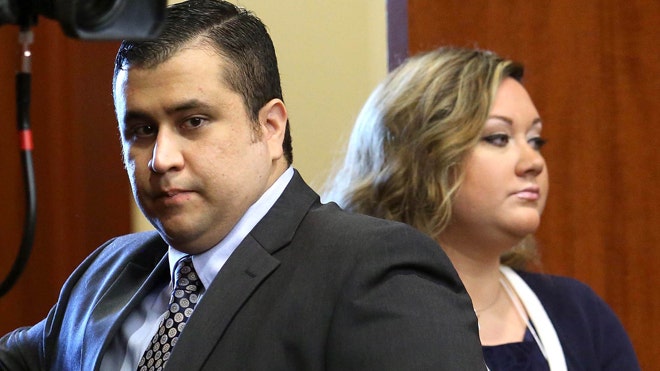
Some Day, I Hope Soon, Shellie Zimmerman Will Tell The Truth About Her Husband George Killing Trayvon Martin And Getting Away With It! And The Truth Will Set Her Free.

Shellie Zimmerman: 'I Have Doubts, Am Conflicted' Over Trayvon Case

Shellie Zimmerman lashed out against her soon-to-be-ex-husband, saying that she is conflicted about what happened the night 17-year-old Trayvon Martin was killed.

The estranged wife of George Zimmerman said during an appearance on NBC’s The Today Show that she no longer knows "what he’s capable of.”
“This person that I’m married to, that I’m divorcing, I’ve kind of realized now that I don’t know him,” she told Matt Lauer on Thursday. "I think anyone would doubt that innocence because I don't know the person that I've been married to. I have doubts, but I also believe the evidence," she added.

She said that the acquitted killer snubbed her after he was found not guilty. "He just kind of treated me like I was disposable," she said. "He went on a victory tour without me."

Shellie Zimmerman appeared on the show beside her lawyer, Kelly Sims, nearly three weeks after she frantically called 911 claiming her husband was threatening to shoot her and her father in Lake Mary, Florida. She claimed that Zimmerman had punched her father and smashed her iPad.

"In hindsight, I should have pressed charges," she said.
She added that she never pressed charges because she believed that besides her husband, she would have gone to jail that day as well. Shellie Zimmerman, 26, is currently serving a year of probation after taking a plea deal in a perjury case for lying about the couple’s finances.

George Zimmerman, who has made brief public appearances since his acquittal in July – including racking up a number of traffic stops and a visit to a Florida gun dealer – has not responded his wife’s statements on the morning talk show.

Labels: , , ,

Thursday, September 26, 2013

Kentucky Justices Say: It Ought To Be Either Self-Defense Or It's Not!

Ky court reinstates reckless homicide conviction

— Kentucky's self-defense laws and jury instructions are so confusing that innocent people are convicted and guilty people set free because the average person can't make sense of what qualifies under the law, a Kentucky Supreme Court justice wrote Thursday.

The declaration from Justice Will T. Scott, who was joined by justices Mary Noble and Bill Cunningham, came as they agreed to reinstate the reckless homicide conviction of 61-year-old Janice Hasch of Shepherdsville in the 2008 shooting death of her husband.
"I must state my belief that the jury's verdict in this case is a state testimonial to the confusion generated by our self-defense statutes and instructions," Scott wrote for the three.

The decision reverses a ruling by the Kentucky Court of Appeals vacating the conviction.
The full court agreed that the evidence supports a reckless homicide conviction in the death of Jerald "Jerry" Hasch. The Kentucky Court of Appeals concluded that there was a lack of evidence underpinning the conviction and that a judge shouldn't have given jurors the option of reckless homicide.

Instead, the appeals court ruled, jurors should have had the options of murder and an acquittal based on a claim of self-defense.

Justice Daniel Venters wrote that, even though Hasch was aware she could have fled a potentially violent situation, that didn't negate her right to stand her ground in self-defense.
Police say Janice Hasch, then 57, shot Jerry Hasch between the eyes at a distance of less than 24 inches during a domestic dispute.

Hasch found a small caliber handgun while cleaning a closet and took the weapon, still in a case, to her husband and confronted him with it. Jerald Hasch became angry and demanded the weapon, but Janice Hasch refused to hand over the gun.

After a dispute, Janice Hasch, an experienced marksman, pulled the trigger and shot her husband between the eyes at a distance of less than 24 inches. Janice Hasch initially told police she could have left the house, as she had done during previous disputes. Later, she claimed self-defense.

Venters concluded that there's no doubt Hasch intentionally shot her husband, but that jurors accepted her claim that she believed shooting Jerry Hasch was necessary to protect herself.
"Further, it had to conclude that she was mistaken in that belief, and that she was reckless in forming that mistaken belief," Venters wrote. "Nothing in her explanation of the shooting or in the circumstantial evidence surrounding it suggested that (Hasch) entertained any doubt about Jerald's intentions or otherwise pondered the possibility that she might be mistaken in her belief.".

Scott, reiterating a call he issued in an unrelated 2005 case, called on lawmakers to address the confusion caused by Kentucky's laws with new legislation that would simplify the law and return it to the absolute guarantee of self-defense outlined in the state constitution.
"I would further note that one who truly acts in self-defense, and is thereby acquitted of murder, could not be guilty of a lesser crime involving a wanton or reckless state of mind for the same act — as we do now," Scott wrote. "As a trial judge, I believed this and still do."

Labels: , ,

Thursday, September 19, 2013

Informercial Frauster, Kevin Trudeau, Ordered Jailed. Watch Video.

Labels: ,

More On Bowling Green, Kentucky, Robbery Killing Of Larry Wayne Thomas By Dominique Wortham And Adriana Mason.

Robbery Gone Wrong: Suspects theft of $1,000 ends in death


Bradenton, Fla., freshman Dominique Wortham and Paducah resident Adriana Mason’s plot to steal $1,000 from Larry Thomas the night he was killed escalated from armed robbery to murder, investigators said at a preliminary hearing Wednesday morning for Wortham and Mason.
“It started as a shooting investigation and quickly became a murder investigation,” Bowling Green Police Department detective Matt Davis said to presiding Judge Sam Potter during the hearing.

Family members for both Wortham and Mason were in attendance.

Davis met an injured Thomas, his large intestines exposed, right before Thomas was airlifted to Vanderbilt Medical Center for emergency care where he later died.
Just before being put into the helicopter, Thomas told Davis that an “older black male” had shot him.
Davis later investigated the crime scene. He found no sign of forced entry. Davis said blood spatter was found on the bed spread and pillows of Thomas’s bed, as well as a small amount of blood on the wall.

After talking with neighbors at the Greenhaven Apartments, Davis learned Thomas’s cell phone had been stolen and that a neighbor who looked after a bleeding Thomas called 911.
Alyssa Rite and her boyfriend, both neighbors of Thomas, told the Herald last week that a neighbor who lived next door tried to keep him conscious until the police arrived.
“He was already really gray though,” Rite said of Thomas by the time the police arrived.
Phone records pulled by police revealed Mason had contacted Thomas 12 times on Sept. 2. Mason was at first uncooperative when police attempted to interview her.

After Davis, assisted by the Paducah Police Department, arrived at Mason’s home with the physical phone records, Mason confessed in front of her family and gave the detective her testimony.
Mason said in her testimony to Davis that Wortham and Thomas had prior drug dealings. Wortham had given Thomas $1,000 worth of marijuana to be paid back to Wortham after it was sold. Wortham had not received payment for the drugs, Mason told Davis.

Together, Wortham and Mason plotted a robbery to steal Thomas’s money. Mason spent part of the day with Thomas, all the while texting Wortham.
“During the entire time she is with Mr. Thomas, she is texting Mr. Wortham ... telling him when it is clear to come in on Mr. Thomas,” Davis said.

Mason told Davis the plan was for Mason to convince Thomas to take a shower, telling him that she would join him. With Thomas in the shower, Mason unlocked the door to the apartment to let Wortham in.
Wortham couldn’t find the money in time.
Thomas came out of the shower first and sat nude on his bed.

Mason said Wortham then entered the room and first pointed the gun at her before pointing it at Thomas. A fight between the two men quickly broke out.
“She described it as a very physical altercation,” Davis said. “...During the course of this fight, Ms. Mason said she was so close to the subjects she could see their fingers over the trigger going back and forth.”

After a struggle, and with Mason outside of the apartment, the fight ended with a single gunshot, followed by an “Ah!” from Thomas, Davis said.
Davis said the gunshot entered Thomas’s stomach at a downward angle.
Alan Simpson, Wortham’s attorney, asked Davis if the investigators knew who ultimately pulled the trigger. Davis said it is unknown at this time who fired the weapon.

Mason then told the detective that Wortham then turned the gun on her, threatening her and telling her if she spoke about the incident he would come after her.
“Ms. Mason told us that she did not have any choice, that she was forced to do this,” Davis said of her involvement.
Thomas went outside of his apartment and said, “I’ve been shot,” causing neighbors to run out toward him, Rite said last week.

Wortham and Mason left the apartment with $400, a platinum-gold watch and gold teeth.
The two checked into a local motel when Mason later told detectives in a separate one-on-one interview she had sex with Wortham, who pawned the teeth at a gold store in Bowling Green for $50 but kept the watch.

Later, cooperating with police, Mason made a phone call to Wortham while police listened in.
Wortham confirmed in his phone call to Mason that he was in Bowling Green in his Barnes-Campbell Hall room. BGPD, with the assistance of the WKU Police Department, arrested Wortham, who was wearing the stolen platinum gold watch at the time of the arrest.

Wortham, whose lawyer said he originally came to WKU with hopes of walking onto the WKU football team, then confessed to police about his role in Thomas’ death.

After the hearing, Dwight Burton, Mason’s attorney, said Mason’s current murder charge is unfortunate and that she is charged with murder because during the course of a felony, if a murder occurs, everyone involved is held liable for the act.
“My client didn’t really have anything to do with the shooting,” Burton said.

Simpson said after the hearing that it was obvious that this was never intended to be a homicide.
“It’s a very unfortunate series of circumstances that escalated in a matter of seconds,” Simpson said.
The two will go before a grand jury at a later date.

Labels: , ,

Wednesday, September 18, 2013

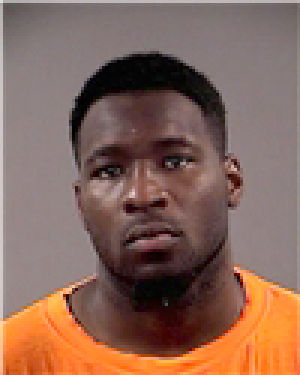
Preliminary Hearing Reveals More In The Bowling Green, Kentucky, "Robbery" Killing Of Larry Wayne Thomas By Dominique Leshay Wortham And Adriana Monique Mason.

Police: Intended robbery ended in death

Larry Wayne Thomas
Dominique Leshay Wortham
Adriana Monique Mason

Two people charged with murder had planned to rob the victim just before going inside his apartment, police say.

During a preliminary hearing in Warren District Court today, Bowling Green Police Detective Matt Davis said that – according to Adriana Monique Mason’s statement to police – Dominique Leshay Wortham, 21, and Mason, 19, met at Campus Pointe apartments on Fields Drive on Sept. 2 and discussed robbing Larry Wayne Thomas Jr., 20. Wortham and Mason are both charged with murder in Thomas’ shooting death.


Thomas was shot in the torso at about 11 p.m. Sept. 2 at Greenhaven Apartments, Apt. 8F, on Rock Creek Road. He died the following morning at Vanderbilt University Medical Center in Nashville.

Warren District Judge Sam Potter found probable cause to send the case against Wortham and Mason to a grand jury. They are in Warren County Regional Jail in lieu of $1 million cash bonds.

Davis testified that Mason said Wortham had shown her a large black gun on his right thigh before they left in separate vehicles to go to Greenhaven Apartments, where Thomas lived.

Wortham said he had given Thomas $1,000 for marijuana and that Thomas had not paid him back yet. Wortham and Mason agreed that Mason would preoccupy Thomas while Wortham sneaked into the apartment and took the money Thomas owed him, Davis testified.

Mason told Thomas to get in the shower, then she unlocked the door and texted Wortham to tell him he could come in, according to Davis’ court testimony. Mason got in the shower with Thomas while Wortham looked for the money. Wortham could not find what he was looking for, and Thomas got out of the shower while Wortham was still there.

Wortham came into the bedroom where Thomas was sitting on the bed, Davis said. Wortham pointed the gun at Mason’s forehead, then at Thomas’ forehead. Thomas and Wortham physically fought, Mason told police, and she was close enough that she could see both their fingers on the trigger of the gun, Davis said this morning.

As Mason tried to leave the apartment, she heard a loud bang and someone yell, as if in pain. She said Wortham ran out of the bedroom, telling her not to tell anyone.

She said she knew Thomas had been shot because he did not come out of the bedroom, Davis testified.

At some point, Mason took Thomas’ phone and Wortham took $400 cash and Thomas’ roommate’s gold teeth and platinum watch, Davis said.

Wortham and Mason left Greenhaven Apartments and went back to Campus Pointe. They gathered a few things and left to go to a hotel on Scottsville Road, according to Davis’ testimony.

With no way to call the police, Thomas managed to go next door to his neighbor’s apartment for help. The 911 call came in at 11:17 p.m. Thomas was flown by helicopter to Vanderbilt, where he died at 2:25 a.m. Sept. 3.

Police gathered phone records and saw that Thomas and Mason communicated 12 times on the day he was shot.

Police tried to question Mason by phone once, but she became very upset and refused to cooperate.
Police then went to Mason’s home in Paducah to question her, but some family members arrived and stopped the interview, according to Davis’ testimony.

Davis and his partner then went to Paducah and interviewed her, receiving the information Davis revealed in the preliminary hearing.

Labels: ,

Friday, September 13, 2013

Update: Bowling Green Police Make Second Arrest In Killing Of Western Kentucky University Student, Larry Thomas, This Time It's Adriana M. Mason Of Paducah.

 More to follow shortly. Stay tuned.

Labels: , ,

As Planned, Richie Farmer Enters Plea For Public Corruption, Will Be Sentenced January 14Th.


Ex-hoops star pleads guilty in corruption case

— Former University of Kentucky basketball star turned politician Richie Farmer has entered a guilty plea to government corruption charges in a deal with prosecutors.
Farmer, whose jersey hangs as a monument in the rafters of Rupp Area, faces about two years in prison for misdeeds while serving as the state's agriculture commissioner.
He appeared Friday morning in U.S. District Court in Frankfort.

"I let down the people of Kentucky, I let down my family and friends, and for this I am truly sorry," Farmer said during the proceeding.

Farmer was accused of using Department of Agriculture employees to work on his Frankfort home, including building a basketball court in his backyard. Prosecutors said Farmer also hired friends, including his girlfriend, as special assistants who did little or no work for the agency. And they accused Farmer of using government employees to do personal errands, including babysitting his children, mowing his yard, even chauffeuring his dog.

Labels: , , , ,

Bowling Green Police Make Arrest of Dominique L. Wortham (A Western Kentucky University HillTopper Football Player) In Killing Of Another Western Kentucky, Student Larry Thomas; Motive Was Robbery.

                                                  Dominique L. Wortham

Arrest Made in Rock Creek Drive Murder in Bowling Green

BOWLING GREEN, Ky (WBKO) -- The Bowling Green Police Department say they have made an arrest in the murder of Larry Thomas.
Police have arrested 21 year old Dominique L. Wortham of Bowling Green for murder.

Police say Worthman confessed to shooting and killing Thomas on September 2.
Thomas was shot at an apartment on Rock Creek Drive. He later died at the hospital.
Wortham told police he shot Thomas during the course of a robbery.

The investigation is ongoing.

Labels: ,